













BUYING GROUPS

ORCHESTRATE THE BUYING GROUP BEHIND EVERY DEAL

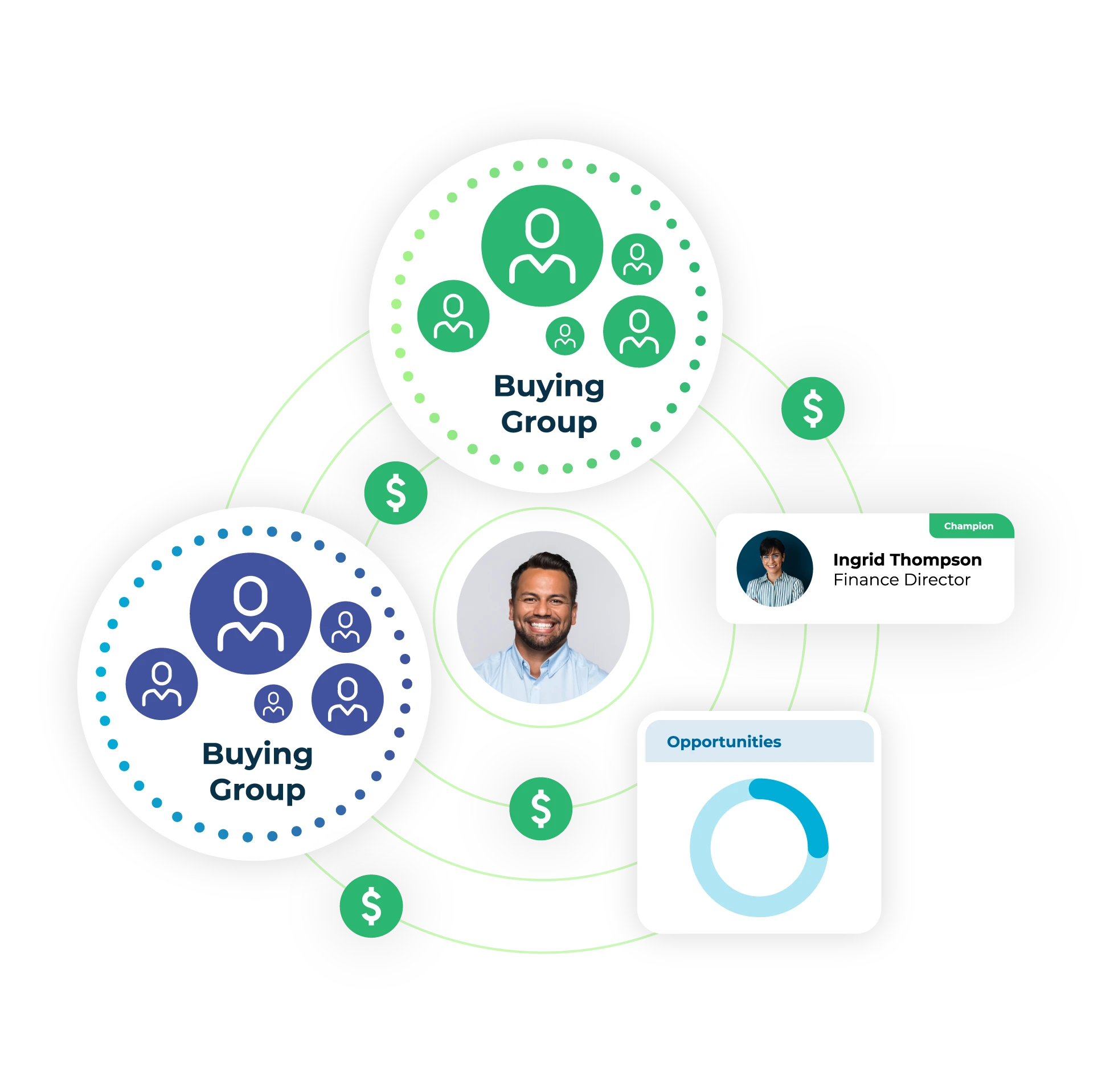
In complex sales, decisions are made by groups – not individuals – and AI is surfacing more buying signals than ever. Without orchestration, signals are missed and opportunities are lost. That’s why your go-to-market strategy needs to capture every buying group signal, map every stakeholder, and ensure coordinated action across the revenue lifecycle.

Goodbye Leads, Hello Committees

LeanData helps revenue teams use AI to identify the right stakeholders, understand their influence, and orchestrate coordinated action across GTM teams that engage every buyer, accelerate decisions, and increase win rates.

DRIVE MORE REVENUE WITH BUYING GROUPS

2 x
Increase in win rates
> 30 d
Faster deal velocity
15 %
More uncovered opportunities

BUYING GROUPS BLUEPRINT

Leverage AI to analyze your historical opportunity data and reveal how buying groups actually form – which roles appear, which stakeholders drive decisions, and which engagement patterns predict wins. Build your unique buying group strategy with a data-backed framework your teams can operationalize with confidence.

  • Uncover historic patterns across opportunities to identify buying group members, roles, and influence
  • Pinpoint the touchpoints that correlate with pipeline progression and revenue outcomes
  • Establish baseline metrics and ongoing measurement to prove ROI and guide the evolution of your buying groups motion

BUYING GROUPS EDITION

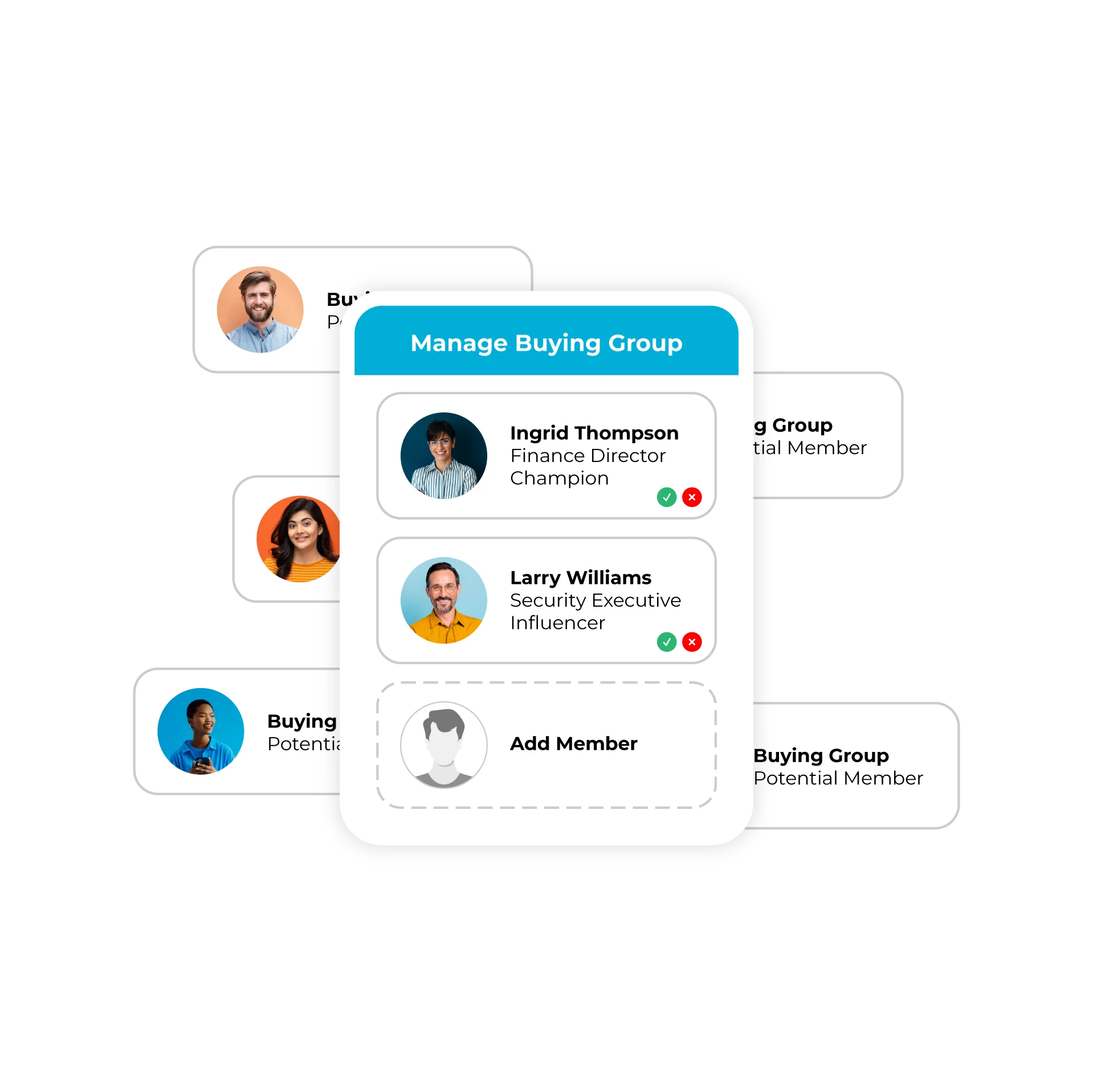
Operationalize your buying groups motion and automate how buying committees are created, tracked, acted on. As new people engage, roles shift, and signals emerge, LeanData updates the buying group in real time and helps GTM teams take the right next step to accelerate opportunities.

  • Automate the creation, tracking, and orchestration of buying groups without disrupting existing sales processes
  • Use AI-powered Title Normalization to automatically classify job title variants into standardized roles
  • Ingest buying group signals from any source – AI SDRs, intent platforms, predictive scores – and trigger coordinated action across every stakeholder
  • Gain complete visibility into engagement and influence with Journey Tracker insights that accelerate decisions and increase win rates

Learn More

LeanData Orchestrator software creating a B2B Buying Group lead scoring model

Customer Story Highlights

Palo Alto Networks customer story thumbnail

Palo Alto Networks Sees Revenue Increases with Buying Groups Strategy

With the support of LeanData, Palo Alto Networks’ Buying Groups motion demonstrated a significant positive impact on revenue.

2x Closed Won Rate
15% Improvement in Revenue
20% Improvement in MQL to Opp conversion rate
10x Increase in pipeline progression
HYUa3p7aRbEyt6be3XFJws

How Veeam Unlocked Hidden Pipeline and Boosted Opportunity Value by 200% with LeanData

Veeam revolutionized its go-to-market strategy by leveraging LeanData to unify fragmented buyer signals, align teams around opportunities, and achieve a 200% increase in opportunity value while boosting pipeline efficiency by 50%.

238% increase in pipeline value
40% shorter sales cycle
46% rise in average opportunity size

Frequently Asked Questions

What is a buying group in B2B sales?

A buying group is a committee of individuals involved in an organization’s decision-making process for a purchase. In B2B sales, most purchase decisions involve multiple stakeholders, each playing a distinct role, such as the decision maker, champion, financial approver, influencer, gatekeeper, or end user. Forrester research shows that 82% of buying decisions are made by a group, and on average, 13 people within an organization are involved in a buying decision. A buying group is connected to a specific opportunity moving through the sales cycle, making it the most accurate unit for measuring buyer intent and engagement.

What is a Buying Groups Motion and how does it differ from ABM or lead-based marketing?

A Buying Groups Motion is a B2B go-to-market approach where marketing and sales collaboratively identify, engage, and qualify all members of a buying committee as a single opportunity aligned to a specific solution. It sits between lead-based marketing, which targets individual contacts and misses the full committee, and account-based marketing (ABM), which targets entire accounts and is too broad. The Buying Groups Motion is organized around the opportunity object in your CRM, which acts as a container connecting all buying committee members to a deal.

How does LeanData’s Buying Groups platform work?

LeanData’s Buying Groups platform automates and scales an opportunity-centric motion natively inside Salesforce. It uses a Journey Object to track all deal influencers from pre-opportunity engagement through close, including roles, signals, and missing committee members. The platform identifies buying group members by role and influence, uses AI to update group composition, and streamlines handoffs from marketing to sales. It also includes LeanData Blueprint, a diagnostic tool that analyzes your last 24 months of closed opportunity data to uncover buying group patterns, establish an ROI business case, and define the right personas and roles for your specific sales motion.

What results can B2B companies expect from a Buying Groups Motion?

B2B companies that shift to a Buying Groups Motion consistently see higher conversion rates, faster deal velocity, and larger average deal sizes. Forrester estimates that delivering a verified buying group to sales results in a 20% to 50% improvement in conversion rates. LeanData customer Reltio reported 20% growth in actionable sales pipeline, 24% faster opportunity progression year over year, and a 50% reduction in closed-lost opportunities after adopting a buying group strategy. Companies also uncover 5% to 15% more hidden opportunities and create 10% to 20% more new opportunities through better prioritization and qualification of buying groups.

FROM AI INSIGHT TO BUYING GROUP EXECUTION

Buying Groups Edition brings your buying group strategy to life with AI-powered role identification, automated group management, and coordinated action across every team. Engage the right stakeholders, adapt to deals as they evolve, and move opportunities forward with speed and confidence.