














AI entered go-to-market (GTM) conversations quietly, then suddenly felt unavoidable.
In the past year, nearly every revenue operations, sales operations, and marketing operations team has tested AI in some form.
Some experiments worked. Many stalled. A few created more confusion than efficiency.
What has changed is not interest. It’s accountability.
Across LeanData’s recent 2026 GTM Predictions webinar and multiple 2025 OpsStars sessions, experienced operators shared a consistent message:
AI is no longer a future advantage. It is an execution multiplier.
That means it rewards strong foundations and exposes weak ones. Three clear AI realities have emerged:
#1 AI does not fix broken GTM foundations.
#2 AI only delivers value when designed as part of a system.
#3 The highest AI returns come from narrow, buyer-aligned, and human-aware use cases.
What follows is a closer look at each reality, how operators are addressing it today, and what it means for GTM execution in 2026.
Some teams are still asking what AI can do. Others are already deciding where it belongs.
In 2026, this distinction matters.
AI Reality One: AI Exposes Broken GTM Foundations
First, AI amplifies the assumptions already baked into your systems.
Teams expect AI to correct bad data, unclear ownership, or lead centric processes. Instead, AI scales those problems faster.
AI systems depend on trust:
- They trust the fields you choose.
- They trust how records relate to each other.
- They trust the logic behind routing, handoffs, and prioritization.
When those foundations are inconsistent, AI does not hesitate. It simply proceeds.
Consequently, many AI initiatives fail before reaching production. The issue is rarely the model. Rather, it’s the data and the logic beneath it.
This reality showed up clearly in an OpsStars session from NVIDIA.

How NVIDIA Approaches AI with Discipline
At NVIDIA, the revenue marketing operations team takes a deliberate approach to AI. They draw a clear line between deterministic workflows and probabilistic ones.
Customer experience steps, ownership rules, and SLAs remain rule based. AI is introduced only where uncertainty exists, such as interpreting engagement signals or prioritizing accounts.
Before applying AI, the team invested in clean object relationships and consistent definitions inside Salesforce. As a result, AI strengthens decision making instead of creating risk.
This approach mirrors what many enterprise teams are learning. AI works best when it supports clarity, not when it replaces structure.
Where LeanData AI Fits Naturally
This same principle appears inside LeanData through Intelligent Matching.
LeanData uses AI-powered fuzzy logic and LLM-based title normalization to strengthen lead-to -account matching.
It also uses AI-generated audit summaries to explain why a match occurred. As a result, teams gain cleaner data and clearer buyer context before downstream actions occur.
AI should be used to clarify inputs and reinforce governance. It does not override business rules. That foundation makes later automation more reliable.
Next comes the second reality.
AI Reality Two: AI Must Be Architected as a System
AI fails when treated as a collection of tools.
RevOps experts have warned against one off agents and isolated AI features. These experiments often look impressive in isolation but struggle to deliver sustained value.
AI works when intelligence flows through a system: Data feeds insight, insight informs orchestration, orchestration triggers action and governance holds everything together.
This reality came to life during an OpsStars session with Samsara.

How Samsara Built AI into the Funnel
Samsara approached AI by creating a marketing intelligence function. Instead of relying on traditional lead scoring, they introduced LLM based propensity models.
Samsara’s models do not operate in isolation. They inform routing, prioritization, and personalization across the funnel. Intelligence flows from the data warehouse into execution systems that sales teams already use.
As a result, AI supports consistent decisions across marketing and sales. The system works because it was designed as a whole.
How LeanData Uses AI to Support GTM Systems
LeanData applies AI at the system level through its orchestration capabilities.
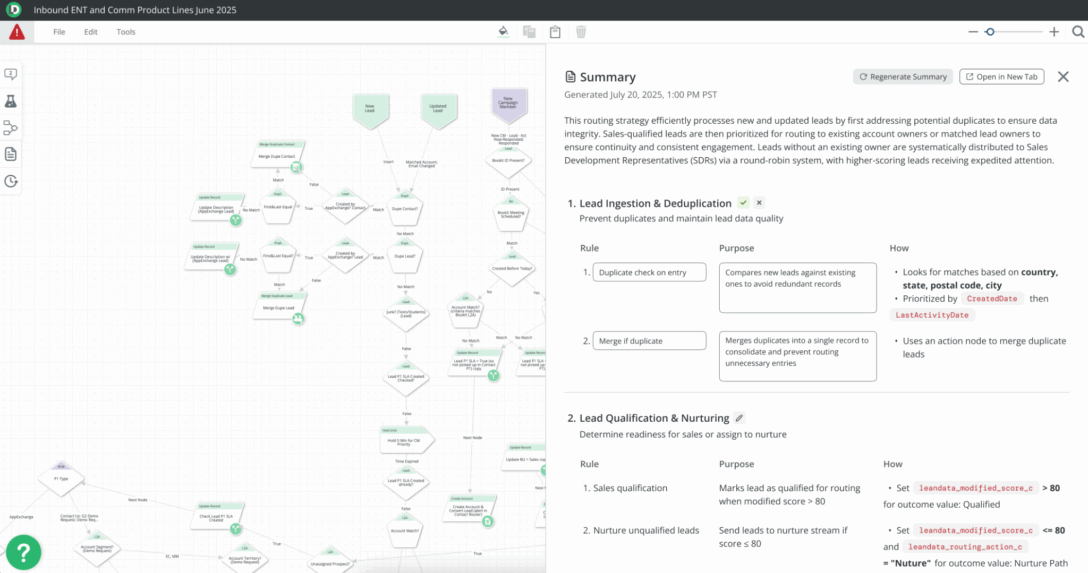
AI Graph Summary explains what a routing graph is intended to do and why it exists. AI Graph Comparison shows what changed between versions.
These features help administrators understand complex GTM logic, speed onboarding, and maintain governance.
AI does not take action on its own (at least not yet 🤷). Instead, it helps teams understand, maintain, and improve the systems that drive execution.
Then comes the third reality.
AI Reality Three: High ROI AI Is Narrow & Human-Aware
AI delivers the most value when it solves specific problems.
Teams that aim for full autonomy often struggle. Teams that target narrow execution gaps see faster progress.
Further, human judgment still matters. AI supports speed, context, and consistency, but it does not replace accountability.
This reality appeared in an OpsStars session featuring OpenAI.
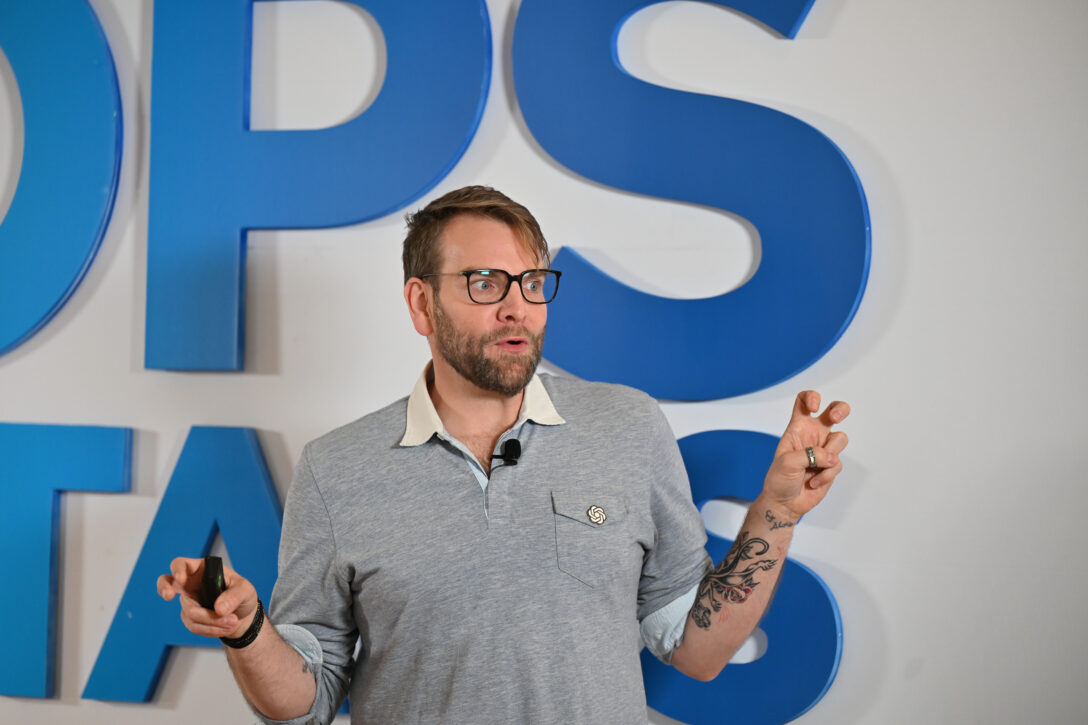
How OpenAI Applies AI Inside Marketing Operations
At OpenAI, the marketing operations team focuses on removing friction with AI.
AI interprets unstructured form inputs, it improves lead qualification accuracy, and overall reduces manual review steps that slow response times.
However, humans remain in control. AI assists prioritization and interpretation, but operators decide how to engage.
This balance keeps AI aligned with buyer needs instead of internal efficiency alone.
LeanData AI in Buying Groups Execution
LeanData applies AI in a similar way inside its Buying Groups products.
AI-driven title clustering classifies leads and contacts into personas. Buying Group Journey insights recommend likely buying group members and surface engagement gaps. Then, journey automation watches for specific signals and triggers next steps based on defined criteria.
Big-picture, LeanData AI for Buying Groups supports visibility and timing.
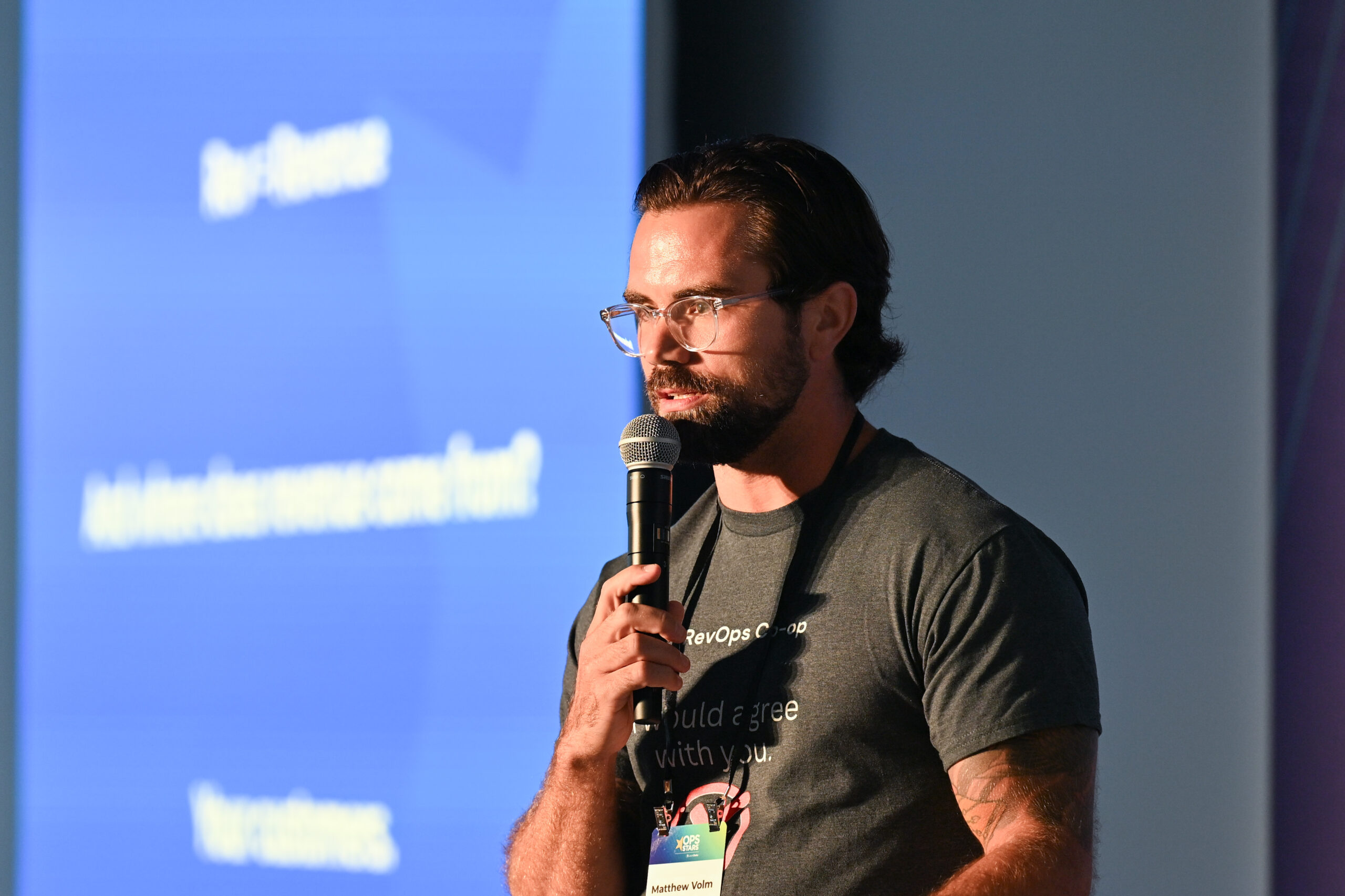
“Don’t say, ‘we gotta start using AI because everyone’s using AI’…start with a problem that you have.” Matt Volm
What These AI Realities Mean for 2026
Together, these three realities point to a clear shift.
AI rewards teams that invest in foundations. It favors systems over tools. It delivers value when applied thoughtfully to real execution problems.
For Ops leaders, the opportunity is not to chase every AI trend. It’s to design GTM systems that AI can support responsibly.
As enterprise B2B buying grows more complex, coordination becomes the differentiator. AI helps teams see patterns, reduce friction, and respond with consistency.
These realities also reveal a widening maturity gap.
Some teams are still asking what AI can do. Others are already deciding where it belongs. In 2026, this distinction matters.
Mature GTM organizations will apply AI where it strengthens coordination and insight, and they will resist it where consistency and trust matter more.

Kim Peterson
Kim Peterson is the Senior Manager of Content Strategy at LeanData where she digs deep into all aspects of go-to-market strategy and execution. Kim's writing experiences span tech companies, stunt blogging, education, and the real estate industry. Connect with Kim on LinkedIn.