












Summary
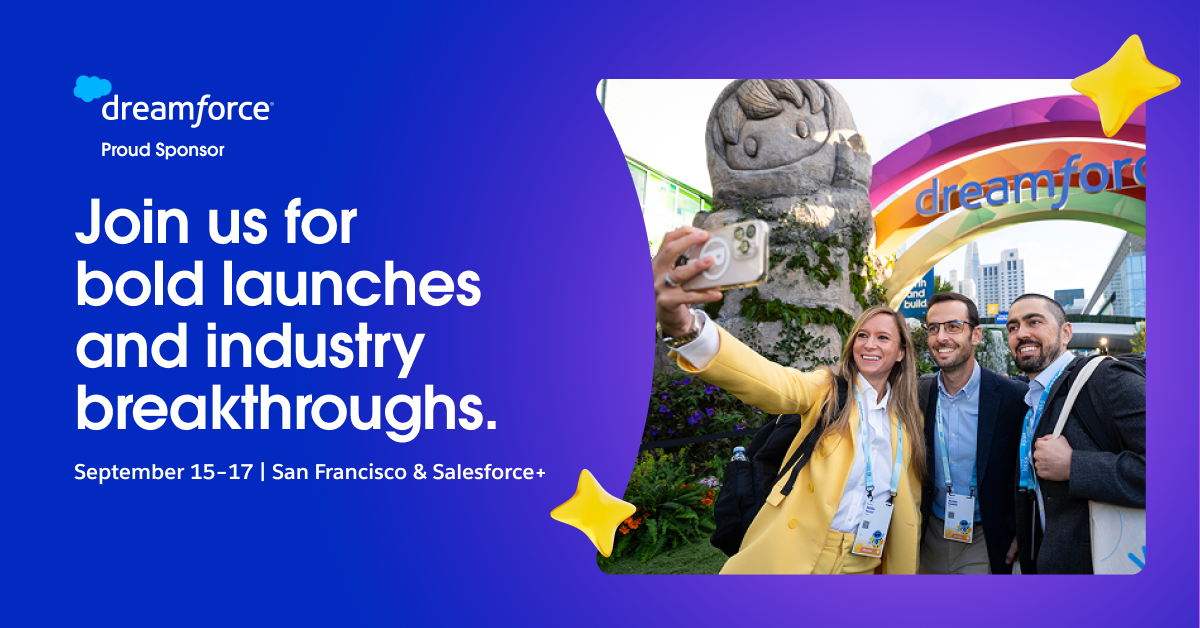
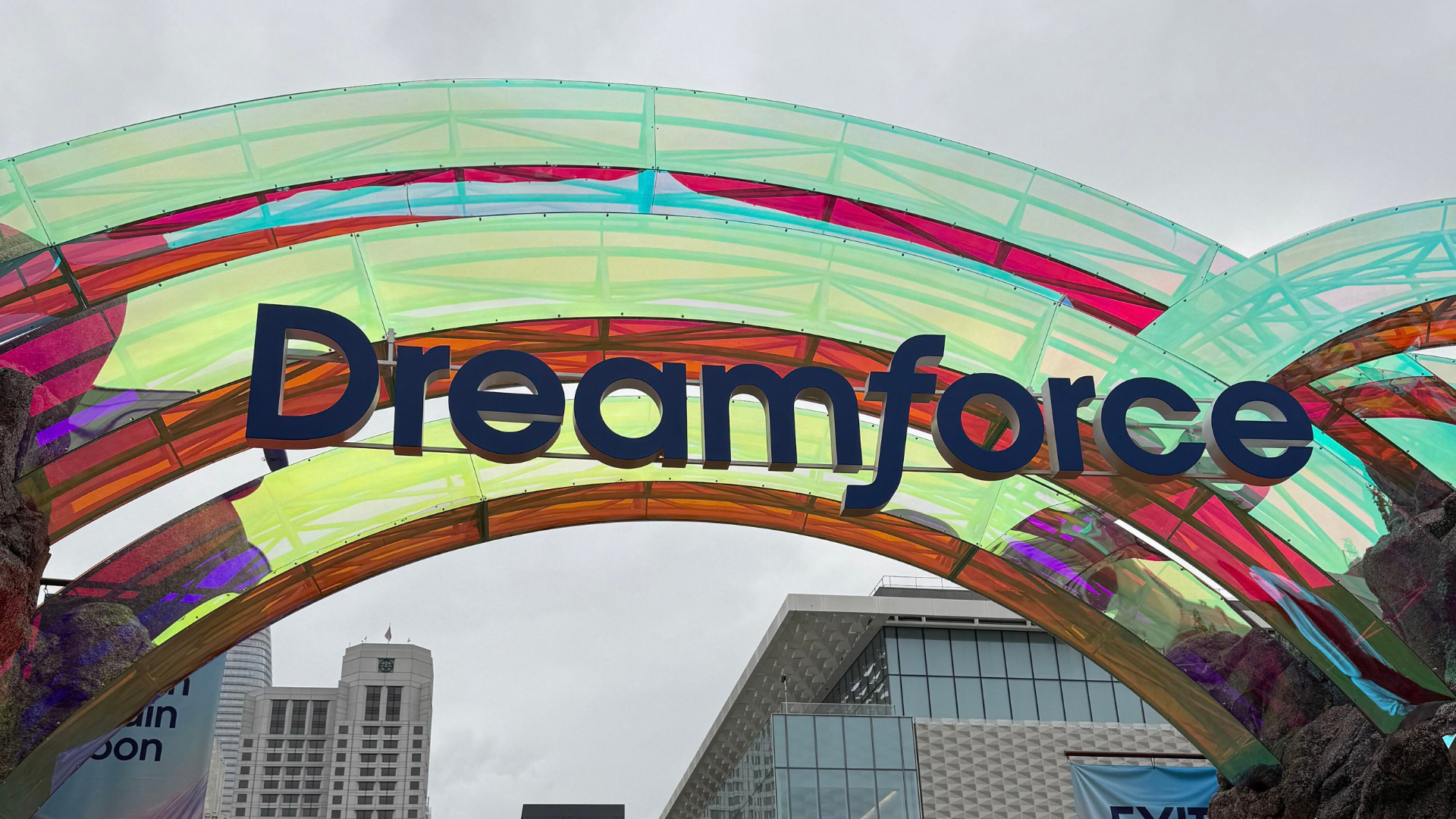
Dreamforce 2026 (Sept. 15-17, San Francisco) was all about putting the agentic enterprise to work. In this Dreamforce 2026 recap, we cover the biggest announcements and what they mean for GTM teams. Salesforce introduced AIforce, Koa, Claudeforce, and a set of job-ready agents. Under the product news, though, the keynotes kept landing on trust. Agents need grounded data, business logic they can follow, and shared context before they can be trusted to act. That’s the same thing we’ve been hearing from GTM Ops leaders all year. On stage, Uber and Autodesk showed what it looks like when you build that foundation first and put AI on top of it.
What You’ll Learn
- The biggest announcements from the Dreamforce 2026 keynotes and why they matter for revenue teams
- Why “trust” and “harness” came up so often and how they connect to the AI Reckoning
- How Uber for Business used Agentforce and LeanData to reach 100% of its self-serve drop-off leads
- How Autodesk turned LeanData into the governed decision plane behind its Agentforce motion
- What to fix in your data, process, and customer context before you scale AI
The Headline: Agents Everywhere, and Trust Is the Bottleneck
If Dreamforce 2025 introduced the agentic enterprise, Dreamforce 2026 was about making it run for real.
Marc Benioff opened the main keynote by pushing back on the “SaaSpocalypse” talk. AI isn’t the end of software, he explained. It’s the end of software that makes humans do all the work. Jensen Huang and Dario Amodei joined him on stage, and the demos showed agents reading records, pulling from connected systems, reasoning, and taking action inside Salesforce.
A second theme ran under all the product news, and it’s one Ops teams know well. An agent can only be trusted if what it’s working from is right. Salesforce put it plainly in its own wrap-up of the week: Enterprise AI needs a harness, not just a model.
 “Agents are great, right? But you can’t trust them. You need a harness.”
 Jason Lemkin

At LeanData, we’ve been calling that moment the AI Reckoning. For the last two years, the mandate was to move fast and try everything. Now teams are asking a harder question: Where’s the impact, and can we trust the output?
Dreamforce 2026 Recap: Keynote Highlights
Here’s a quick look at the biggest announcements and why they matter for revenue teams.
AIforce and the four-layer stack
The biggest launch of the week was AIforce. Instead of asking people to come to Salesforce, AIforce brings Salesforce’s data, workflows, and business logic to whatever AI interface someone is already using.
What stood out to us was how Salesforce explained the architecture. The platform is built in four layers: data (Data 360), business logic and semantics, agents (Agentforce), and the interface (AIforce). The reason is simple. AI models are probabilistic. On their own, they aren’t grounded in a company’s source of truth, so something deterministic has to sit underneath them.
That’s the case we’ve been making to Ops teams all year. Use fixed, reliable logic for the things that have to be right every time, and flexible AI reasoning for the things that need judgment.
Koa: a model that knows CRM
Salesforce also introduced Koa, a CRM-focused reasoning model built with NVIDIA on its Nemotron model family. Salesforce says Koa is 14% better at keeping context during complex conversations and 11% more precise at executing tools.
A model built for CRM is a real step forward. It still has to reason over whatever is in the CRM, though. If leads aren’t matched to accounts, or three records describe the same buyer, even a purpose-built model will reason its way to the wrong answer. Here’s what AI-ready data should look like.
The Agentforce keynote: from demos to ROI
The Agentforce keynote moved past “look what an agent can do” to get into how you can run agents in production. Salesforce shared that 30,000 customers are now live on Agentforce and introduced an Agentic ROI Playbook focused on deploying, monitoring, and improving agents over time.
Humans stayed in the loop throughout. Fulton Bank, for example, shared that it has saved 80,000 hours with Agentforce. Across the customer stories, people were still setting the goals and approving the actions. Agents took on the volume.
Trust, data, and the “harness”
Trust came up again and again. Benioff reinforced Salesforce’s zero data retention stance (“your data is your data”), and Salesforce’s wrap-up described a harness made of trusted models, context, agency, actions, governance, and security.
Put those pieces together and you get the three things we see holding up every successful AI GTM motion:
- Data: Clean, matched, complete records that agents can reason over
- Process: Business rules that are written down and enforced so agents follow the same playbook your team does
- Context: A shared view of the customer so Marketing, Sales, and CS agents don’t step on each other
How Dreamforce 2026 Connects to the AI Reckoning
This year’s keynotes described the same shift found in our recent research. In our 2026 State of AI Go-to-Market Readiness Report, 93% of GTM teams said they’ve deployed an AI agent, but only 31% said their infrastructure is ready to support one. Seventy percent said data quality is already hurting execution.
Here’s how the big Dreamforce themes line up with the foundation question:
The reckoning isn’t a verdict on AI. Everyone has AI now. The teams pulling ahead are the ones with the right foundation, one that makes it possible to use AI more reliably.
From the Stage: Uber and Autodesk Show What AI-Ready Looks Like
Two LeanData customers spoke at Dreamforce to share what happens when you prioritize the foundation.
Uber for Business: an AI SDR with a human handoff that works
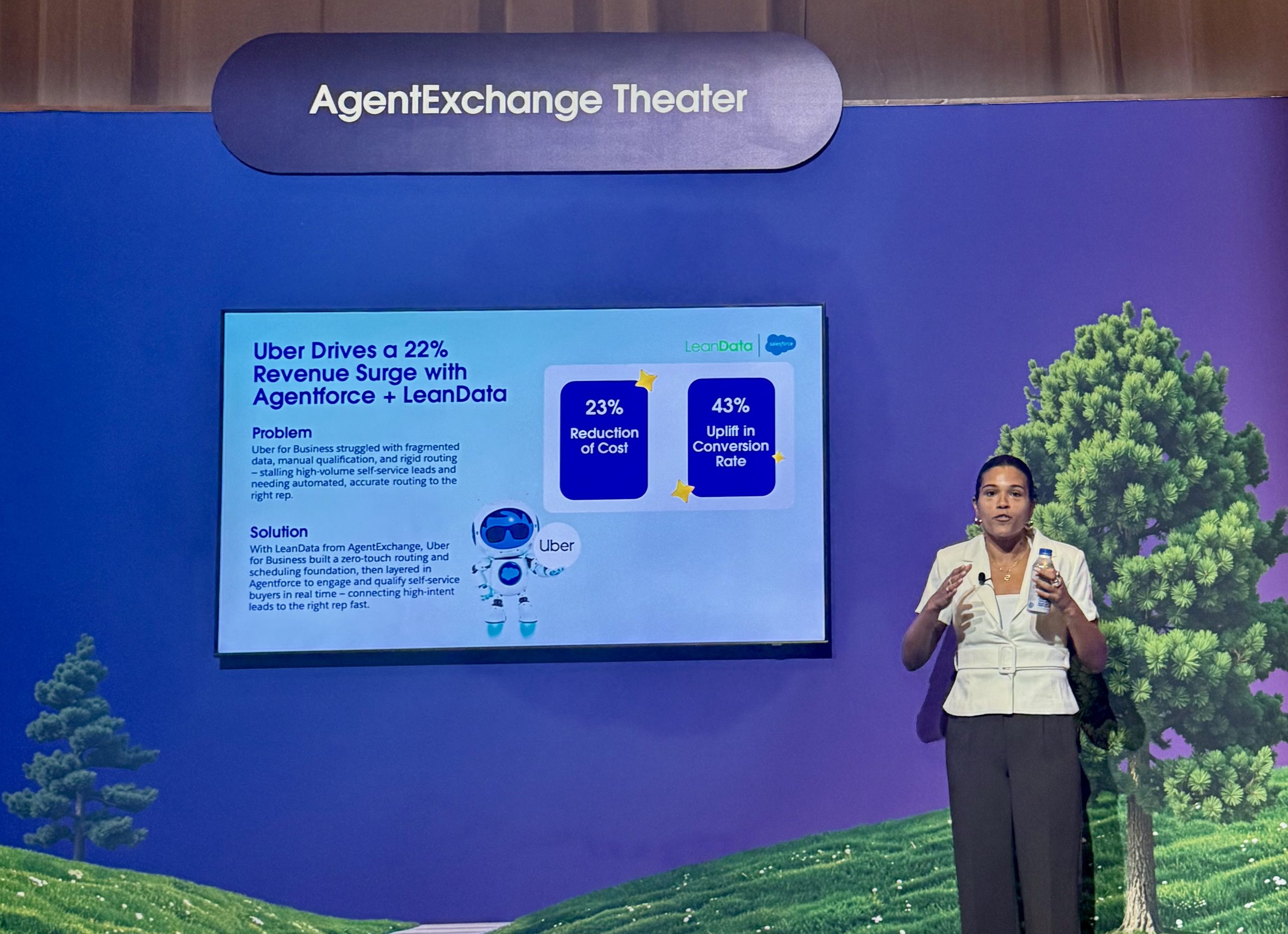
At the AgentExchange Theater, Sarah Oertel, Revenue Technology Manager at Uber for Business, joined Salesforce’s Alexandra Laxmi Iyer to walk through how Uber scaled outreach to self-serve signups.
Uber for Business serves about 350,000 customers across 75 countries. Many sign up on their own but drop off before finishing verification steps. With a team of human specialists doing outreach, about 80% of those drop-off leads went untouched, and some of them had real buying intent.
So Uber built “Garrett,” an Agentforce SDR that now reaches out to 100% of self-serve drop-off leads. When a lead needs more help, LeanData Scheduling books the meeting and routes it to the right specialist based on Uber’s routing logic. Discovery and leadership alignment took about four months. The build, including internal testing, took about two. At Dreamforce, Uber shared:
Sarah was clear that the goal was never to take humans out of the process. The goal was to bring them in when they add the most value:
“It was for us to look at how we could optimize the flow for human support to only be triggered whenever it’s really necessary.”Sarah Oertel


Her specialists now go into calls with more context, better preparation, and a lead who asked to talk. Her advice for other teams was simple: “The biggest lesson here is to start small, define your hypothesis and your success metrics upfront, and then iterate quickly.”
Get the full story in How Uber Bridges the AI-to-Sales Gap with Agentforce + BookIt.
Autodesk: LeanData as the decision plane for Agentforce
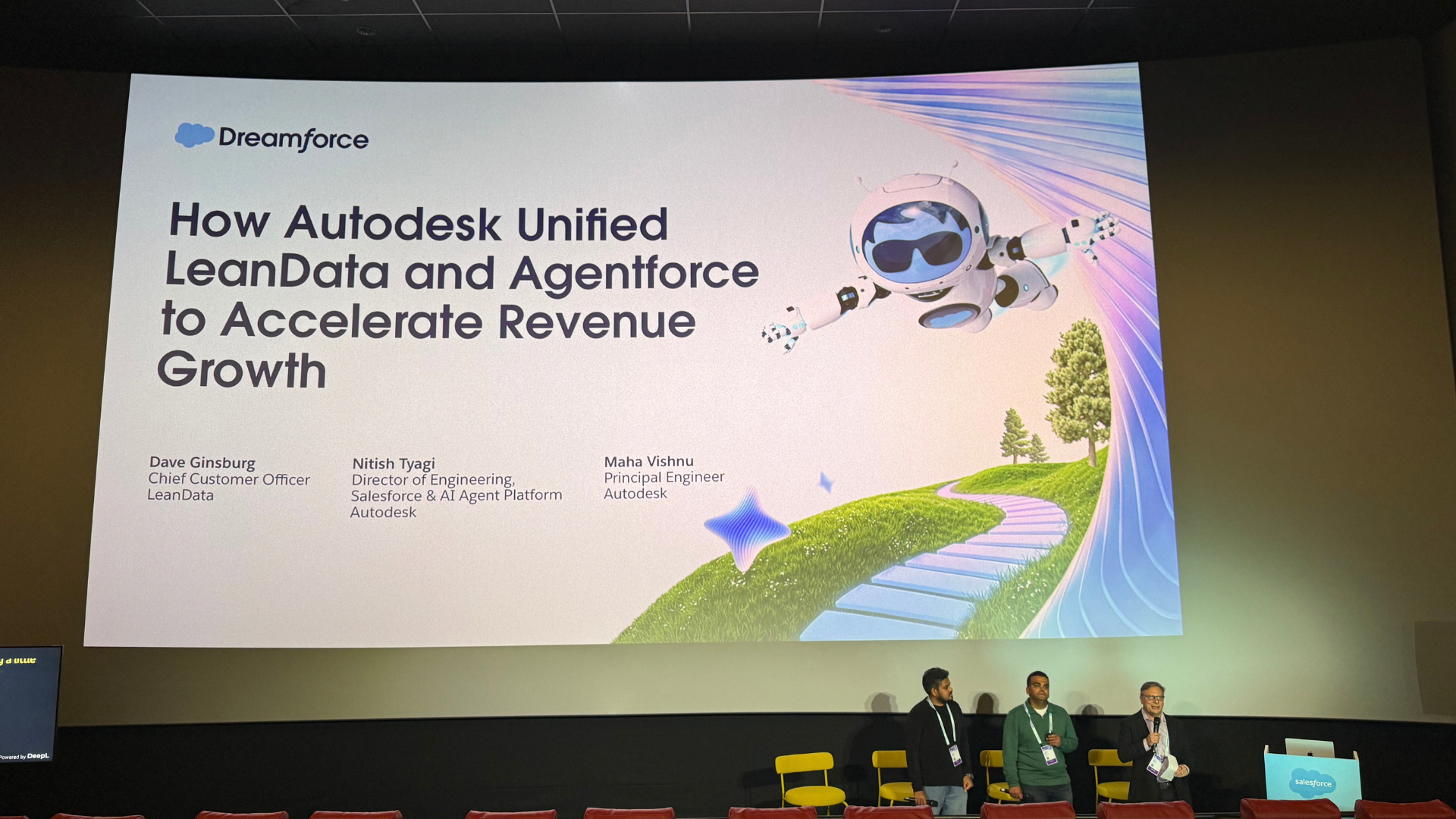
In “How Autodesk Unified LeanData and Agentforce to Accelerate Revenue Growth,” Nitish Tyagi (Director of Engineering, Salesforce & AI Agent Platform) and Maha Vishnu (Principal Engineer) from Autodesk joined LeanData Chief Customer Officer Dave Ginsburg.
Autodesk’s architecture separates three jobs: customer context, deterministic routing, and conversational engagement. LeanData handles matching, prioritizing, enriching, tagging, and assigning. From there, high-value, high-intent prospects go to human SDRs and BDRs, and Agentforce handles scaled nurture, qualification, and warm handoffs. In Autodesk’s words, “LeanData became the decision plane for a governed revenue handoff system. … Business rules move from bespoke Apex paths into an explicit, governed orchestration layer.”
The lesson maps right back to the keynote. Business logic stays deterministic, AI handles scale, and humans handle judgment. That split is what lets Autodesk’s Ops team change routing in hours and still have the ability to explain every decision.
Around Dreamforce Week
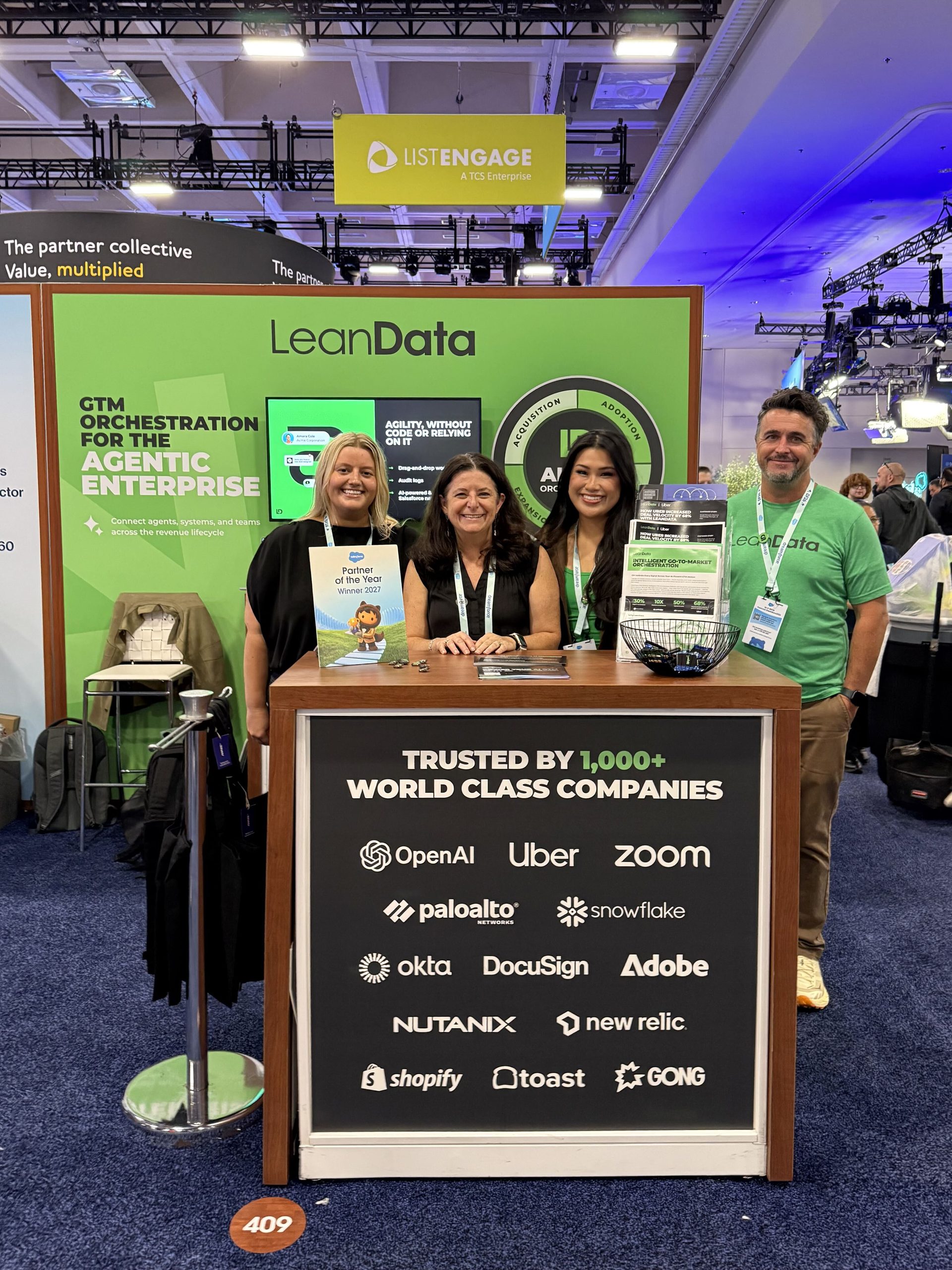
If you saw our Dreamforce week lineup, you know our team kept busy outside the keynotes. We had live demos and plenty of great conversations at Booth #409 in the Expo Hall. Our Solutions Consultants Rob Deutsche and John Gomez ran the AgentExchange GTM App Demo Showcase, and we co-hosted the Club 6 Lounge at Tropisueño with 6sense. Thank you to everyone who stopped by for a demo, a coffee, or a quick recharge between sessions.
What to Do Before You Scale AI
If you left Dreamforce excited about AIforce and a lineup of new agents, good. Now before you turn them loose, it’s time to ask a few questions:
- Is your data ready? Are leads matched to accounts, duplicates resolved, and buying groups visible?
- Is your process written down? Do your routing rules, SLAs, and rules of engagement live in your systems, or in someone’s head?
- Is your context shared? Can Marketing, Sales, and CS agents see what the others are doing with the same account?
- Can you explain it? If an agent routes a lead or books a meeting, can you see why?
- Do you know what success looks like? Like Uber, define your metrics before you launch.
Next Up: OpsStars 2026
That’s our Dreamforce 2026 recap, but this conversation is just getting started. For the first time, OpsStars is a standalone event, and it’s coming up fast on Oct. 5-6 at the InterContinental San Francisco.
This year’s theme is “Power Your AI GTM,” with two days of practitioners sharing how they’re building the foundation AI runs on. See the full agenda. Bring your team. Groups of three or more save 15% through Oct. 1.
See What AI-Ready Looks Like for Your Team
FAQ
When was Dreamforce 2026?
What was announced at Dreamforce 2026?
What is AIforce?
Why does data quality matter for Agentforce and AI agents?
How did Uber use Agentforce and LeanData?
When is OpsStars 2026?

Jill Makin
Jill Makin is a Content Marketing Specialist at LeanData. Her content expertise includes B2B SaaS marketing across industries including fintech, healthcare, enterprise orchestration, and more. Connect with Jill on LinkedIn.