













Summary
AI GTM orchestration is the layer that turns scattered AI signals into coordinated actions across marketing, sales, and customer success. A recent LeanData survey of 157 B2B revenue professionals shows how quickly AI adoption has outpaced the infrastructure meant to support it, plus what teams can do to close that gap.
Key Takeaways
- AI adoption is close to universal, with 93% of teams running at least one agent, yet only 31% believe their infrastructure is fully ready for it.
- Data quality is the top blocker. 55% name it their number one AI challenge, and it drives most of the downstream problems teams report.
- Coordination breaks down at scale, so 70% saw data hygiene degrade execution and 27% had multiple tools reach the same prospect.
- Governance matters more than raw capability. The biggest fear, at 60%, is agents acting on the wrong records, plus the top wish is a complete audit trail.
- A coordination layer ties clean data, documented process, and shared context together, so AI produces coordinated revenue instead of noise.
AI Moved Fast. Your Infrastructure Might Be Playing Catch-Up
Picture five AI agents working your pipeline at the same time. One enriches records, another books meetings, a third scores intent, and two more push outbound email.
Now picture none of them aware of what the others are doing. That scene sits closer to daily reality than most revenue teams would like to admit.
LeanData recently surveyed 157 revenue professionals at enterprise B2B companies, and the results tell a consistent story.
First, adoption is everywhere:
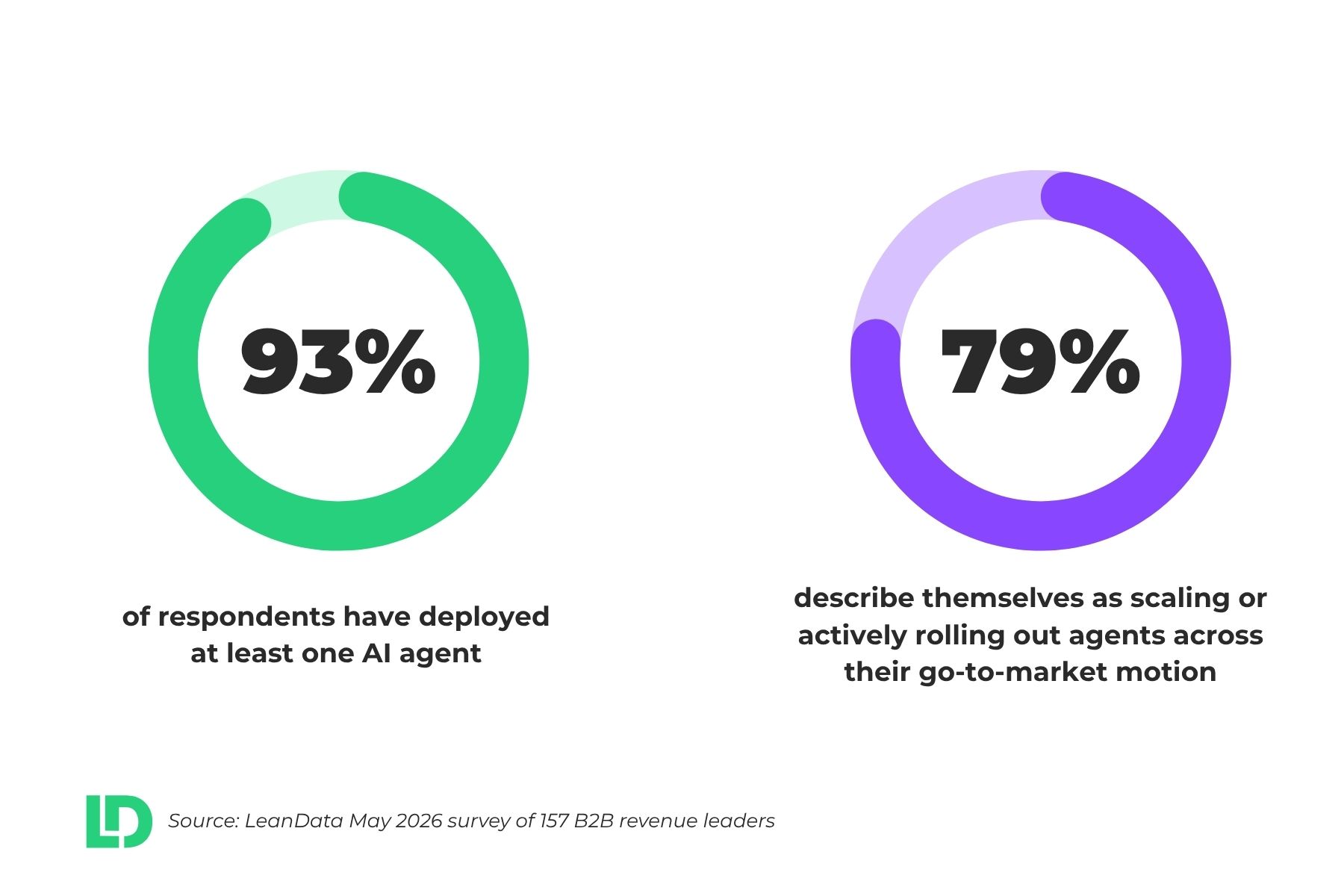
- 93% of respondents have deployed at least one AI agent
- 79% describe themselves as scaling or actively rolling out agents across their go-to-market motion
So the real question is: Can the systems underneath can keep pace?
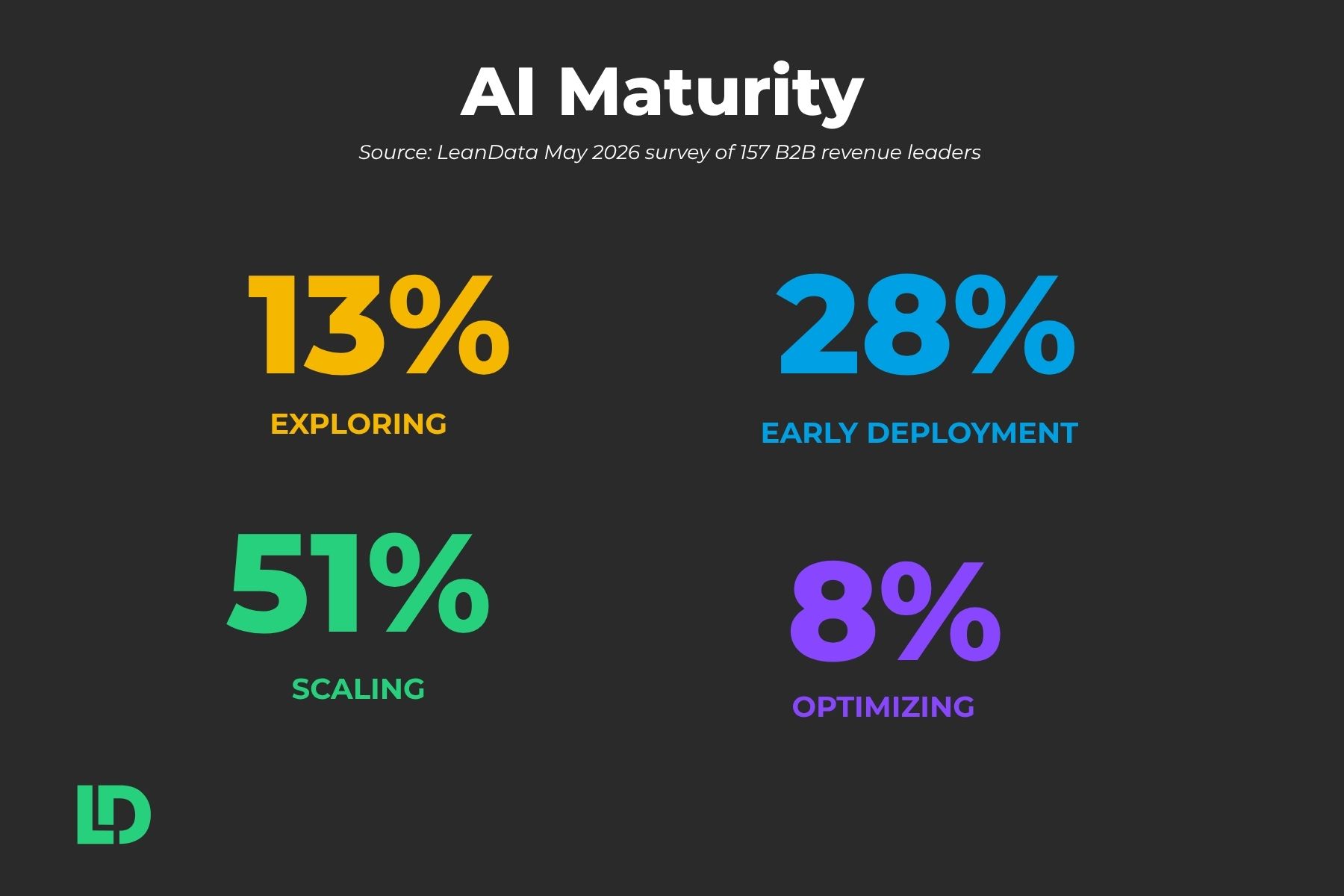
The survey suggests they cannot, at least not yet. When asked about infrastructure readiness, only 31% felt fully prepared for AI transformation.
As a result, a large majority admitted their foundation has gaps. Just 8% described their operations as fully optimized. So most teams sit in the messy middle, moving quickly while the ground shifts beneath them.
The Adoption Curve Is Steeper Than the Readiness Curve
Where do all these agents come from? Everywhere, it turns out.
Teams source them from:
- AI features baked into existing tools like Gong and HubSpot
- Custom builds on top of large language model APIs
- Dedicated agent platforms.
Consequently, the modern revenue stack looks less like a tidy system and more like a crowd of independent workers, each hired separately and each following its own instructions. And, that crowd is growing.
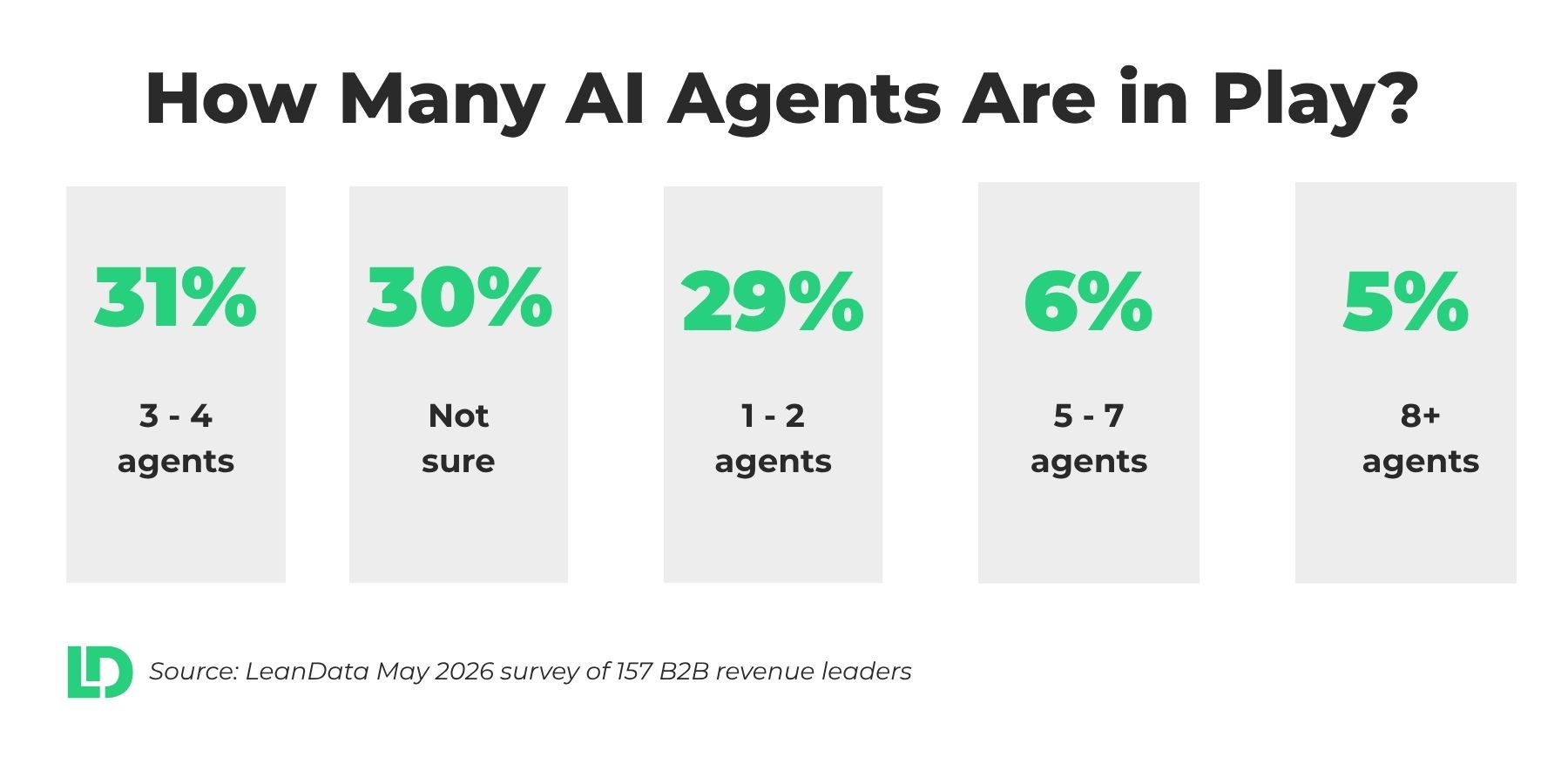
The most common answer to “how many distinct AI agents act on your records” was three to four.
Then comes the part that should make any operations leader pause: nearly one in three respondents did not know how many agents were touching their data at all.
So even at modest numbers, the odds of two agents stepping on each other climb fast. Without a shared layer coordinating them, that overlap turns into chaos quietly and quickly.
When AI Agents Collide
The survey asked which coordination problems teams had run into over the previous six months. The responses map neatly onto what happens when automation scales faster than governance.
Here is what respondents reported:
- 70% saw data hygiene and quality issues degrading GTM execution, including the actions taken by agents.
- 30% found actions taken on records with no clear audit trail, so no one could explain what happened or why.
- 27% had multiple tools or agents send outreach to the same prospect, creating duplicate, competing touches.
- 19% experienced agentic automation conflicts that caused reporting issues.
- 17% had a marketing sequence fire while a rep was actively working the deal.
- 14% watched automation or an agent bypass account ownership and territory rules.
Read those together and a pattern emerges: Each item describes an agent acting correctly on its own terms while creating a mess for everyone else.
So the individual tools are not misbehaving. The trouble starts because nothing sits above them to enforce a shared set of rules.
Bad Data Sits at the Root of the Problem
Ask revenue teams to name their single biggest AI challenge and one answer rises above the rest: 55% pointed to data quality and readiness.
The next three challenges on the list, (1) tech stack integration, (2) unclear strategy, and (3) skill gaps, all flow downstream from that same source. Because an agent can only act on what it can see, incomplete or duplicated CRM data leads it straight to the wrong conclusion.
The open-ended responses reinforced this. When teams described what still needs to change before they can trust automation, they clustered around four themes:
- Cleaner data
- Documented processes
- Better system integration
- Cleaner ownership
In other words, first fix the foundation, then let the agents run. One respondent put it plainly, noting that AI performs only as well as the data feeding it. That single idea explains most of the friction in the survey.
AI generates the insight and recommends the next move.
Orchestration makes sure the right thing then happens, reliably and every time, with a record of what occurred.
What AI GTM Orchestration Really Solves
So what closes the gap between eager AI adoption and shaky infrastructure?
This is where AI GTM orchestration earns its place. Think of orchestration as the coordination layer that sits between your AI agents, your human sellers, and the systems they all share. AI generates the insight and recommends the next move. Orchestration makes sure the right thing then happens, reliably and every time, with a record of what occurred.
LeanData plays that role inside Salesforce.
Rather than adding another agent to the pile, it governs the outputs of the agents you already have, so every signal reaches the right owner with full context. Plus it does this the same way for a human action, a system trigger, or an AI recommendation.
That consistency is the point. When every signal flows through one layer, teams gain speed from AI without losing sight of what their tools are doing.
A few building blocks carry most of that work. The table below breaks them down in plain terms.
AI GTM ORCHESTRATION WITH LEANDATA
Notice that none of these require replacing your current AI investments. Instead, they connect those investments so the outputs land correctly. That’s the difference between more activity and more revenue.
Governance Is the Feature Teams Want Most
Here is the finding that surprised us most: When respondents named their biggest fear about scaling AI agents, 60% chose the same thing: agents acting on inaccurate data, wrong records, or violating ownership rules.
Then, when asked which single outcome would matter most if a product could coordinate every GTM action, 31% chose a complete audit trail of every action taken on every record. The rest of the top answers followed the same theme of control, compliance, and visibility.
Teams want confidence that the automation they already run follows the rules and leaves a trail.
Consequently, governance stops being a nice-to-have and becomes the headline feature. LeanData supplies exactly that, with transparent routing logic, full auditability, and guardrails that apply whether an action came from a rep, a rule, or an agent.
That structure is what lets teams trust AI inside a revenue motion.
Proof That Coordination Pays Off
The value shows up in the numbers real customers report.
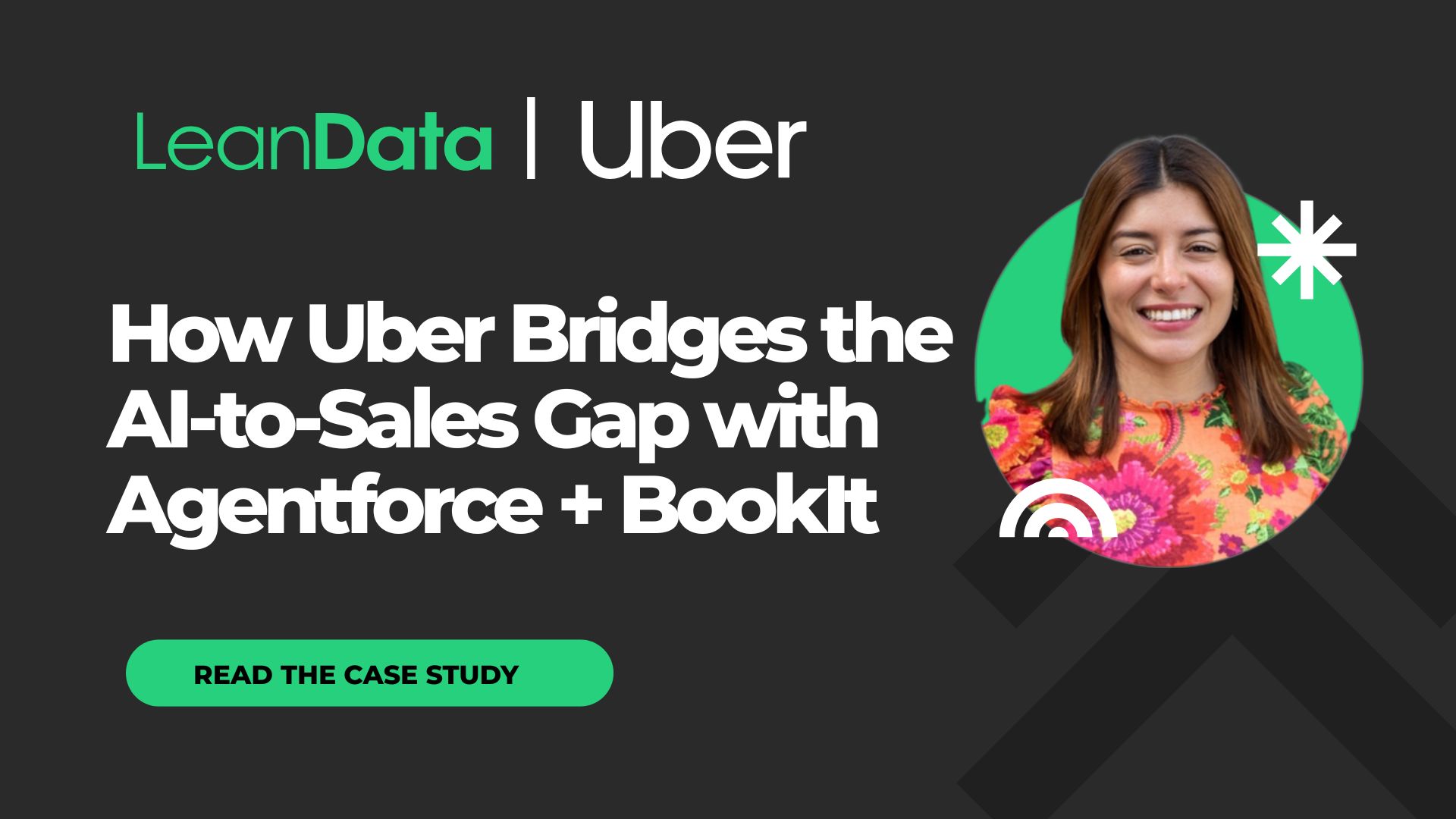
Uber for Business built an agentic GTM engine on top of LeanData and saw a 68% increase in deal velocity, a 53% increase in win rates, and a 95% reduction in the time it takes to assign an MQL.
Because the coordination layer handled the routing and handoffs cleanly, the AI investments around it could finally deliver.
It is also telling that leading AI companies, including Anthropic, OpenAI, and Databricks, run their own go-to-market on LeanData. Even at the frontier of AI, they still need a dependable layer that puts every signal in the right hands.
Where Revenue Teams Go From Here
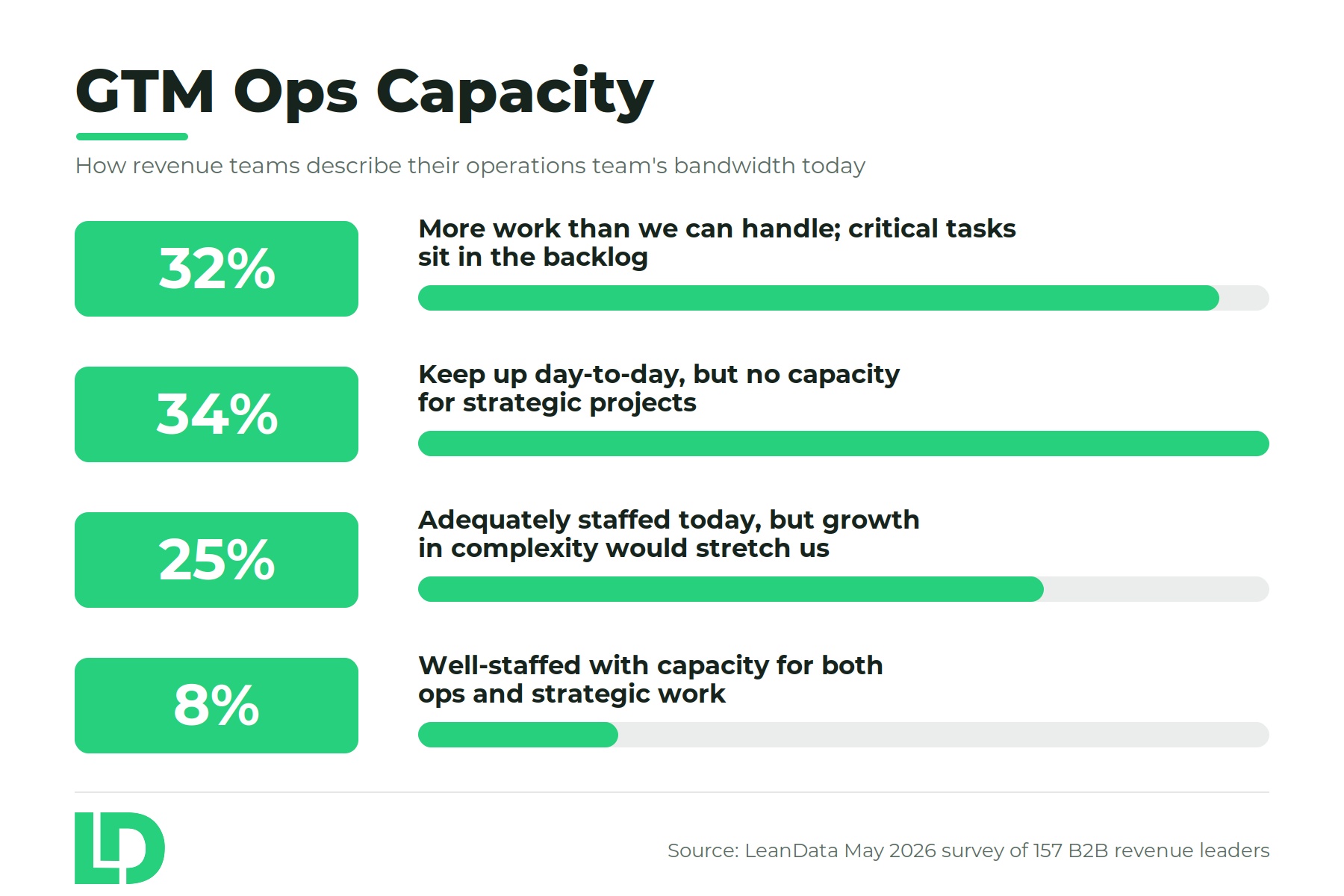
One more survey stat frames the stakes: 66% of GTM operations teams said they are at or over capacity, with no room for strategic work.
Meanwhile AI keeps adding complexity faster than those teams can absorb it. So the instinct to bolt on another agent is understandable, yet it often makes the underlying problem worse.
The steadier path starts with the foundation the survey kept pointing to. First, clean and resolve your GTM data so agents act on something trustworthy. Next, document the business rules that live in people’s heads today.
Then give marketing, sales, and customer success one shared source of context to work from. Once those three pieces are in place, a coordination layer ties everything together, and your AI stack starts producing coordinated revenue action instead of scattered noise.
AI adoption is not slowing down. So the teams that pull ahead will be the ones who pair that adoption with the orchestration to govern it. That combination turns a crowd of independent agents into a system you can trust.
Talk is easy.
See the results teams are getting right now.
FAQ
How many AI agents do most B2B go-to-market teams have working their data?
What is the number one AI challenge for B2B go-to-market teams right now?
Are most B2B go-to-market teams ready for AI transformation?
What problems are AI agents causing B2B marketing pipeline?
What do B2B go-to-market teams most want from AI coordination?

Kim Peterson
Kim Peterson is the Senior Manager of Content Strategy at LeanData where she digs deep into all aspects of go-to-market strategy and execution. Kim's writing experiences span tech companies, stunt blogging, education, and the real estate industry. Connect with Kim on LinkedIn.