














Summary
Operational confidence separates high growth go to market (GTM) teams from those stuck firefighting. This article explores how enterprise B2B teams move from GTM chaos to operational confidence, using real examples from Drata’s go to market operations team.
Most go to market (GTM) chaos does not announce itself loudly. It shows up quietly, in missed follow ups, unanswered questions, and uneasy assumptions that systems are working as intended.
At first, teams compensate by adding more tools, scheduling more meetings and building more dashboards. Yet over time, complexity increases, confidence drops, and small issues turn into real revenue risk.
High growth teams break this cycle.
They do not chase perfection. Instead, they focus on building operational confidence. That confidence comes from knowing: (1) where signals go, (2) who owns the next step, and (3) why decisions happen the way they do.
In a recent LeanData customer spotlight, the GTM team at Drata shared how this shift unfolded as their operations scaled. What follows are five execution habits that high growth GTM teams consistently apply.
#1 They treat GTM execution as a system, not a series of tasks
Many organizations invest heavily in GTM strategy. They define ICPs, buy intent data, and align on revenue goals. However, execution often happens in fragments. Signals land in different tools, ownership changes by region, and follow up depends on individual behavior.
Drata encountered this firsthand. Before tightening their execution model, they discovered that only 36 percent of key intent qualified accounts were being worked, and sales teams took an average of seven days to respond. As a result, high value accounts went cold even though the signals existed.
High growth teams approach this differently. First, they assume execution is a system that must function end to end. Signals must enter, move, and exit with clarity. Ownership must be defined automatically and next steps must be consistent.
At Drata, this meant centralizing how signals entered Salesforce and ensuring they flowed through a consistent routing and assignment model. LeanData supported this by acting as the connective layer that coordinated how signals triggered assignments, notifications, and campaign tracking.
Consequently, GTM execution stopped depending on memory or manual effort. Instead, the system carried the load.
#2 They prioritize signals instead of reacting to everything
Signal overload creates a dangerous illusion of activity. When everything looks important, nothing actually gets prioritized.
Drata made a deliberate decision not to work every signal equally. Instead, they tiered accounts based on fit and potential.
- Tier one accounts triggered immediate outreach and, in some cases, personalized gifting.
- Tier two accounts followed structured sales sequences.
- Lower priority accounts entered scaled programs rather than consuming rep attention.
This approach required discipline. It also required confidence in the underlying data. Drata used Salesforce fields to distinguish account tiers and relied on LeanData orchestration to ensure each tier followed the intended path.
As a result, sales teams stayed focused, marketing teams retained clarity, and experimentation became possible. Teams tested new engagement methods in lower risk segments without disrupting top priority accounts.
High growth teams understand that prioritization isn’t about doing less. Rather, it’s about directing energy where it matters most.
#3 They enforce speed through accountability, not pressure
Unfortunately, speed to lead often turns into a performance conversation. Leaders push reps to move faster, reps push back on lead quality and the cycle repeats.
The solution? Drata reframed the problem. Instead of asking people to move faster, they built accountability into the system itself.
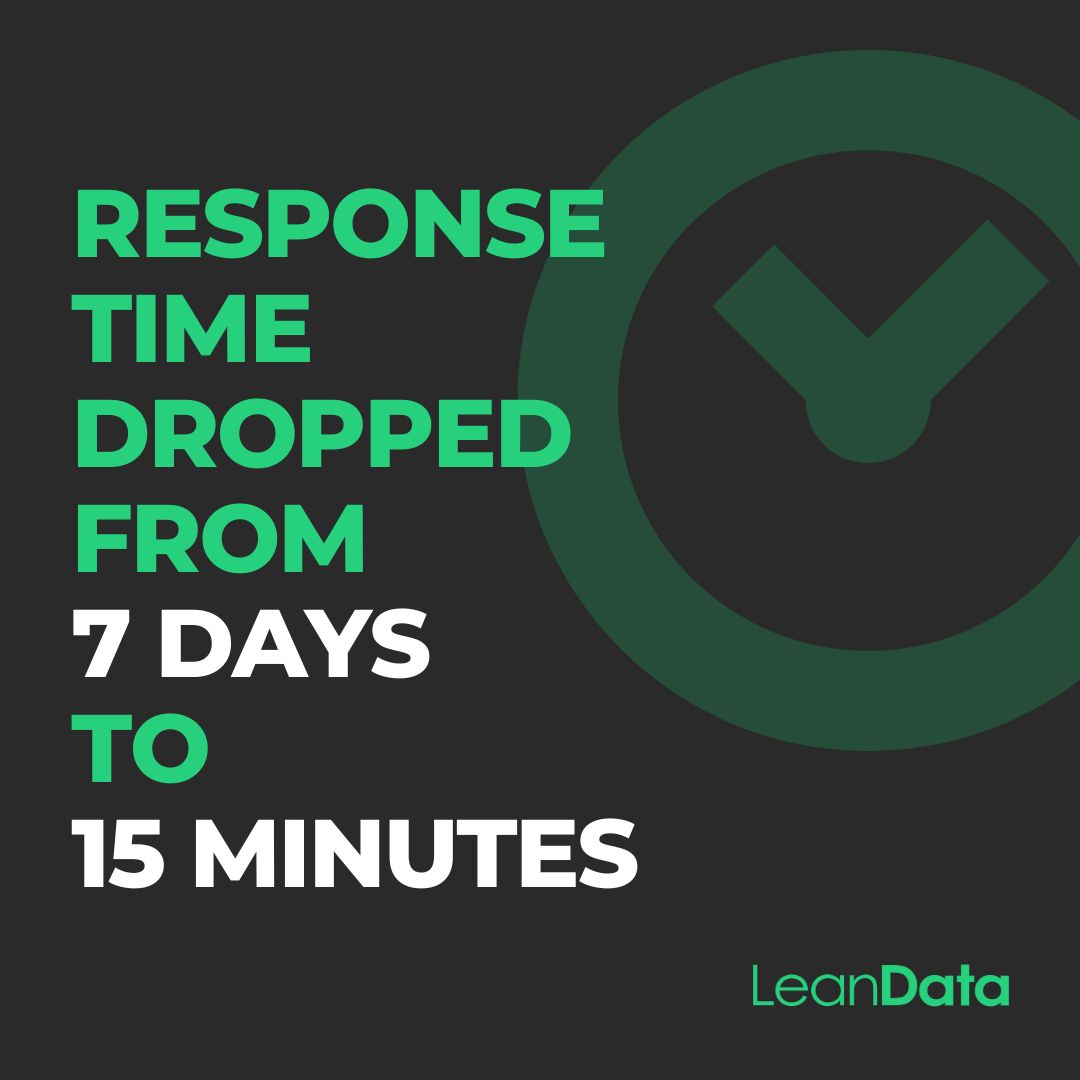
Using LeanData SLAs, Drata established clear response expectations, including a fifteen minute window for high intent accounts. Slack notifications alerted reps and managers when accounts entered their name and Salesforce dashboards tracked adherence across teams.
More importantly, SLAs did not exist in isolation. They connected directly to reporting and weekly conversations between sales and marketing leaders. Consequently, discussions focused on behavior and outcomes rather than opinions.
The impact was immediate. Response time dropped from seven days to fifteen minutes. More importantly, teams trusted the process. Sales leaders knew accounts were being worked. Marketing leaders knew signals were not being wasted.
High growth teams recognize that speed improves when accountability is shared and visible.
4. They build auditability into everyday operations
When something goes wrong, the worst answer is “we don’t know why.”
Drata experienced this painfully when a routing failure left seventy accounts unassigned, representing roughly two million dollars in pipeline. The most challenging part was not the loss itself, but the lack of explanation.
Auditability changed that.
LeanData audit logs allowed Drata’s operations team to see exactly how records moved through routing logic. They identified where changes broke, which assignments failed, and how fixes restored flow. As a result, issues stayed small and visible.
Audit logs also improved trust across teams. When sales managers asked why an account routed a certain way, operations could show the answer. Screenshots replaced speculation and confidence replaced doubt.
High growth teams assume things will change: new employees join, territories shift and logic evolves. Auditability ensures that change does not create blind spots.
Auditability ensures that change does not create blind spots
5. They connect execution to revenue context
Execution without context creates busy work, but the reverse is even worse: context without execution creates analysis paralysis.
Drata bridged this gap by tying signals directly to Salesforce campaigns, which changed how teams worked day to day:
- Qualified accounts entered campaigns automatically
- Campaign status updates reflected real outreach and engagement
- Reporting tied activities directly to pipeline and opportunity creation
As a result, marketing and sales leaders began speaking the same language. Instead of debating lead quality, teams reviewed campaign performance. Instead of guessing which signals mattered, they saw which ones converted.
LeanData supported this flow by automating campaign membership and updates as records moved through routing and follow up stages. Consequently, attribution became part of execution rather than a separate reporting exercise.
High growth teams understand that confidence grows when teams see how daily actions connect to revenue outcomes.
Operational confidence makes complexity manageable
Operational confidence does not eliminate complexity. It makes complexity manageable.
For Drata, confidence meant fewer late night worries about broken routing, clearer conversations across sales, marketing, and operations, and the freedom to experiment without fear.
Enterprise GTM teams face increasing pressure to move faster while managing more signals, regions, and roles. Operational confidence becomes the foundation that allows growth without friction.
And, when GTM teams trust their systems, improvement becomes continuous instead of reactive.
FAQ
What is operational confidence in GTM teams?
Why do enterprise go to market teams struggle with GTM execution?
How do SLAs help improve speed to lead?
How does lead routing impact revenue outcomes?

Kim Peterson
Kim Peterson is the Senior Manager of Content Strategy at LeanData where she digs deep into all aspects of go-to-market strategy and execution. Kim's writing experiences span tech companies, stunt blogging, education, and the real estate industry. Connect with Kim on LinkedIn.