













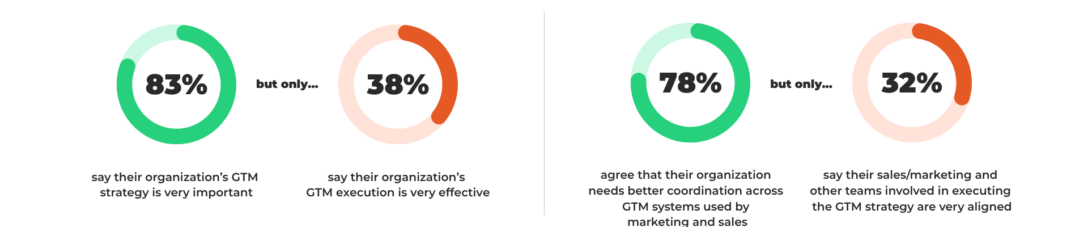
Survey of 522 B2B leaders finds that while 83% say GTM strategy is very important, only 38% rate execution as very effective, pointing to process discipline, team alignment, and technology as keys to closing the divide.
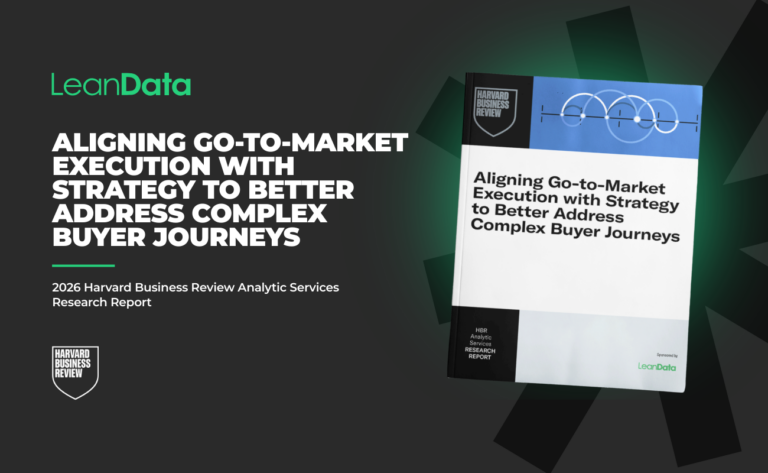
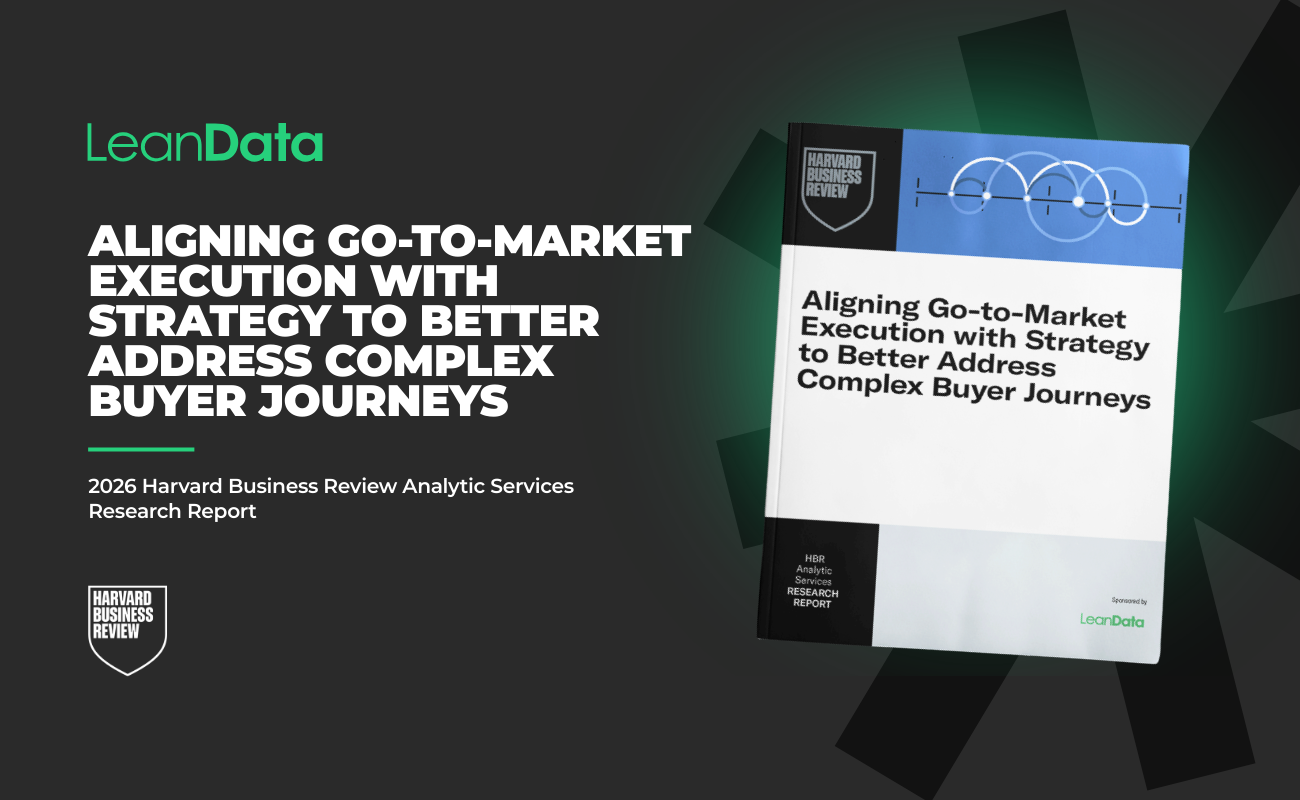
SANTA CLARA, Calif., March 31, 2026 — LeanData, the leader in Intelligent GTM Orchestration, today announced the publication of a new research report by Harvard Business Review Analytic Services, titled Aligning Go-to-Market Execution with Strategy to Better Address Complex Buyer Journeys. Sponsored by LeanData, the report draws on a survey of 522 B2B professionals to examine why so many organizations struggle to translate go-to-market strategy (GTM) into consistent execution.
The findings present a stark picture.
While 83% of respondents say their go-to-market strategy is very important for selling to B2B buyers, only 38% describe it as very effective. Seventy-eight percent agree their organization needs better coordination across GTM systems. All the while, AI is raising the stakes on both fronts.
For enterprise B2B leaders under pressure to drive efficient revenue growth, the report serves as both a warning and a roadmap.
The Execution Gap in an AI-Accelerated Market
Go-to-market execution refers to how marketing, sales, and customer teams coordinate processes, data, and technology to respond to buyer signals across the revenue lifecycle. While strategy defines what an organization intends to do, execution determines whether those plans are carried out consistently and at scale.
The report finds that revenue growth is increasingly determined not by the quality of GTM strategy, but by the ability to execute it across teams, processes, and systems.
Respondents identified improving coordination among sales, marketing, and customer teams as the top lever and the data shows a significant divide between those making progress and those falling behind.
Organizations classified as leaders are significantly more likely than laggards to demonstrate strong cross-functional alignment, clarity on strategy, and effective coordination.
Leaders are more likely to report shortened sales cycles and increased revenue as outcomes of their GTM improvements.
Laggards struggle with misaligned goals, fragmented handoffs and slow response to buyer signals, weaknesses that AI-driven market dynamics are making more costly.
Complexity as the Core Challenge
The report identifies complexity, both buyer-side and internal, as the primary driver of the execution gap. Buyer journeys have grown more intricate, with purchasing decisions increasingly made by cross-functional buying groups rather than individual stakeholders.
At the same time, AI is reshaping how buyers discover and evaluate solutions, compressing decision timelines and creating new channels that GTM teams must navigate. Meanwhile, Sellers are deploying AI to personalize outreach, analyze the flood of signals, and meet buyers across an increasingly non-linear buying journey.
Internally, organizations face fragmented data and siloed teams. Forty-eight percent of respondents cite lack of system integration as a top design challenge, and 43% point to siloed data as a barrier to execution.
These gaps make it difficult to respond to buyer signals with the speed and consistency that modern B2B environments demand.
What Successful GTM Leaders Do Differently
The research reveals a clear formula among high-performing organizations. Ninety-two percent of respondents agree that aligning GTM strategy to the buyer journey is essential, but leaders act on this belief with far greater consistency than their peers.
Leaders treat process as a discipline, not a one-time initiative, and continuously refine how teams work together.
Further, leaders distinguish themselves by defining common metrics and KPIs, clarifying roles and expectations, and aligning on a shared GTM strategy at significantly higher rates than laggards.
Among organizations already using AI, the most common applications include analyzing data for insights, optimizing marketing campaigns, coaching sales reps, refining customer personas, and personalizing content at scale.
The report features perspectives from senior B2B leaders including Chris Dent of Bain & Company, Jen Allen-Knuth of DemandJen, Lauren Daley of Palo Alto Networks, Bob Yang of Adobe, MarTech entrepreneur Jon Miller, and Meagen Eisenberg of Samsara, each offering insight into how enterprise organizations are rethinking execution.
Orchestration as the Foundation for AI-Powered GTM
As demonstrated by many LeanData customers, forward-thinking organizations not only adopt AI, but deploy it within structured, governed processes, using it to enhance coordination rather than creating isolated experiments.
“This research confirms what we hear from enterprise GTM leaders every day: the gap between strategy and execution is where growth stalls,” said Jim Bell, Chief Marketing Officer at LeanData. “The organizations pulling ahead are the ones building real execution infrastructure — leveraging AI without losing control of GTM processes. That’s the next frontier of efficient growth, and it’s where LeanData is deeply focused.”
The Imperative to Act
AI and automation will continue to raise the bar for how quickly organizations must engage buyers. The report makes a compelling case that execution, not strategy or technology alone, is the defining competitive factor. Leaders are building that foundation now: aligning teams, governing AI within shared processes, and investing in orchestration that turns fragmented signals into coordinated action.
For enterprise B2B leaders, the question is no longer whether AI will reshape go-to-market, it already has. The question is whether their execution infrastructure is ready for what comes next.
Download the full report, Aligning Go-to-Market Execution with Strategy to Better Address Complex Buyer Journeys.
About LeanData
LeanData helps B2B enterprises fuel efficient growth by aligning marketing, sales, and customer service execution with the buyer journey. Our Intelligent GTM Orchestration platform acts as the connective tissue across the revenue lifecycle, integrating and normalizing buyer data, automating signal-driven workflows, and delivering AI-powered insights. The result is faster, cleaner execution and the ability to adapt GTM motions with agility without coding. More than 1,000 leading companies and a community of 5,000-plus OpsStars rely on LeanData to achieve speed to lead, higher conversions, accelerated pipeline, and predictable growth by turning buyer signals into coordinated action.
Media Contact
Kimberly Peterson
Senior Manager, Content Strategy
[email protected]