













Summary
Buying groups promise real revenue impact, but how do you get your org on board? In this OpsStars 2025 session, Workiva’s Mikayla Wilson shares a four-step, boots-on-the-ground playbook to secure executive and cross-functional buy-in, validate impact with real data, and ease teams into new day-to-day workflows. Perfect for RevOps, Marketing Ops, Sales Ops, and GTM leaders tasked with moving beyond MQLs to signal-driven GTM orchestration.
Key Takeaways
- Start with “why.” Anchor buying groups in outcomes like higher win rates, larger deal sizes, and better customer experiences to frame a broader revenue process transformation.
- Build a cross-functional Revenue Council. Include Sales, Marketing, Ops, Data, and IT plus key external partners; use quick polls, reactions, and short “listening tour” chats to align fast.
- Make the data undeniable. Pair stellar stats with real account examples and seller voices to overcome data fatigue and build trust.
- Show the daily workflow. Demo the pilot, define scope and metrics, and reduce anxiety by illustrating “what changes for me.”
- Iterate pragmatically. If org readiness lags, start with a “Signal Hub” dashboard for visibility, then graduate to native CRM workflows.
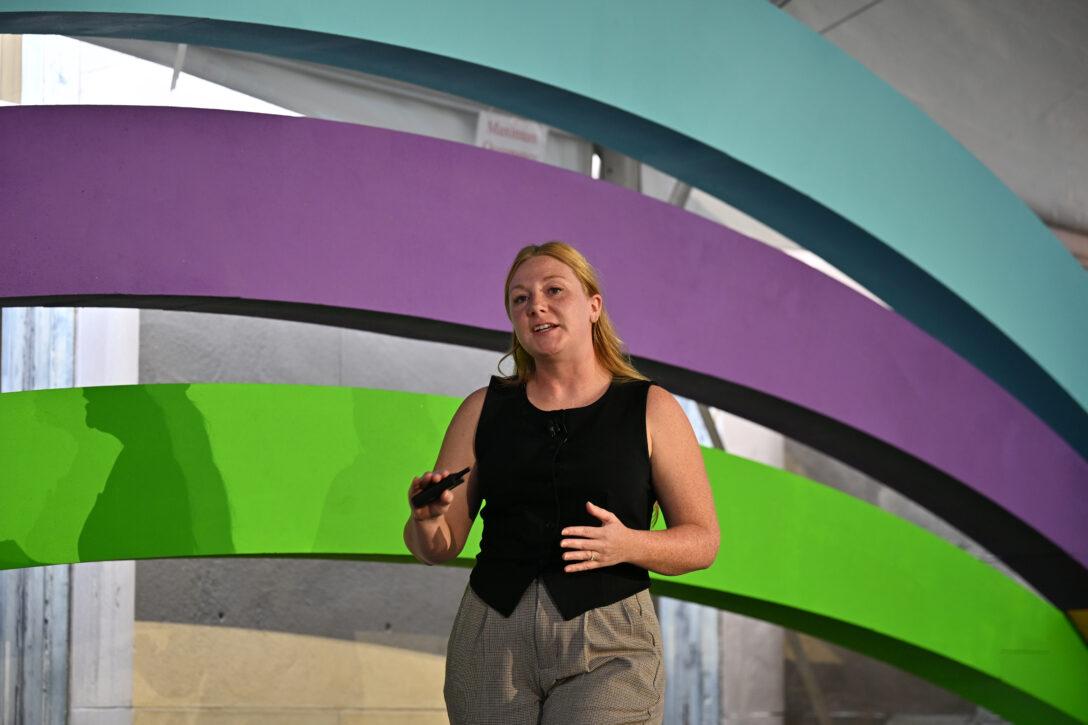
Speakers
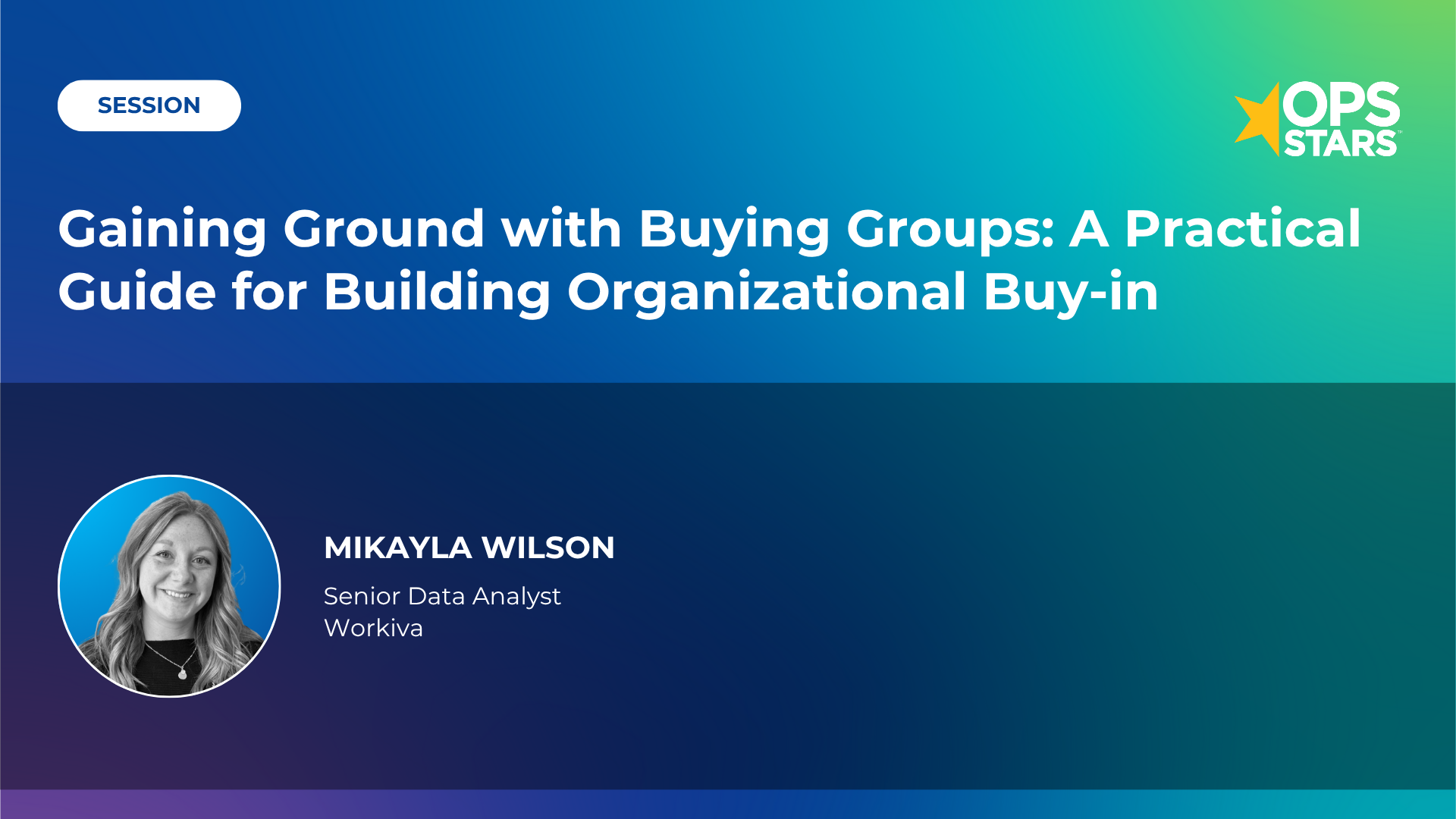
Mikayla Wilson — Senior Data Analyst, Workiva
Mikayla is a data-driven strategist at the intersection of analytics and GTM, focused on turning engagement signals into executive-ready insights and action.
Natalia Kochem — OpFocus
Natalia is the VP of GTM Strategy and Operations Consulting at OpFocus and longtime practitioner helping enterprises operationalize buying groups in Salesforce. Natalia introduced the session and Workiva’s blueprint journey.
What You’ll Learn
Q: How do I build organizational buy-in without a multi-day workshop?
A: Create an internal Revenue Council across functions, run 30-minute sessions with polls and reactions to rapidly surface alignment, then conduct short department listening tours to deepen input.
Q: What data convinces skeptics that buying groups work?
A: Combine assessment-level metrics (e.g., signal-based expansion opportunities) with concrete, named-account examples and a sales co-presenter quote to translate numbers into real pipeline impact.
Q: How should I start if my org isn’t ready for a full buying groups pilot?
A: Launch a lightweight “Signal Hub” dashboard inside existing seller views to create daily visibility and grassroots adoption, then iterate toward native CRM workflows.
Session Transcript
Natalia Kochem
Everyone, I’m here to give a major shout-out to this upcoming speaker. I’m Natalia Kochem from OpFocus. We’ve been guiding and implementing buying groups in Salesforce since 2017, and in my role, I’ve personally been able to work with hundreds of different companies. There are occasions when you meet a client who really sets the bar high—and that’s who this next speaker is for me.
Mikayla Wilson is a Senior Data Analyst at Workiva, and what’s really interesting about her role is that she sits at the intersection of data and strategy. She takes that data, visualizes it, and makes it interesting, meaningful, and actionable for her executives—and that’s such a rare talent.
I got to work with her on a Buying Group Blueprint project for Workiva, which was a complex strategy transformation. What’s very exciting about this next session is that she’s going to share a practical guide to gaining executive buy-in—a fantastic topic. I’m so excited for you all to hear her. Please help me welcome Mikayla Wilson to the stage.
Mikayla Wilson
That was so sweet. I didn’t know I’d come on stage and want to cry. Thank you, Natalia, for that kind introduction.
I’m so excited to have this session with you all today on Gaining Ground with Buying Groups. I’m Mikayla Wilson, Senior Data Analyst at Workiva, and today I want to share a practical guide for building organizational buy-in in about four steps.
Last year, I came to OpsStars and sat in the audience learning about buying groups for the first time. It’s been a year-long journey since then, and I’ve learned a lot—from OpFocus, LeanData, Forrester, Palo Alto Networks, Veeam, NVIDIA, and others. It truly takes a village to implement buying groups.
The steps I’ll cover today are:
-
Frame the “why.”
-
Identify and engage key stakeholders.
-
Compile and present compelling findings.
-
Illustrate the day-to-day impact.
Step 1: Frame the “Why”
I always like to start here. Ever since watching Simon Sinek’s “Start with Why” TED Talk, the concept really resonated with me. If you haven’t seen it, I highly recommend it. Simon says, “People don’t buy what you do; they buy why you do it.”
When we talk about buying groups, the what is the vehicle—it’s the way we execute. But the why is about freedom, growth, and transformation. For buying groups, the “why” is revenue process transformation—connecting buyer signals to GTM execution in a more intelligent way.
Those who’ve implemented buying groups are already seeing measurable outcomes: higher win rates, larger deal sizes, better customer experiences, reduced friction, and new hidden opportunities.
Before moving on, I want to pause and ask: Are you really bought in yourself?
It’s hard to bring others on the journey if you’re not fully committed.
I’ll be honest—at first, I struggled with buying groups. As a data analyst working on marketing-to-sales handoff reporting centered around the MQL, I thought, “If we don’t have MQLs, what am I going to do with my day?” But as I processed it, I realized this was an opportunity to explore a new data set for Workiva—something that could add value and bring impact in ways I’d never seen before.
Step 2: Identify and Engage Key Stakeholders
This is where I draw from Forrester’s concept of a Revenue Council. Build your internal council across functions—Sales, Marketing, Operations, Data, and IT. Include both individual contributors and leaders so you have bottom-up and top-down momentum.
I also recommend involving your external partners early—vendors and consultants. I had the pleasure of working with LeanData and OpFocus on our Blueprint project, and having their expertise was pivotal.
At Workiva, IT owns many of our tech budgets, and we found that including them early was crucial to resolving “build vs. buy” decisions and accelerating progress.
Our council grew to about 30 members—wild, I know—and we couldn’t just issue directives. We had to collaborate. I didn’t have time for multi-day workshops, so I scheduled 30-minute virtual sessions and made the most of them.
To keep things interactive, I used polls and reactions in virtual meetings.
For example, I’d ask:
-
“How many of you are frustrated with our current process?”
-
“Who’s interested in trying something new?”
-
“How important is improving the marketing-to-sales handoff to our revenue growth?”
These polls helped quickly surface alignment. From there, we broke into departmental listening tours for deeper conversations.
We also created a Slack group for our Revenue Council to collaborate asynchronously and started developing a shared language—common terms like “signals,” “personas,” and “title clusters.” This made people feel part of something special, and they loved it.
Finally, I used imagery to make concepts accessible. One example I love is the Goldilocks analogy:
-
Accounts are too big—hundreds of contacts, overwhelming.
-
Leads are too small—you can’t sell an enterprise platform to one person.
-
Buying groups are just right.
Step 3: Compile and Present Compelling Findings
To prove that buying groups weren’t just a theory, I shared examples of thought leadership from Forrester, Palo Alto Networks, Veeam, NVIDIA, and others.
Then I ran a quick internal case study. Using an opportunities-with-contact-roles report, I looked at the last four quarters and compared win rates by group size—one contact vs. two or three. In just ten minutes, we could already see the positive correlation.
With LeanData and OpFocus, we performed a full systems and strategy assessment. The results were impressive—three in five opportunities showed expansion potential from existing signals. Revenue projections increased dramatically.
But I learned that data alone doesn’t always convince people. Many stakeholders experience data fatigue. So I complemented the stats with real account examples and seller stories.
When I talked with Sales, they were surprised to see signals they had completely missed—engagements that were invisible because our system was overly reliant on MQLs. Once they saw it, they were hooked.
I invited sales leaders to co-present with me. One executive said,
“Having visibility into all buying group members could have made our conversations and sales cycles more efficient. We could have supported stakeholders in making a business case together.”
When we modeled potential outcomes, the difference was striking:
-
MQL-based model: under $25 million in projected pipeline.
-
Buying groups model (three or more members): over $80 million.
It was a mic-drop moment. But data and projections alone weren’t enough—we needed to make it tangible.
Step 4: Illustrate the Day-to-Day Impact
People were inspired, but they still had questions: “How will this change my workflow?”
That’s where change management comes in. I demoed what the new process would look like day to day, showing that the shift was actually a small lift for a big gain.
We defined scope, metrics, and expectations—and then reality hit. Workiva wasn’t quite ready for a full native rollout. Like many companies, we were navigating major changes—AI disruption, macroeconomic shifts, and evolving priorities.
So instead of pausing, I pivoted. Inspired by LeanData’s concept, I built a Signal Hub dashboard using our BI tools and embedded it into existing sales views.
It started as a grassroots experiment. I showed it to a few sales reps, and word spread quickly. Soon I was getting messages like:
-
“I check this dashboard every day.”
-
“I showed this to my manager, and they want to learn more.”
-
“Can you present this at our leadership meeting?”
That grassroots excitement became the bridge to our next phase—moving back toward native Salesforce workflows in 2026.
In Summary
We’re gaining ground with buying groups through four simple steps:
-
Frame the “why.”
-
Identify and engage key stakeholders.
-
Compile and present compelling findings.
-
Illustrate the day-to-day impact.
And remember: change takes time and iteration, so give yourself grace along the journey.