













Summary
Traditional funnels struggle to keep pace with modern buyer behavior. In this OpsStars 2025 session, leaders from Qualified and Pendo show how AI SDR agents reshape inbound, nurture, and conversion to remove friction and increase speed to lead. You’ll leave with five concrete use cases you can pilot now, plus a clearer view of how GTM orchestration adapts around buyers, not forms.
Key Takeaways
- Forms are failing your buyers. 97% of website visitors do not fill out forms, so most demand never hits your CRM.
- Rules-based nurture underperforms. Only 16% of marketers rate nurture programs highly. This is a signal to rethink marketing automation platform-heavy journeys.
- Follow-up is too slow. Human SDR cycles average hours (sometimes days), and 39% of marketing leads never get contacted.
- One agent, full-funnel impact. AI SDRs capture, nurture, and qualify in real time, working every lead, around the clock.
- Personalization lifts results. Pendo saw a major jump after moving to an agentic model, including ~4× more meetings through this channel.
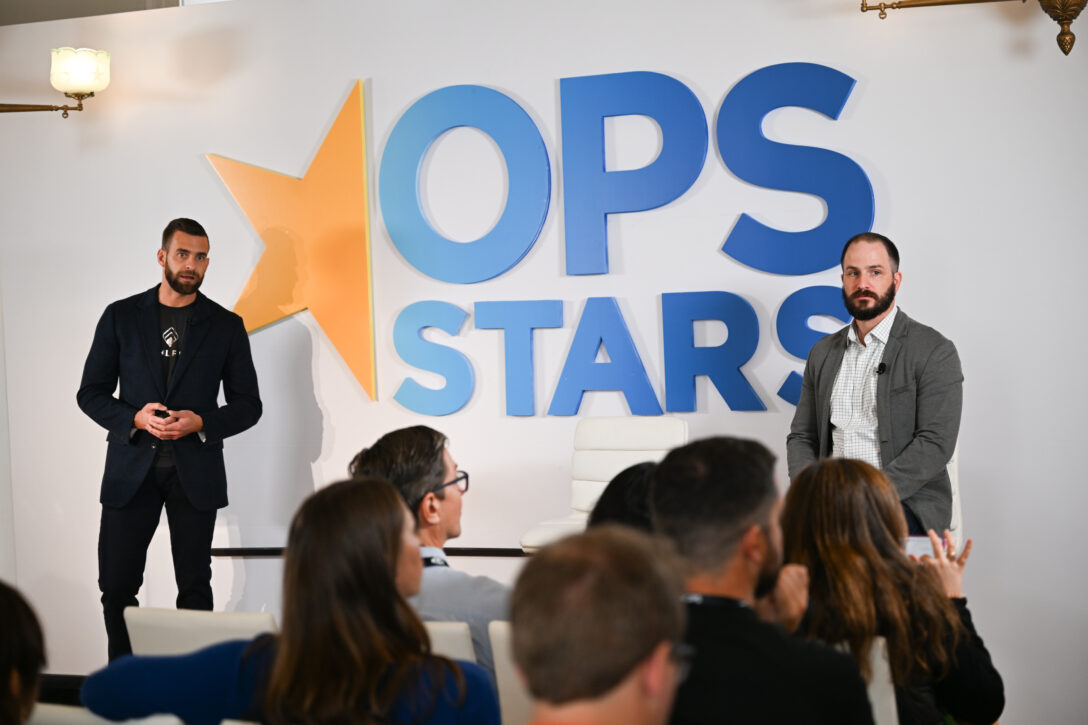
Speakers
Kieran Snaith — VP, Revenue Operations, Qualified
Kieran leads RevOps at Qualified, focusing on pipeline acceleration and AI-driven inbound motions.
Ryan O’Shea — Director, Marketing Technology & Operations, Pendo
Ryan oversees martech and operations at Pendo, applying AI and automation to improve speed to lead and buyer experience.
What You’ll Learn
Q: Why is the traditional marketing lead funnel breaking?
A: It relies on rigid systems and human capacity limits: buyers avoid forms (97%), marketing automation platform nurtures are low-impact (only 16% rate them highly), and 39% of leads never receive follow-up.
Q: What changes with an agentic funnel?
A: An AI SDR works every inbound lead 24/7, holds contextual conversations across web and email, autonomously nurtures, and books meetings instantly — improving both capture and conversion.
Q: Where should we start?
A: Pilot one of five starter plays: website conversations, instant email follow-up, omnichannel continuity between inbox and site, VIP handling for open opps, or instant capture and routing for net-new leads.
Session Transcript
Kieran Snaith
All right. Hi everybody. Thanks for being here today. The session that we’ll be going over today is AI Agents in Action: How to Accelerate the Buyer Journey. Quick introductions here. My name is Kieran Snaith. I run Revenue Operations at Qualified, and I’m joined by Ryan O’Shea, Director of Marketing Technology and Operations at Pendo.
So what we’re going to be talking about today, first and foremost, is the collapse of the traditional marketing funnel. It has relied on rigid systems, outdated strategies, and has always been impacted by human capacity. We’ll be talking about the rise of the agentic funnel, this new age where AI SDRs and AI agents are able to play a role in the marketing funnel, drive efficiencies, and get you to results.
And then, last but not least, we’re going to be doing a customer chat with Ryan here. We’ll talk about how Pendo made the switch from a traditional marketing funnel to an agentic funnel.
Before we look forward, let’s look back. The traditional marketing funnel has served us really well over the past decade or so. We’ve relied on this heavily inside of marketing and sales operations and have counted on it as the way that we go to market. It served us relatively well for 15 years, but since then it has become obsolete. We haven’t seen a lot of innovation here. Buyer behavior has shifted, and the traditional marketing funnel has not moved with it.
It’s extremely fractured, relying on outdated technology and outdated processes. Countless companies are still relying on web forms today, and this probably looks familiar to a lot of folks. If you’re driving demo requests or contact sales through a form, they’re really outdated. They’re disruptive to buyer behavior. The ultimate statistic here is that only 3% of buyers are actually engaging. You’re spending time and money to drive them to the website, however that may be via advertising or webinars, and the result is missed leads. Ninety-seven percent of people do not engage with your forms.
Historically, we’ve relied on marketing automation platforms to manage nurture campaigns. This is time-consuming for many reasons. Your business changes—maybe your corporate messaging or product offerings change. It’s not simple. You now have to redo all your nurture and messaging. It’s extremely time-consuming for your marketers and marketing operations team, and your content becomes outdated quickly, especially in this fast-moving world.
Maps are not able to dynamically adjust for your specific buyers and their journey. You have set paths—if this, then that—and they follow that track. Not only is this a time suck, marketers don’t like it. Only about 16% of marketers and marketing ops actually say that this is an efficient way to generate pipeline and engagement today.
Even if a buyer does submit a form, you’re introduced to madness. You’re stringing together three to six systems in order to make it happen. You fill out a form, score that lead, route it through your systems, and these systems need to talk to one another accurately. At the end of all this, the average response time is an hour and a half.
We contacted ten of the largest and most successful SaaS startups and did a secret shopper exercise, where my CEO filled out forms and we timed how long it took them to make contact. The average was an hour and a half. We were shocked that these brands were dealing with this issue.
Even when you get through all this madness, it comes down to the SDR issue—capacity. You’re running all of these flows, maybe finally getting them to your SDR or BDR team, but they have limited capacity. You start to deal with issues like, “I’m too busy. Only give me the quality leads.” Only 39% of leads are actually contacted.
We’ve relied on the traditional marketing funnel for the better part of 15 years. It served us well, but it’s not adjusting or moving. We continue to rely on web forms, and only 3% of website visitors are engaging. Managing lead nurture with maps is arduous, and only 16% of the people that own those tools say it’s effective. The human SDR follow-up is slow.
Most of my career, I’ve managed inside sales teams or had a hand in those processes. It’s very difficult to get them to work 100% of what you’re trying to generate. So we’re constantly prioritizing and shifting to solve for the SDR, and this is ripe for change.
Let’s talk about the rise of AI. Things have moved rapidly. It took about ten years for enterprise to adopt SaaS, four years to embrace mobile, but in the last two years, we’ve seen rapid movement to AI. It’s had a foundational impact on our personal lives, and now we’re seeing adoption within the enterprise.
Two years ago, we were thinking about AI differently. The first transformation was Copilot—assistive workflows that help humans do tasks faster or better. Then we moved to Autopilot—autonomous workflows that complete tasks with clear parameters. Now we’re in the world of agents—fully autonomous systems that can reason and act without human intervention.
When we look at adoption, software development and engineering lead the charge. Support and service follow, but marketing and sales are neck and neck for third place. The number one driver of adoption in sales and marketing is AI SDRs.
Enterprises are spending a lot of money on teams only working 39% of leads. This category is growing fast. Mid-market and SMBs were early to it, but over the last 12 to 18 months, enterprise adoption has exploded.
Agents can transform the funnel by reducing friction and capturing new leads, nurturing top-of-funnel leads dynamically, and converting bottom-of-funnel leads—all with one agent. The agent works around the clock, doesn’t take PTO, doesn’t get sick, and becomes your best SDR.
Agents reduce the silent majority on your website by engaging in real-time conversations. Humans doing this through chat programs are expensive and often not performing their best work. AI allows conversational interfaces that scale, with settings to control tone, aggressiveness, and goals.
Having real-time conversations over text, voice, and video is what humans would do, and that’s what we’re bringing to market today.
AI SDR agents can autonomously nurture buyers using your go-to-market data inside your CRM and marketing automation platform. The agent makes dynamic decisions—what pages they visited, where they dwell, what questions they asked—and builds specific nurture tracks. The content is always personalized.
Buyers can bypass long wait times and asynchronous scheduling. They can instantly book time and get exactly what they need.
The AI revolution is happening at a pace we’ve never seen before. AI SDRs are transforming the funnel, capturing more leads autonomously, and eliminating capacity issues.
Here are five use cases where you can leverage an AI SDR today:
- Engage leads in face-to-face conversations on your website. The AI SDR taps into CRM and marketing automation data, providing full context of who the individual is.
- Follow up with and nurture inbound leads over email. The AI follows up in real time without complex routing.
- Deliver a seamless omnichannel experience. The same brain emails and chats, aware of buyer context and segment, creating consistent engagement.
- Deliver a VIP experience for valuable buyers. The agent references CRM data to personalize interactions and dynamically adjust tone or goals.
- Instantly capture, qualify, and route new leads. It identifies unknown buyers, matches them to ICPs, creates new accounts and leads, and routes to the right salesperson.
At Qualified, our AI SDR is named Piper. We have over 1,500 five-star reviews on G2 and a five-star rating on the Salesforce AppExchange. Most recently, we were named the AI Conversation Automation Wave Leader by Forrester. Piper works across website and email to deliver a true omnichannel experience.
Customers have seen major results: Greenhouse saw $27 million in influenced pipeline and $4 million in revenue in one year; Gainsight saw a 4x increase in engagement and 2x SDR capacity; SUSE saw $16 million in pipeline in just three months.
Now, I’m joined by Ryan, who has moved from a traditional marketing funnel to an agentic one. Ryan, thanks for joining me today. How are you doing?
Ryan O’Shea
Great, thanks. I lead the marketing operations team at Pendo, and part of my job is to use technology and AI to make our go-to-market motion more efficient. At Pendo, we help companies measure and optimize the way users interact with software, both internally and externally, and map which workflows could and should become agentic.
When we looked at our go-to-market motion, we wanted to optimize how we used AI and agents to maximize efficiency. We had a chatbot that wasn’t performing well and wanted to improve that experience.
Kieran Snaith
Great. What have you seen change in your business since driving this shift?
Ryan O’Shea
With a traditional chatbot, we had to script every question and response. It was cumbersome for our team and clunky for visitors. Even with a great SDR team, traditional lead follow-up takes hours or days, and prospects move on. Speed to value is king.
By bringing in an AI SDR—ours is named Penny—we changed our inbound workflow. Instead of SDRs manually triaging and qualifying, the agent handles it upfront. Visitors interact with the agent, do research, and by the time they meet with a rep, they’re further along. Sales reps can focus on building relationships and moving deals forward.
Kieran Snaith
How do SDRs and BDRs feel about the technology?
Ryan O’Shea
At first, there was fear of being replaced by AI, but once it was built into workflows, they realized it removed manual work. They can focus on what gets them paid—creating and closing opportunities. It’s been a positive experience.
Kieran Snaith
I’ve seen that too. Event follow-up and outreach used to be the bane of my existence—herding cats.
Speaker 2
Now they don’t have to close manually anymore. We dynamically send on their behalf.
Speaker 1
Yeah, it’s had a really good impact.
Speaker 3
Great.
Kieran Snaith
We’ve got about two minutes left. Any questions from the audience?
Kieran Snaith
We support about 20 languages today. I don’t have the list memorized, but at our front booth we can give you a demo. You can also go to the website and ask Piper, “What languages do you support?” and she’ll give you the list.
Speaker 3
One of the biggest issues with chat is initial engagement.
Ryan O’Shea
Yes, and that’s why we switched to an agentic solution. Before, our chatbot asked the same question every time and engagement was low. Now, the agent uses context—persona, segment, tone—and our website visitor-to-interaction conversion rate is much higher. We’re getting 400% more meetings booked through this channel.
Kieran Snaith
At first, message-to-conversation and conversation-to-meeting rates were on par with humans, maybe slightly lower. But after training and improvements, they matched human performance. The real gain comes from volume—you can now address 100% of website visitors.
Kieran Snaith
We have a UI called Visitor 360. It pulls in all data from your CRM, marketing automation, and enrichment providers. If we know the account is LeanData and the person doesn’t exist in Salesforce, it can push that record automatically. We read and write records deeply, handling custom and standard objects and fields.
Kieran Snaith
As for Intercom—it’s founded in support, and we often see customers use both tools. Intercom for support, us for go-to-market and marketing. Intercom is great but less suited for pipeline generation.
Kieran Snaith
For capturing contact info, we use a smart form. We just ask for an email and enrich the rest on the backend. Many customers use enrichment vendors for additional data.
Audience Member
How do you measure success?
Kieran Snaith
I use account engagement rate—how many accounts targeted versus meetings set. Ten percent is fantastic. We usually sit around eight and aim for ten. On the contact level, around 2.5 to 3% is really good. If you look at the entire funnel, not just MQLs, expect closer to 1.5%.