













Summary
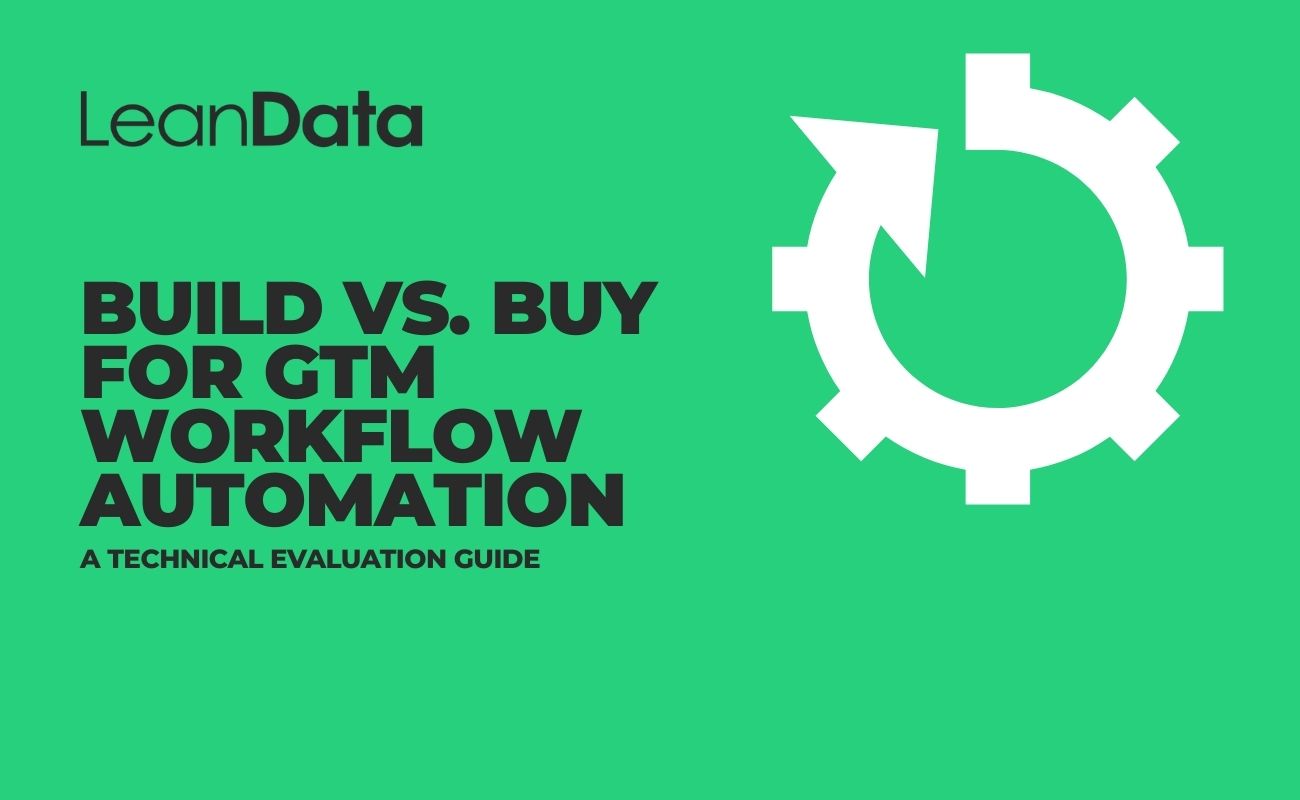
Build vs buy decisions for GTM workflow automation have become architectural decisions for enterprise teams. As buyer signals multiply and Salesforce logic spreads, IT and Ops leaders face growing risk tied to performance, governance, and long-term scalability.
What You’ll Learn
- How distributed Salesforce automation increases long term CRM risk
- Why GTM workflows behave like architecture, not configuration
- Where performance and governance issues emerge at scale
- How centralization improves visibility and change management
- What to evaluate when choosing between build and buy
When GTM Automation Stops Scaling Quietly
Modern go to market execution no longer runs on simple lead assignment. Every buyer interaction creates a signal, and every new system introduces logic, dependencies, and failure points. Over time, distributed automation turns the CRM into a patchwork that is harder to understand, test, and change with confidence.
Enterprise teams feel this shift first in Salesforce. Custom Flows grow. Exceptions accumulate. Debugging slows. Even small updates begin to feel risky because the full path of execution is no longer clear.
Distributed automation often increases operational risk as systems grow, not because teams lack skill, but because logic has no single home.
“LeanData is much better than standard Salesforce routing. It’s visually easy for most to understand and use, and allows us to do some really complex matching.”Dean Rosenberg
Why Distributed Logic Creates Long Term Risk
When routing, matching, SLAs, and lifecycle rules live across Salesforce Flows, triggers, and external tools, ownership blurs. Audit trails disappear. Changes introduce regressions. IT inherits technical debt that grows quietly release after release.
What Centralized Orchestration Changes
A centralized orchestration layer creates one governed place for GTM workflow execution. Logic becomes visible. Performance becomes predictable. Changes move through a controlled lifecycle from sandbox to production without breaking existing processes.