















A lead’s first twelve hours
Watch a single lead move through a well-built stack, and the automation is impressive right up until the moment it stops.
9:14pm. Someone at a target account fills out a demo request. LeanData matches the record to the right account, checks territory and segment, and assigns the owner. Nobody is awake.
9:15pm. FlowBuilder enrolls the prospect in the Salesloft Cadence built for that persona, under the rep who owns it, with exit conditions already set.
8:02am. The rep opens Salesloft. Rhythm has already sorted her day, and this prospect sits near the top with the context attached.
8:31am. She connects. The prospect is real, the timing is right, and he wants to talk to someone who can go deeper on the technical side.
8:32am. Everything stops.
She needs an AE on the phone or on the calendar in the next minute. First she has to work out which AE, and that answer lives in Salesforce. So she goes to get it, finds the account, checks the owner, and comes back.
The eleven hours before that moment were fully automated. The ninety seconds after it were not.
When the meeting belongs to someone else
Booking your own time is one problem. Booking someone else’s is a different problem, and it is the one that stalls at 8:32am.
Salesloft schedules meetings well, and reps use it constantly. When this SDR wants time on her own calendar, she books it in Salesloft and never thinks about it again.
This moment asks for something more involved. The meeting belongs to an AE she has not identified yet, and identifying him means resolving territory, segment, round-robin capacity, coverage exceptions, and the account match that connects this lead to the rest of its buying group. Those rules live in Salesforce, where LeanData governs them.
BookIt brings that decision into the moment. It resolves ownership against the same logic that routed the lead in the first place, books against the right AE’s live availability, and writes the result to Salesforce with attribution and a full audit trail. The rep looks nothing up, because the answer arrives with the booking.
Salesloft keeps her in the workflow. LeanData makes sure the meeting lands where it belongs, and leaves a record of why. The two do different jobs, and a handoff at this speed needs both.
What we built
LeanData BookIt now runs natively inside Salesloft.
Reps launch BookIt Handoff from the Salesloft Person record. Mid-call, the rep opens BookIt where she already is. LeanData resolves ownership using the rules your team configured, books the meeting with the right AE, and writes it back to Salesforce with attribution intact. She never asks the ownership question, because it was answered before she got there.
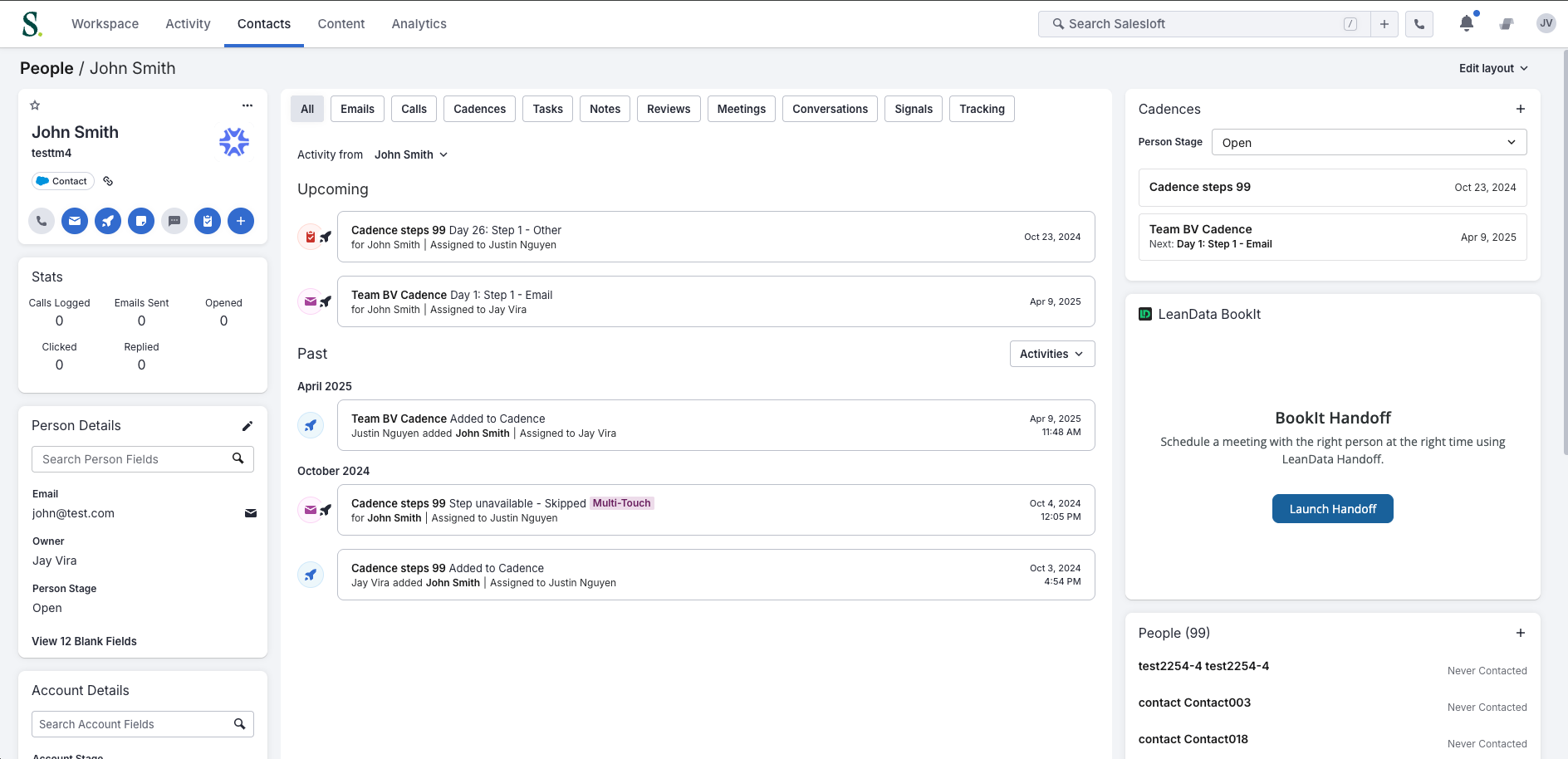
Reps add BookIt Invite availability inside the Salesloft email composer. Live time slots drop into the message the rep is already writing, whether that is a Cadence step or a one-off reply. The prospect picks a time, and the meeting routes and books itself.
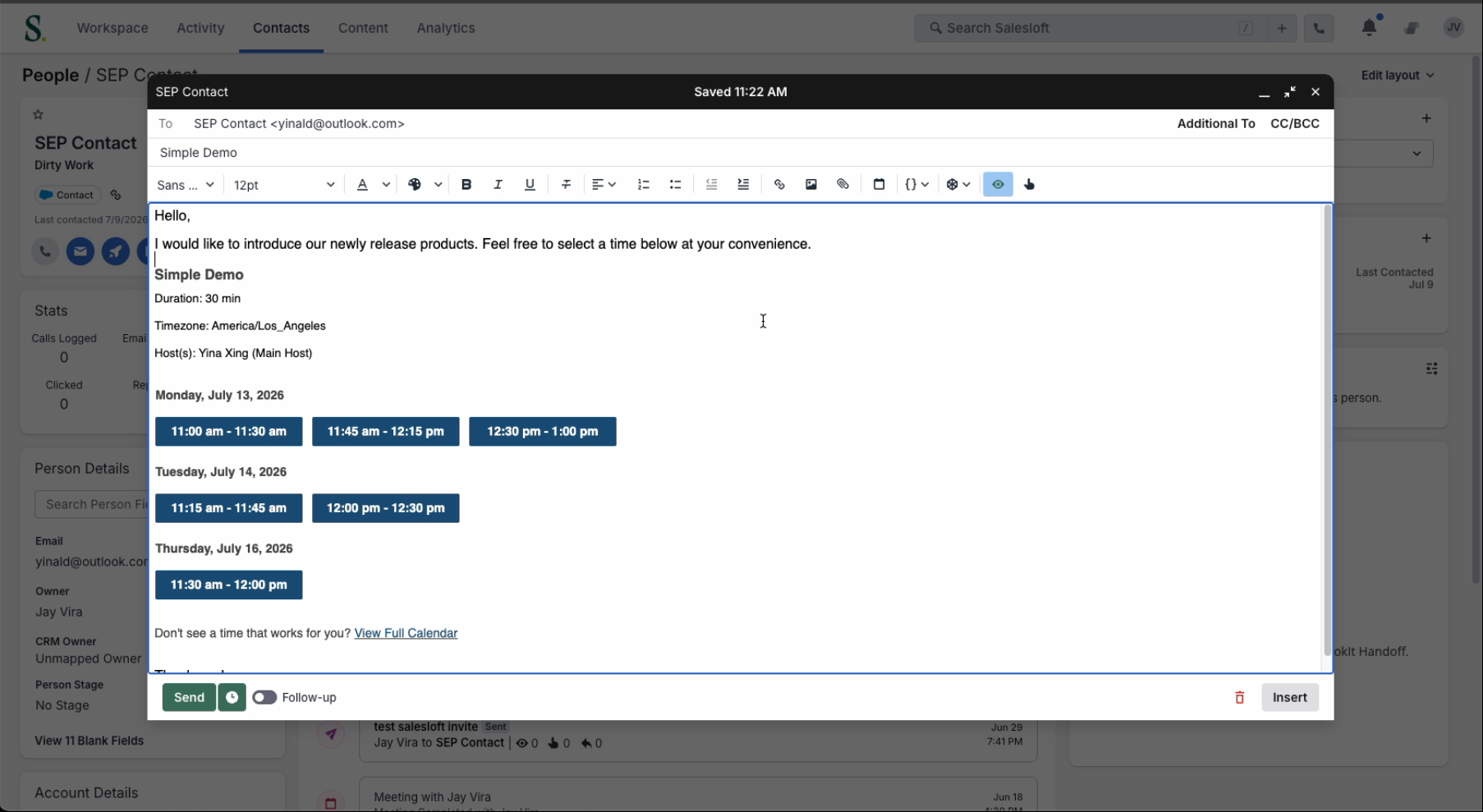
An admin installs it from the Salesloft Marketplace. Existing BookIt handoff and routing settings apply on install, so nothing needs rebuilding.
Why the fourth step was the hard one
The first three steps in that lead’s morning are deterministic. Match the record, apply the rules, enroll in the Cadence. Software is good at those.
The fourth step is a judgment call executed under time pressure, and until now it required a human to go look something up. Every one of those lookups is a place where the process slowly degrades. The rep guesses. Or she books with whoever she knows. Or she promises to send times later and the thread goes cold. None of it appears in a pipeline review as a failure. It appears as meetings that never happened.
Closing that step changes what the whole chain is worth. A routing engine that gets ninety-five percent of the way to a booked meeting is worth considerably less than one that finishes.
This gets more important as agents enter the motion
More of the top of that timeline is becoming automated by things that are not rules. AI SDRs qualify and hand off. Scoring models decide what deserves attention. Intent platforms surface accounts nobody asked about.
All of it produces output that has to reach a person and trigger the right action, which is precisely where most stacks break. LeanData sits between the signal and the action, applies the same governance whether the trigger came from a form, a rule, a rep, or an agent, and logs every decision in Salesforce so you can explain it later.
A booked meeting is one of the most valuable actions in that chain. It should follow the same rules as everything else, and you should be able to audit how it happened.
Four steps, complete
Salesloft is where sellers run their day. LeanData decides who should act and makes sure the action lands.
Together the sequence now runs end to end. A signal creates the record. LeanData routes it and enrolls it in the right Cadence. Rhythm tells the rep when to work it. BookIt books the meeting with the right owner, without the rep leaving the workflow or an admin reconciling anything afterward.
What to do next
Already using BookIt and Salesloft: Find LeanData in the Salesloft Marketplace and install it. Your existing settings carry over.
New to BookIt: Request a demo and we will walk through routed scheduling inside your own motion.
See what changes for your team
FAQ
How do I install LeanData BookIt in Salesloft?
What can reps do with BookIt inside Salesloft?
When would I use BookIt instead of scheduling directly in Salesloft?
Does this replace the existing LeanData Salesloft integration?
Do I need to reconfigure routing?

Jill Makin
Jill Makin is a Content Marketing Specialist at LeanData. Her content expertise includes B2B SaaS marketing across industries including fintech, healthcare, enterprise orchestration, and more. Connect with Jill on LinkedIn.