















Summary
Modern B2B purchases are led by buying groups, not lone leads. In this OpsStars 2025 session, Forrester’s Amy Hawthorne breaks down a practical, low‑cost playbook to identify, engage, and orchestrate buying groups using the tools you already have. Ideal for RevOps, Marketing Ops, Sales Ops, and GTM leaders who want to improve conversion rates and buyer experience without a major tech stack rebuild.
Key Takeaways
- Prioritize buying groups over individual leads. Filter lead reports by account to spot multi‑contact engagement and focus rep time where a purchase is most likely.
- Map personas to buying roles. The same persona can be a decision‑maker in one scenario and an influencer in another; tailor messaging to the buying context.
- Attach contacts to opportunities. Connect signals to contacts to opportunities to see who accelerates deals and where they stall.
- Train SDRs for concierge‑style conversations. Use observed signals to invite the right stakeholders and add value instead of rigidly qualifying.
- Form a Revenue Council. Meet to fix process handoffs and signal access (not to review pipeline numbers) and run small, low‑risk pilots.
- Move from static to dynamic, AI‑assisted orchestration. Let cross‑channel signals trigger next best actions across Marketing, Sales, and Customer Success.
Speaker
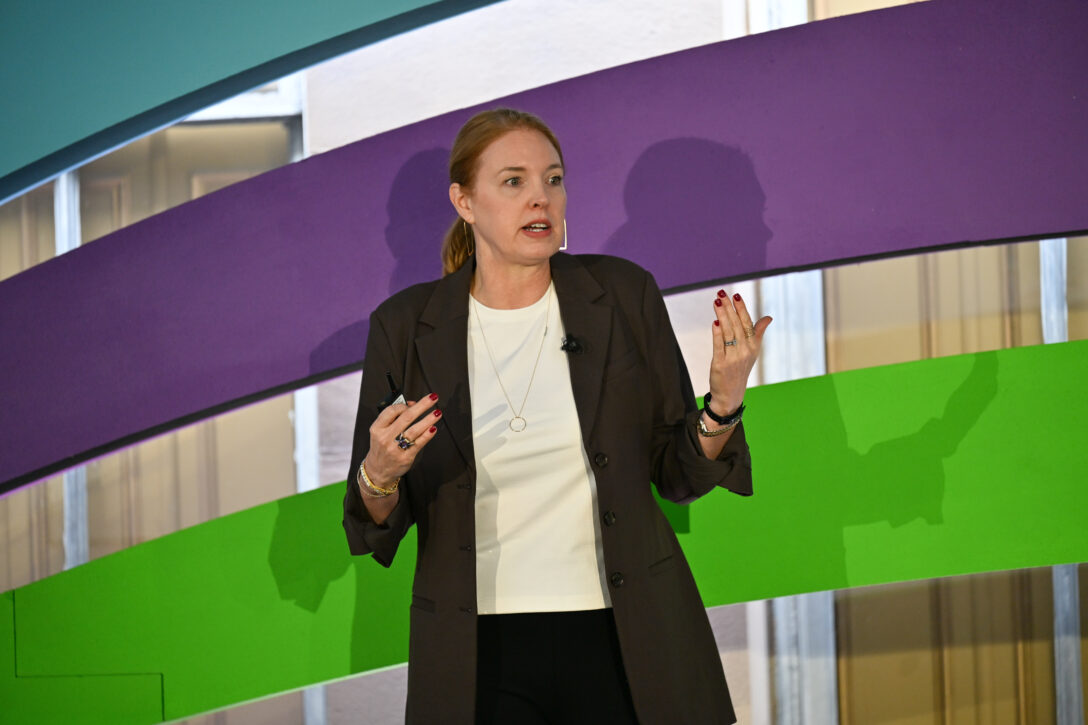
Amy Hawthorne — VP, Principal Analyst, Demand/ABM Strategies, Forrester
Amy advises B2B leaders on modern demand strategy and buying‑group execution, blending practitioner experience with Forrester research.
What You’ll Learn
Q: How do I identify active buying groups with the data I already have?
A: Add an account filter to lead/MQL reports to find accounts with multiple engaged contacts around the same solution. Prioritize those accounts for outreach and progression.
Q: What changes most improve seller connection rates?
A: Shift SDR/BDR enablement from strict qualification to concierge‑style assistance: reference observed signals, invite the likely stakeholders, and route to experts quickly. Connect those contacts to the opportunity so patterns (e.g., which roles speed velocity) are visible.
Q: How can we orchestrate across the lifecycle, not just acquisition?
A: Use a signal → trigger → action model across Marketing, Sales, and Customer Success. Signals like event registration, competitive intent, stalled stage, or low product usage should trigger targeted content, sales plays, or CS interventions.
Session Transcript
Amy Hawthorne
Hi there. So I forgot about the seventh-grade piece. My joke with the seventh grade is I actually was a seventh-grade teacher, and being a seventh-grade teacher helped me deal with salespeople. What do salespeople care about? Themselves. What do seventh graders care about? Themselves. So as a longtime marketer and once a quota-carrying seller, I learned a lot as a seventh-grade teacher way back when about how we position things for sales and ultimately for our customers as well.
I feel like Katie kind of stole a lot of my show this morning. I’m so excited that we are so aligned on all things buying groups. If you’re in this session, you are probably here because you already accept that the individual is not your buyer. They’re working with a group of people. There’s a champion, a decision maker, and an influencer who’s helping. There’s somebody ratifying that decision, asking, “Is this the right decision we’re making?” All of them have different roles, different jobs in this buying context, and are often on different teams in the organization as well.
Every year, Forrester does a buying journey study, asking B2B buyers and purchasers what that experience was like. Here are some of the things they tell us. On average, there are 13 people in a buying group inside a company. That could be lots of users, people influencing the process, integrating technology, or those who are the output for those pieces. Depending on the solution you’re selling and the size of the organization, that number will vary. Also new data shows nine people outside of the organization influence the buying process—partners, peers, competitors, customers, analysts like me, and AI tools. They’re getting information about you and your products and services before you ever engage.
One of my favorite stats: 60% of those purchase influencers are under the age of 45, like most of you here. You’re all digitally native. Most of you probably text your parents more than you call them. You go online to make reservations rather than call. Our buyers have changed, and we have to change as well.
Not only have our buyers changed, the process has changed too. Seventy-four percent of sellers tell us their buyers are showing up more informed. They’re doing research. They’re not calling and asking, “Where are you located? What do you sell? Who’s on your leadership team?” They already know those things. Ninety-two percent of those buyers have a vendor in mind before they get started—one or more vendors—before they even start a buying process. Are you showing up on their radar before they begin? And 81% of buyers are dissatisfied with that experience, even with the provider they chose. Why? Because we’re trying to pull them into our process. We make them fill out forms, talk to SDRs, or sit through demos when they just want to talk to a product person. They already have most of the information they need and a short list of questions, but we force them through our internal steps. They’re not happy. They’re dissatisfied.
Here’s what our buying and selling process used to look like. The buyer would do some research, identify themselves, and we’d call them an MQL. We would all cheer. That meant a lot of different things to different people. Some said it was based on a complex scoring model. Others said they downloaded a white paper. Either way, we celebrated because we got a name and could add a tally mark—we did our job. We’d hand that MQL to our SDRs and sellers and say, “Have at it.” But now, that process looks very different. That buying group is doing a lot of research before they ever engage. Seventy percent of that journey is done before they ever talk to a seller. They’re doing research, creating a shortlist, and only then having conversations. SDRs aren’t getting as many connections as they used to. How many of you are feeling that?
Nobody’s putting their mobile number on forms anymore. That’s why SDRs aren’t connecting. Yet we’re still asking for that information, putting bad data into our systems, and wondering why it’s not working.
Takeaway: buyers are in control. That shift in control is breaking down the processes we architected 20 years ago. As Evan said about MQLs—how many of you are still driving your car from 20 years ago? None of you. Technology has evolved. How many of you are still using your cell phone from 20 years ago? Probably not. We’ve evolved, and our processes need to evolve too.
So how do we do that? I’ll share some step-by-step things you can do today, and they’re all free. I steal this line from my friends at Palo Alto Networks, who are up next. Everything they’ve done has been free—changing processes, looking at existing technology through a new lens.
First, are you able to capture and connect signals? My guess is yes. Most of you are capturing buying interactions, intent signals, and account signals and can connect them to accounts and buyers. Next, if you changed your MQL reporting and put an account filter on it, could you see buying groups? Yes. If you delivered 1,000 leads that resulted in 700 accounts, you should prioritize the accounts where multiple people are engaged. That’s where buying cycles are happening.
Next, train your SDRs to have different conversations. I like to say more “concierge-like” conversations. Ask, “Are you finding the information you need? Can I connect you with a product expert?” rather than immediately qualifying them. Help and add value. Let them know you’re available when they have a question, rather than forcing your process onto them.
Also, teach SDRs and sellers to use signals. If multiple people are engaging from an account, ask about it. For example, if Amy and Alice both come through, the SDR should ask, “Are you working with Alice? Should we include her in the next conversation?” The response gives you insight. If Alice is a leader and should be included, that’s validation of an active buying cycle. If they don’t know each other, that’s also a signal—two separate motions within one account.
Are you able to attach buying group members to opportunities? Tools like LeanData and Demandbase help with this. The sooner we connect signals to contacts and contacts to opportunities, the better we understand what accelerates deals and what stalls them. If deals move faster when both Amy and Alice are engaged, that’s powerful insight. These patterns help us improve future programs, seller enablement, and customer experiences.
Start by finding a partner—a sales leader or team willing to experiment with you. Use your existing tools and data. Then consider forming a revenue council. This isn’t about pipeline numbers. It’s about process breakdowns and handoffs—identifying where things get stuck or sent too early. The goal is efficiency, and you can do this with what you have today.
Everyone’s done persona work. Now map personas to buying group roles. Your role can change depending on the buying scenario. As a marketing leader, I might be a decision maker for ABM technology but an influencer for CRM decisions. Persona traits stay constant, but buying roles shift by context.
Inventory the signals you have today—social interactions, website activity, campaign engagement, intent data, sales interactions, and soon, customer success signals. Remember, 75% of B2B revenue comes from existing customers. Look at how all these signals connect to show who’s buying, who’s engaged, and where they are in their process.
Once connected, look across programs to identify patterns. If Amy and Alice are engaging with the same solution, how are you packaging that up for the seller? Everything I’ve discussed so far can be done for free, just by looking at data differently.
Now, the AI part. We call this the Forrester Opportunity Lifecycle. If you’re familiar with SiriusDecisions and the old waterfall, this includes the post-sales stages too. Once we sell, we’re responsible for onboarding, satisfaction, advocacy, and retention. Today, marketers handle pre-sales, sellers lead the pipeline, and customer success manages post-sale. Now we need AI to unify these.
We’re moving from siloed, static programs to agile, full-cycle ones. From rules-based to trigger-driven. From pre-planned to signal-responsive. Buyers know we track them and expect timely, relevant engagement.
For example, if someone registers for a webinar, marketing should send a save-the-date and perhaps invite them to a related local event. In the pipeline stage, if a deal stalls, a signal might show they’re looking at a competitor—time for a tailored follow-up. In customer success, signals like non-usage or champion turnover matter most. It’s easier to keep a customer than win a new one.
Think about the full lifecycle—marketing, sales, and customer success aligned to each stage. Each buyer action should trigger an appropriate play. If a customer is up for renewal, should CS check in? Should marketing launch a nurture? Should sales reach out?
Takeaway: you can do this. You have the power, the data, and the tools. Start by finding a partner. Work differently and show results. Early adopters are seeing 20% to 50% higher conversion rates from marketing to SDR meetings and from SDR meetings to close. Don’t go at it alone. Form a revenue council. Optimize processes. Start small, show success, and scale.
Map personas to buying groups, avoid over-messaging multi-solution buyers, inventory your signals, align visibility across teams, and use data to trigger coordinated next actions. Technology isn’t the silver bullet—process is. Build the process first, then apply technology to support it.
Finally, be a change agent. The world is moving fast. Don’t get stuck. Be the one to say, “There’s a better way.” Use AI thoughtfully to create a true 360-degree customer view. Yes, it’s possible—you just have to architect it with intention.
Thank you.