















Summary
Buying Groups reflect how enterprise B2B buyers make decisions, but adoption depends on how teams execute. This article shares a practical path for building a Buying Groups motion through buy-in, visibility, and iteration.
Buying groups adoption does not start with software, dashboards, or workflows.
It starts with how go to market (GTM) teams think about the buyer journey and how revenue actually moves through the organization.
Enterprise GTM teams that succeed with a Buying Groups motion take a practical approach. They focus on alignment before automation. They build belief before redesigning processes. And they treat buying groups as a shared GTM motion, not a one-team initiative.
The following recommendations reflect the perspective of Mikayla Wilson, Senior Emerging Marketing Operations Manager at Workiva, informed by direct involvement in an enterprise scale shift to a Buying Groups GTM motion.
Step 1. Start With the Why, Not the Model
Buying groups gain traction when teams understand why the change matters.
Instead of introducing buying groups as a framework or methodology, successful teams connect them to outcomes leaders already care about. They talk about revenue process transformation and consistency across the buyer journey.
As Wilson stated, “Buying groups is the what. It’s the vehicle. And there are a lot of different ways that we can implement buying group strategies or roads we can take how to do it. However, when it comes to the ‘why‘ for buying groups, it’s for revenue process transformation.”
This framing shifts the conversation.
Teams stop debating definitions and start aligning on outcomes. Consequently, buying groups feel relevant to executives, operations leaders, and GTM teams alike.
 “Buying groups is the what. It’s the vehicle. And there are a lot of different ways that we can implement buying group strategies or roads we can take how to do it. However, when it comes to the ‘why’ for buying groups, it’s for revenue process transformation.”
 Mikayla Wilson


Step 2. Build Shared Ownership Across GTM Teams
Buying groups touch every part of the revenue engine:
- Marketing surfaces early signals
- SDR teams qualify interest
- Sales builds relationships
- Operations maintains structure and visibility
- Leadership evaluates progress
Enterprise GTM teams that succeed treat buying groups as a cross functional effort from the start.
One effective approach is forming an internal revenue council. This group includes marketing, sales, operations, data, and leadership. It also includes individual contributors alongside executives. That mix matters because it creates momentum from both directions.
Shared ownership leads to shared language. Teams begin using the same terms to describe buying groups, opportunities, and signals. Over time, that language reduces confusion and speeds alignment.
Step 3. Use Internal Data to Create Belief
External research helps frame the shift to buying groups, but internal data builds confidence.
Enterprise teams often start with a simple analysis. They look at opportunities with one contact compared to those with multiple contacts and patterns emerge quickly. Many B2B GTM teams find that win rates improve as buying group participation increases and missed signals become visible.
When systems center on leads, GTM teams lack a holistic view of buying signals across the group. Buying groups consolidate that context around opportunities.
Wilson shared, “In our current model based on the MQL, we were projecting we would generate under 25 million in potential pipeline. However, when we took our data and moved into a buying groups model with three plus members, we were going to project over 80 million in potential revenue and pipeline.”

Step 4. Make Buying Groups Feel Manageable Day to Day
Buying groups adoption accelerates when teams understand how daily work improves.
Enterprise GTM teams want clarity:
- What changes tomorrow?
- What stays the same?
- How much effort does this require?
Breaking buying groups into visible, incremental shifts helps answer those questions. Wilson shared that in her experiences with Workiva GTM teams, “It was a very small lift for a very great gain.”
Many organizations begin with visibility. They surface buying group signals inside tools sales teams already use. Then, reps see who else is engaged at an account, conversations become more informed and confidence grows.
Workflow changes often follow visibility. Teams adapt naturally as they see value in shared context.
Step 5. Progress Through Iteration, Not Perfection
Enterprise GTM environments rarely offer perfect conditions for change. System migrations, organizational shifts, and market disruption create delays.
Successful teams do not wait for ideal timing. Instead, they find ways to keep moving.
Wilson explained that a full Buying Groups motion launch was paused due to broader disruption. So, instead of stopping completely, the team focused on visibility and learning. Dashboards integrated into existing views created organic adoption through word of mouth.
As Wilson stated, “Change takes time and various iterations. Give yourself grace on this journey.”
How LeanData Supports a Buying Groups Motion
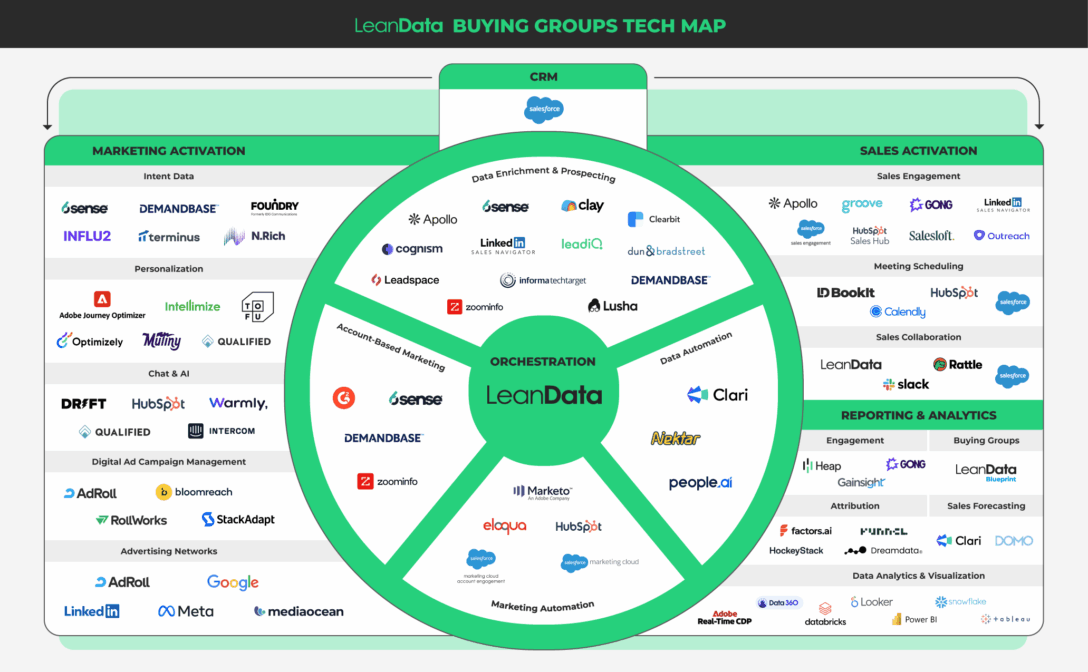
Buying Groups work when teams can identify the full buying committee early, understand how engagement builds across roles, and carry that context forward as opportunities take shape.
The challenge for many enterprise teams is operationalizing this inside systems built for leads or individual contacts.
LeanData supports a Buying Groups Motion by connecting insight to execution directly in Salesforce.
Buying Groups Blueprint analyzes historical opportunity data to uncover who actually influenced past deals, not just the contacts manually added. It surfaces patterns around buying group completeness, missed stakeholders, deal size, and win rates, giving GTM leaders a clear business case and a shared baseline for alignment .
Once that foundation is set, Buying Groups Edition brings buying groups into day to day execution. LeanData’s Buying Group Journey object unifies engagement signals from marketing, sales, and third party systems into a single pre opportunity view.
Teams can see who is engaged, which roles are missing, and how momentum is building before an opportunity exists.
As Buying Groups qualify, LeanData routes them to the right team while preserving full context, allowing marketing and sales to work in parallel without losing visibility or ownership.
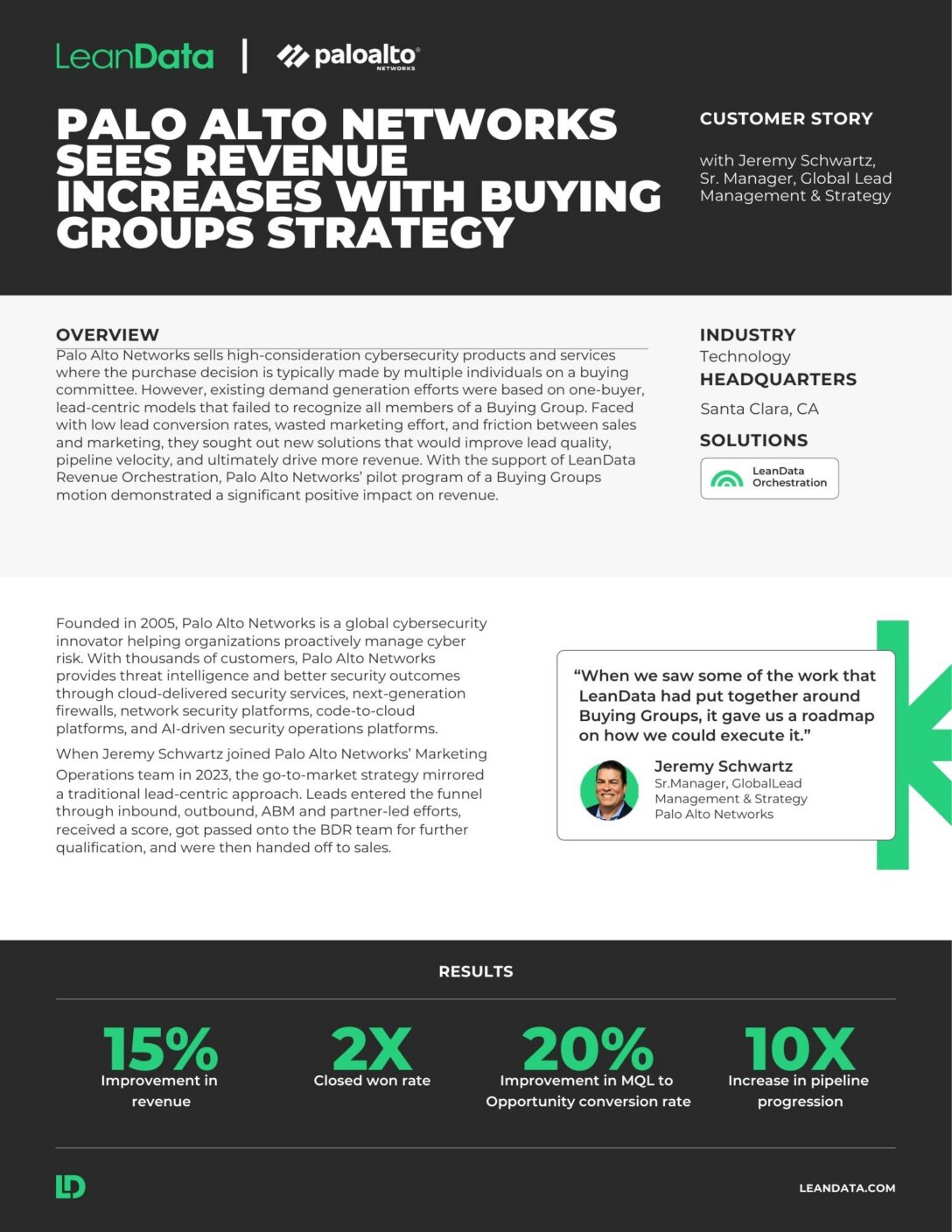
Curious about the results? Read our buying groups case study with Palo Alto Networks.
Building Momentum That Lasts
Buying Groups do not succeed because teams get everything right the first time. They succeed because teams stay committed to learning, adjusting, and moving forward together.
Enterprise GTM teams that make progress start where they are, focus on visibility, and let understanding build over time.
The shift to a Buying Groups Motion often surfaces gaps that were already there. As teams gain clearer insight into who is involved, how engagement is forming, and where signals get lost, conversations improve, decisions become easier and momentum follows.
For enterprise GTM teams willing to take a practical, patient approach, Buying Groups become less about transformation and more about clarity. And clarity, over time, is what allows execution to scale.
FAQ
How do enterprise teams start adopting a Buying Groups motion?
Does a Buying Groups GTM motion require a full system overhaul?
How do teams prove buying groups value internally?
Can a buying groups adoption happen gradually?
Want to see how Buying Groups would look in your GTM motion?

Kim Peterson
Kim Peterson is the Senior Manager of Content Strategy at LeanData where she digs deep into all aspects of go-to-market strategy and execution. Kim's writing experiences span tech companies, stunt blogging, education, and the real estate industry. Connect with Kim on LinkedIn.