















Summary
Veeam transformed its go-to-market strategy by shifting from traditional lead scoring to a B2B Buying Groups Motion, delivering an 86% pipeline increase and 46% larger deal sizes. Learn how enterprise teams can orchestrate complete buying groups in Salesforce.
Key Takeaways
- Traditional lead scoring isolates signals and creates manual work that doesn’t scale across your organization.
- A B2B Buying Groups Motion shifts focus from individual prospects to complete committees, revealing account-level intent.
- Automating signal matching in Salesforce turns scattered intent into reliable buying groups that sellers trust.
- Clean data and proper deduplication form the foundation for reliable buying group orchestration.
- Companies that align sales and marketing around buying groups see significant improvements in pipeline, deal size, and sales cycle length.
Signals everywhere, insight nowhere
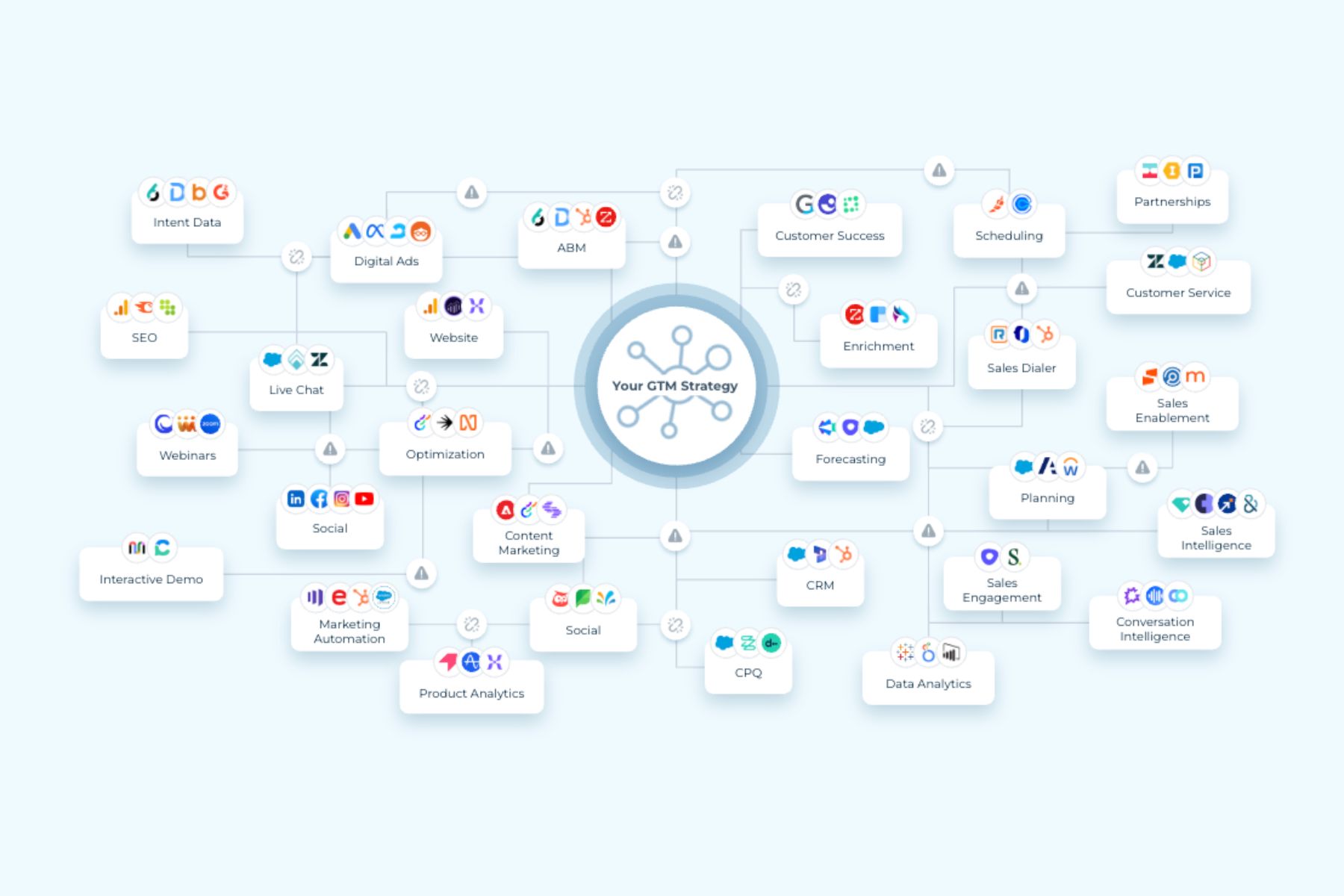
Your marketing automation platform shows you individual engagement signals. Your sales team sees scattered leads across multiple accounts. Nobody has a complete picture of who’s actually involved in the buying decision.
This fragmented view of buyer activity costs revenue operations teams countless hours of manual work each week. Plus, it leaves sales reps chasing leads that may already be engaged through other channels.
The result is wasted effort, missed opportunities, and pipeline that never reaches its potential.
Veeam faced this exact challenge.
Revenue teams were managing lead scoring through Marketo, which worked fine for tracking individual engagement. However, the signals remained isolated.
When a prospect from Company A showed interest in one product and another prospect from the same company engaged with a different solution, the SDR team had to manually piece together that these people belonged to the same buying committee.
Consequently, the team spent enormous time on administrative triage instead of strategic outreach.
“We wanted to have a process in which automation helps our SDR function and does part of the manual work that the SDR team was doing before. The data was there, but it wasn’t served up in a way that helped our sellers.”Dan Roth
The problem With traditional lead scoring
Traditional lead scoring operates at the individual level.
A prospect opens an email, downloads a resource, or attends a webinar, and their score increases. Next, another prospect from the same company engages with different content, and their score increases separately. Then, a third decision maker visits your pricing page. Each signal exists in isolation.
This approach creates several operational headaches:
Fragmented visibility: Sales teams cannot see account-level intent because the system shows only person-level activity
Manual connection work: SDRs must manually search for related prospects and piece together buying committees
Scalability problems: As your prospect base grows, the manual work multiplies and becomes unsustainable
Missed re-engagement opportunities: Stale opportunities remain dormant even when fresh signals indicate renewed interest from the buying committee
Inefficient resource allocation: Operations teams spend time on data cleanup and lead routing instead of building strategic processes
Veeam’s team recognized that this model no longer served their growth goals. The company needed a fundamentally different approach, one that treated buying groups, not individual leads, as the core unit of focus.
Shifting to a buying group model
Rather than continuing to optimize lead scoring, Veeam decided to embrace buying group orchestration. This shift required transformation across people, processes, technology, and programs. Plus, it demanded a change in mindset from both marketing and sales teams.
First, Veeam established a global SDR organization with consistent processes. Next, the team developed persona-driven content and targeting that guided buyers through their journey based on their role within the buying committee. Then, they implemented orchestrated digital marketing programs designed to surround key accounts with relevant messaging across multiple channels.
“We wanted to stop doing traditional lead scoring and think a little bit bigger. We wanted to make connections between intent from multiple individuals working for the same company and expand on that at a broader level.” Dan Roth

The foundation for this transformation rested on clean data.
Veeam invested in deduplication and field mapping to create a reliable starting point. As a result, the global sales team trusted the data flowing into their systems. Without this foundation, buying group orchestration would have failed because sales reps would have questioned the accuracy of the groups being formed.
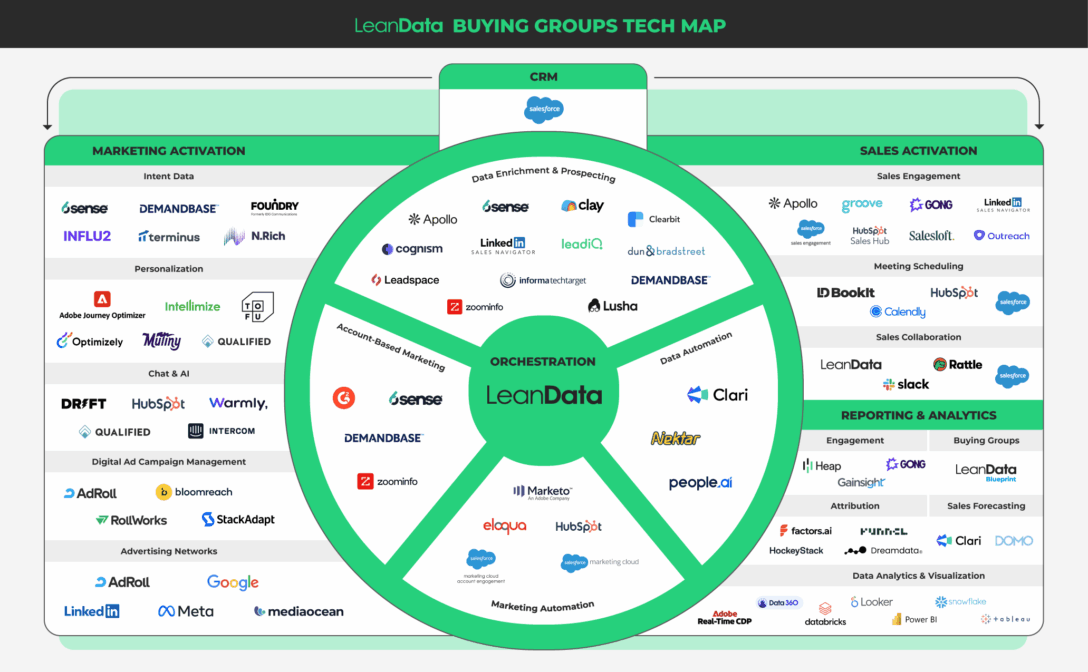
Building buying groups in Salesforce
Once Veeam established clean data foundations, the company implemented a buying group process that operates across three key dimensions: signal capture, intelligent matching, and automated alerts.
Capture the Right Signals
Veeam uses scoring across different engagement levels and product-specific intent tagging to identify prospects ready to engage. The system captures signals from marketing interactions (email opens, content downloads, event attendance) and sales activities (calls, meetings, proposals). Plus, it incorporates intent data from third-party sources to understand which accounts are actively researching solutions.
Match Signals to Opportunities
Here is where the buying group model differs fundamentally from traditional lead scoring.
When a new signal arrives, the system automatically matches it to existing opportunities or creates new ones if none exist. Consequently, related prospects get connected to the same opportunity record, forming a complete buying committee view.
Veeam’s team also discovered the power of recycling stale opportunities. Instead of creating duplicate opportunities, LeanData refreshes a dormant deal when new intent appears, so sellers re-engage with context rather than starting from scratch.
This prevents the common problem of prospects falling through the cracks when initial conversations stall.
Build Roles Inside Buying Groups
Buying groups require clarity about who plays what role. Veeam identifies each buying committee member’s function, whether they are decision makers, influencers, champions, or economic buyers. Plus, the system identifies gaps in the committee. If your buying group lacks a decision maker, the SDR knows to hunt for that person before moving forward.
“Within a buying group, you have a number of persons being added to it, with their function. Maybe there’s a gap there. Maybe there’s a persona that’s missing, and maybe that persona is literally the decision maker. SDRs would have to hunt for it. Instead, automation did its job and served a full buying group to the SDR. ”Dan Roth
The operational shift
Implementing buying group orchestration creates a significant operational shift. Instead of manually triaging leads and matching prospects to accounts, operations teams build the logic that automates these tasks. Consequently, they transition from administrative work to strategic architecture.
Veeam’s marketing operations team gained the ability to build and iterate complex processes without relying on Salesforce developers or waiting in long ticket queues.
- First, they established the rules for signal scoring.
- Next, they configured the matching logic that connects prospects to opportunities.
- Then, they set up alerts that notify sales when buying committees change or new members engage.
This self-service capability accelerates implementation and enables continuous improvement. As the team learns what works, they refine the rules and processes in real time.
The results speak for themselves
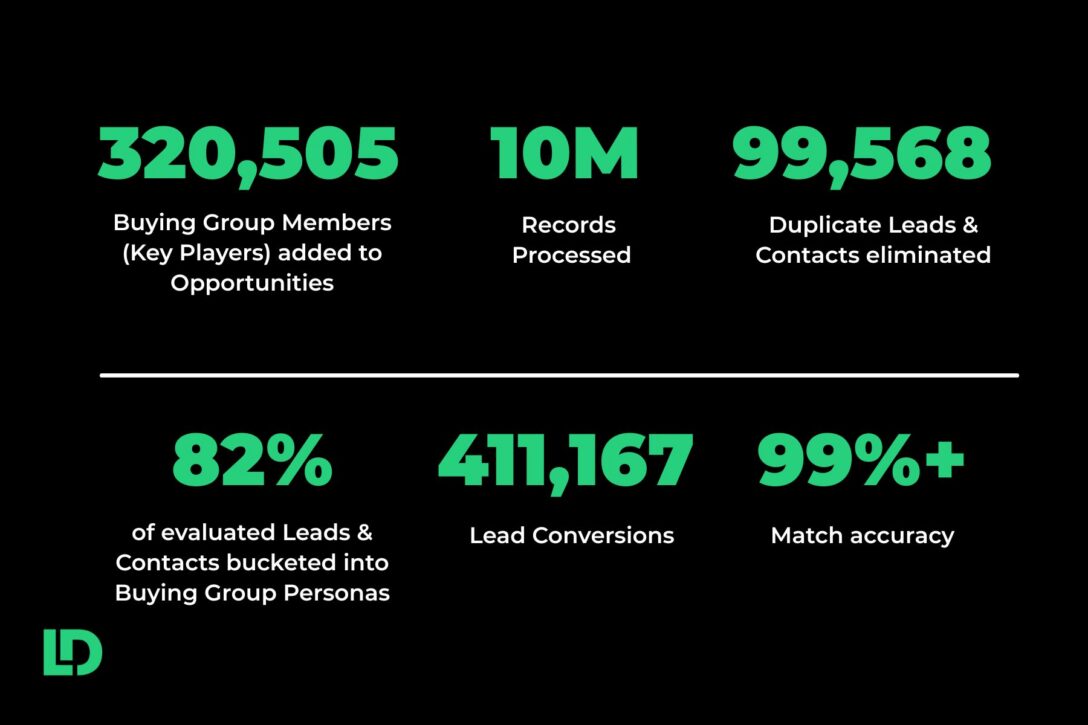
Veeam’s transformation from a lead-centric model to buying group orchestration delivered substantial business impact:
86% increase in pipeline
46% rise in average opportunity size
41% growth in the value of won opportunities
40% shorter sales cycle
7% increase in new opportunities
These results demonstrate that buying group orchestration delivers more than operational efficiency. It fundamentally changes how your organization engages with complex B2B buying committees, resulting in larger deals, faster sales cycles, and stronger pipeline growth.
“Having all of our marketing and sales teams aligned to the Opportunity and all thinking about pipeline, was a huge win for us. We were able to increase the amount of pipeline that we were generating at the top of the funnel, which ultimately leads to more close won business. ” Courtnie Luetke

Getting started with buying groups
If your organization still relies primarily on individual lead scoring, the path forward begins with honest assessment:
- First, examine your current data quality. Do you have confidence in your deduplication and field mapping?
- Next, evaluate your technology stack. Do your current tools support account-level views of prospect engagement?
- Then, assess your team’s readiness. Are marketing and sales aligned around the concept of buying groups, or does your sales organization still think primarily in terms of individual leads?
The shift to buying group orchestration requires investment in technology, process design, and team alignment. However, the returns justify the effort. Companies that successfully implement buying group models report substantial improvements across pipeline, deal size, sales cycle length, and revenue growth.
Veeam’s story shows that the difference is not more signals, but better orchestration inside Salesforce.
Curious About a Buying Groups Motion?

Kim Peterson
Kim Peterson is the Senior Manager of Content Strategy at LeanData where she digs deep into all aspects of go-to-market strategy and execution. Kim's writing experiences span tech companies, stunt blogging, education, and the real estate industry. Connect with Kim on LinkedIn.