














Summary
Buying Groups are now the dominant reality in enterprise B2B sales. This resource explains how Intelligent GTM Orchestration enables a Buying Groups Motion to move from theory into consistent execution across marketing, sales, and operations.
What You’ll Learn
- Why incomplete Buying Groups slow deal progression
- How historical opportunity data exposes missed revenue
- What it takes to track Buying Groups before opportunities exist
- How GTM teams stay aligned across complex buying journeys
- Where execution breaks when a Buying Groups Motion lacks orchestration
Why Buying Groups Demand a New Execution Model
Enterprise buying decisions have always involved multiple stakeholders. What has been missing is a system that can recognize, track, and coordinate those stakeholders across the full buyer journey. Lead-centric and account based approaches struggle once engagement spreads across roles, teams, and timelines.
Organizations that analyze historical opportunity data consistently see the cost of incomplete Buying Group visibility. In Mastering Buying Groups with LeanData, you’ll see how early adopters of a Buying Groups Motion report up to a 2X increase in closed won rates and meaningful gains in pipeline progression when all stakeholders are identified and engaged early.
From Visibility to Execution
A Buying Groups Motion begins with understanding who actually influences deals. Historical opportunity analysis reveals missed roles, delayed engagement, and disconnected signals that quietly slow revenue. Making those patterns visible creates the foundation for better GTM decisions.
Orchestrating the Buying Group Journey
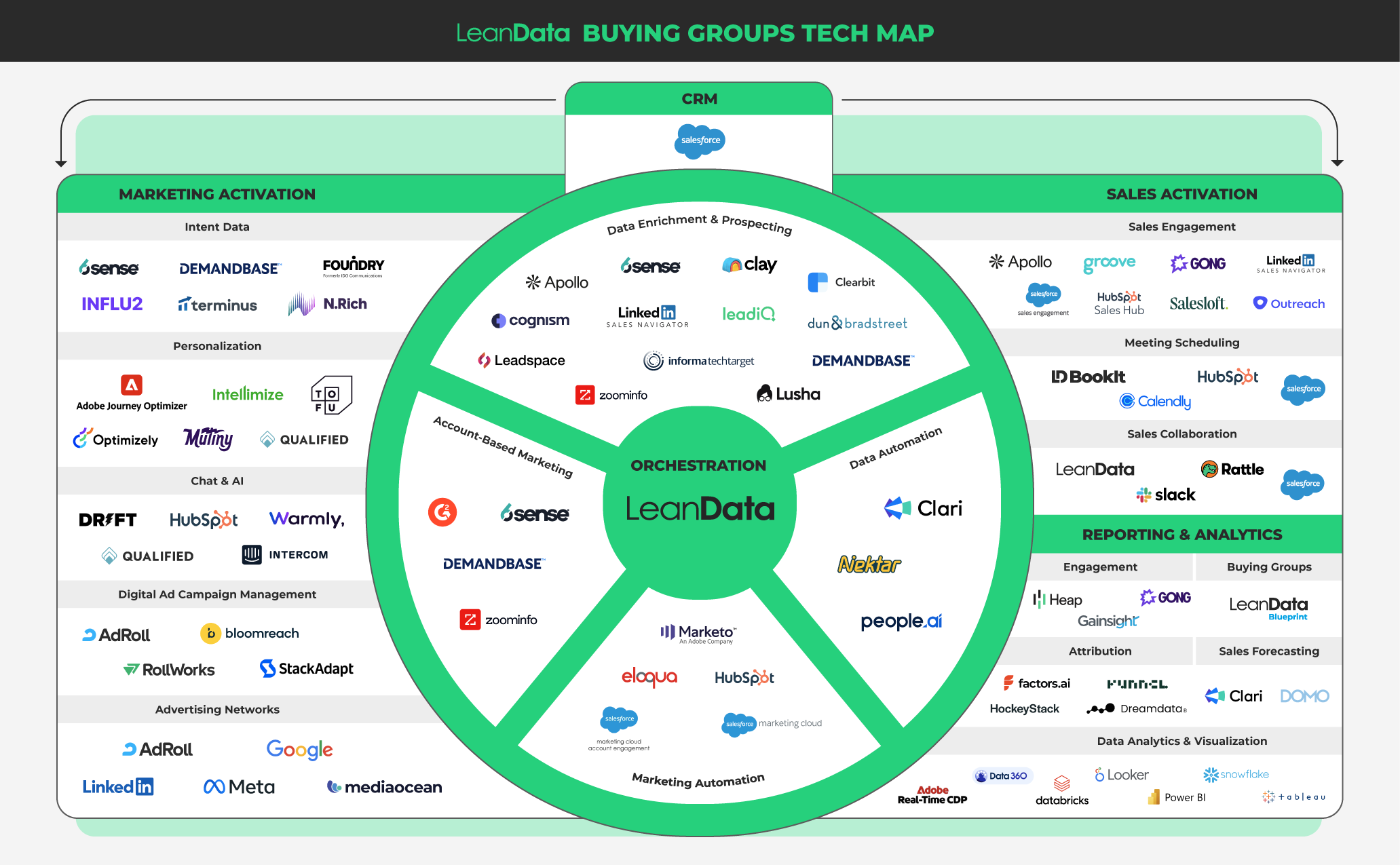
Once Buying Groups are defined, execution depends on coordination. Signals from marketing, sales, and third party systems must align around the group, not individual leads. When Buying Group journeys are tracked before and after opportunity creation, teams reduce blind spots and maintain momentum through complex deals.
 “LeanData is like a Swiss army knife. We use it for data quality, for routing, and now for Buying Groups.”
 Jeremy Schwartz