













Summary
Business process documentation gives AI agents the rules they need to act consistently: who owns an account, when an SLA applies, what to do when a handoff fails, and when to stop. Clean data tells AI what to work on. Documented, encoded business rules tell it what to do next. Without both, GTM teams end up with agents that make confident guesses instead of on-policy decisions.
What You’ll Learn
- Why clean data alone doesn’t guarantee good AI decisions
- What happens when AI agents act without documented GTM rules
- The four traits of AI-ready processes
- How to check whether your GTM processes are ready for AI
Go-to-market (GTM) teams have invested heavily to improve their data foundations. They’ve cleaned up records, matched leads to accounts, removed duplicates, connected signals, and set up buying groups.
That work matters. But it doesn’t solve the next challenge: giving AI agents clear rules for what to do with that data. Business process documentation is the next piece that provides the rules agents use to interpret information and determine what action to take.
Even with accurate account information, an agent can make the wrong decision when those rules aren’t clearly defined. For example, clean data can tell an agent who owns an account or whether a buyer has been engaged. But without business process documentation, the agent might fail to notify the assigned rep or continue with automated outreach.
LeanData research found that 94% of GTM teams don’t believe their infrastructure is fully ready for AI. Data quality ranked as the top challenge, but the foundation includes another critical layer: business process documentation.
In fact, 37% of GTM leaders cite undocumented business processes as a root cause of AI underperformance, which makes them nearly as common a problem as bad data.
Why Doesn’t Clean Data Guarantee Good AI Decisions?
Clean, connected, complete data tells AI what it should work on. Business process documentation tells it when to start, what steps to take, and when to stop.
The distinction becomes more important as AI moves from experimentation to production. GTM leaders are asking whether agents are making decisions consistently, following company policies, and taking actions that produce measurable business outcomes. That requires accurate records and rules that agents can find, interpret, and follow.
A process that exists only in someone’s head isn’t a process an AI agent can access. Neither is outdated documentation, an undocumented exception shared in a Slack conversation, or a standard operating procedure that no longer reflects how the business operates. Business process documentation only helps AI if it’s current, accessible, and specific enough to act on.
Business process truth gives GTM teams and their AI agents a consistent basis for taking action: who and what to act on, what information to use, what rules to follow, what to do next, when to stop or hand off, and how to handle exceptions. The underlying data provides the foundation behind those decisions, while the business rules determine how to turn that information into action.
Without that layer, your organization risks putting AI on top of processes that aren’t set up to be executed consistently.
What Happens When the Rules Aren’t Documented?
AI agents don’t necessarily fail because they misunderstand a business rule. Sometimes, the bigger problem is that there is no clear rule in the first place.
Consider what happens when an agent encounters these common GTM situations:
- An SLA exists in a policy document, but no system enforces it. An agent has no reliable way to determine when a lead requires action or what should happen when a deadline passes.
- Account ownership isn’t clear. Multiple systems list different owners, or an experienced revenue operations (RevOps) team member holds the actual rule for assigning ownership.
- Buyer persona logic is outdated. An agent uses an outdated definition to determine if someone is a qualified buyer.
- An account hierarchy has changed. The agent sees incomplete or inaccurate relationships between parent and child accounts.
- A handoff assumes a human is available. The designated rep is out of office or no longer owns the account, but the process has no fallback.
- A validation rule blocks the next step. The agent doesn’t know why the record is blocked or what alternative action to take.
Each problem looks different on the surface. The underlying issue is the same: The business hasn’t given the agent a reliable way to determine the right next step.
That creates another problem. Marketing, sales, and customer service can each deploy agents that apply their own interpretation of the same business process. Instead of one GTM operating model, the organization ends up with multiple versions of it.
 “Documentation has become more critical than ever because if we don’t understand the systems, AI definitely will act incorrectly. I’ve seen this firsthand with AI summaries being based on deprecated or unused old CRM fields, which creates a real mess when you’re trying to rely on that data for decision-making.”Ben Noffsinger

Why Is Business Process Documentation a Requirement for AI GTM?
AI is probabilistic by design. It can evaluate information, recognize patterns, and make recommendations when the answer isn’t obvious. That flexibility is useful. But when an agent takes action, it can make a confident guess rather than a decision grounded in the organization’s business rules.
Clean data gives the agent the right facts. Process truth gives it the rules for acting on those facts.
For repeatable GTM actions such as routing, ownership, SLAs, handoffs, and eligibility, those actions need to produce consistent outcomes. Deterministic AI execution means AI can reason through ambiguity while defined business rules govern decisions that require consistency.
Only 21% of enterprises have mature governance for AI agents, per Deloitte. The rest often lack the documented decision boundaries, monitoring, and audit trails needed to explain what an agent can do and why it did it.
That makes business logic a critical part of AI-ready infrastructure. A GTM process should give systems and agents enough structure to define these four basic parameters:
- What should happen
- When it should happen
- Who is responsible
- What to do when the normal path doesn’t work
What Are the Four Traits of AI-Ready GTM Processes?
An AI-ready business process has several characteristics that make it usable by both people and machines.
1. Documented, not assumed
Business process documentation is the starting point. The organization has documented a clear, accessible definition of ownership, eligibility, escalation paths, SLAs, handoffs, exceptions, and next steps. The process doesn’t depend on finding the one person who knows how things work. A new employee should be able to understand it, and an AI agent should be able to access the same source of truth.
2. Encoded, not just described
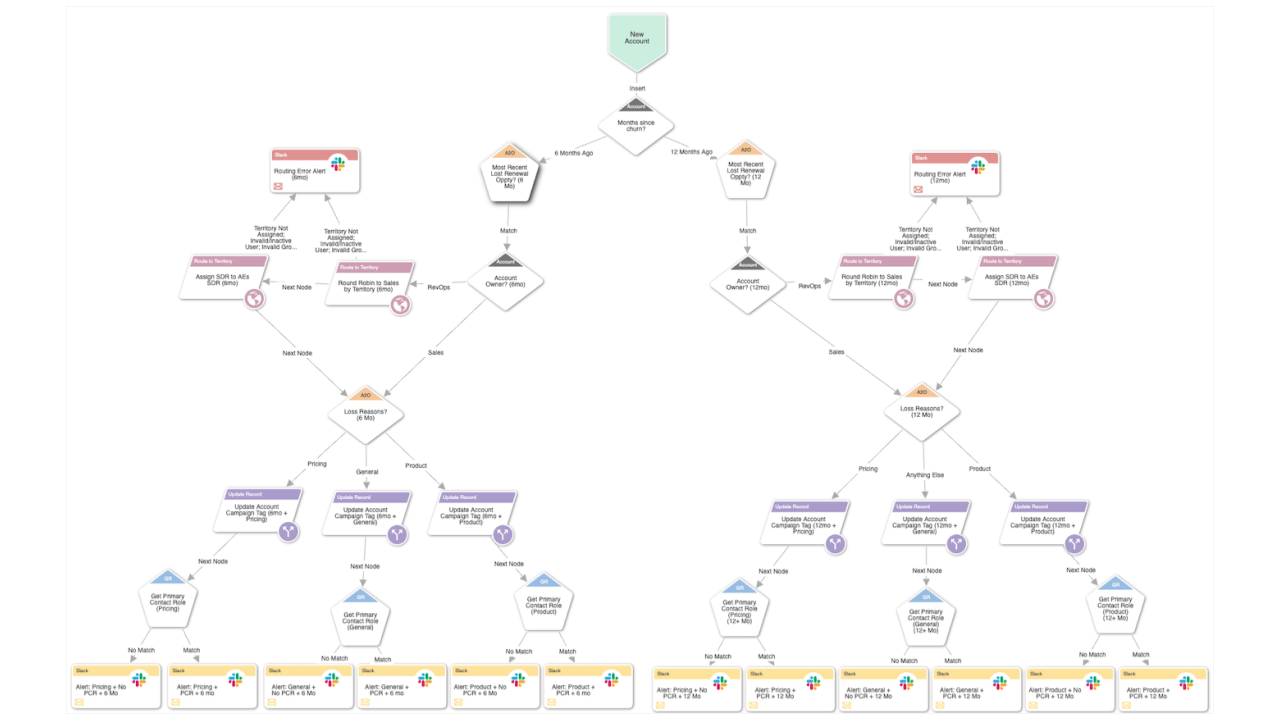
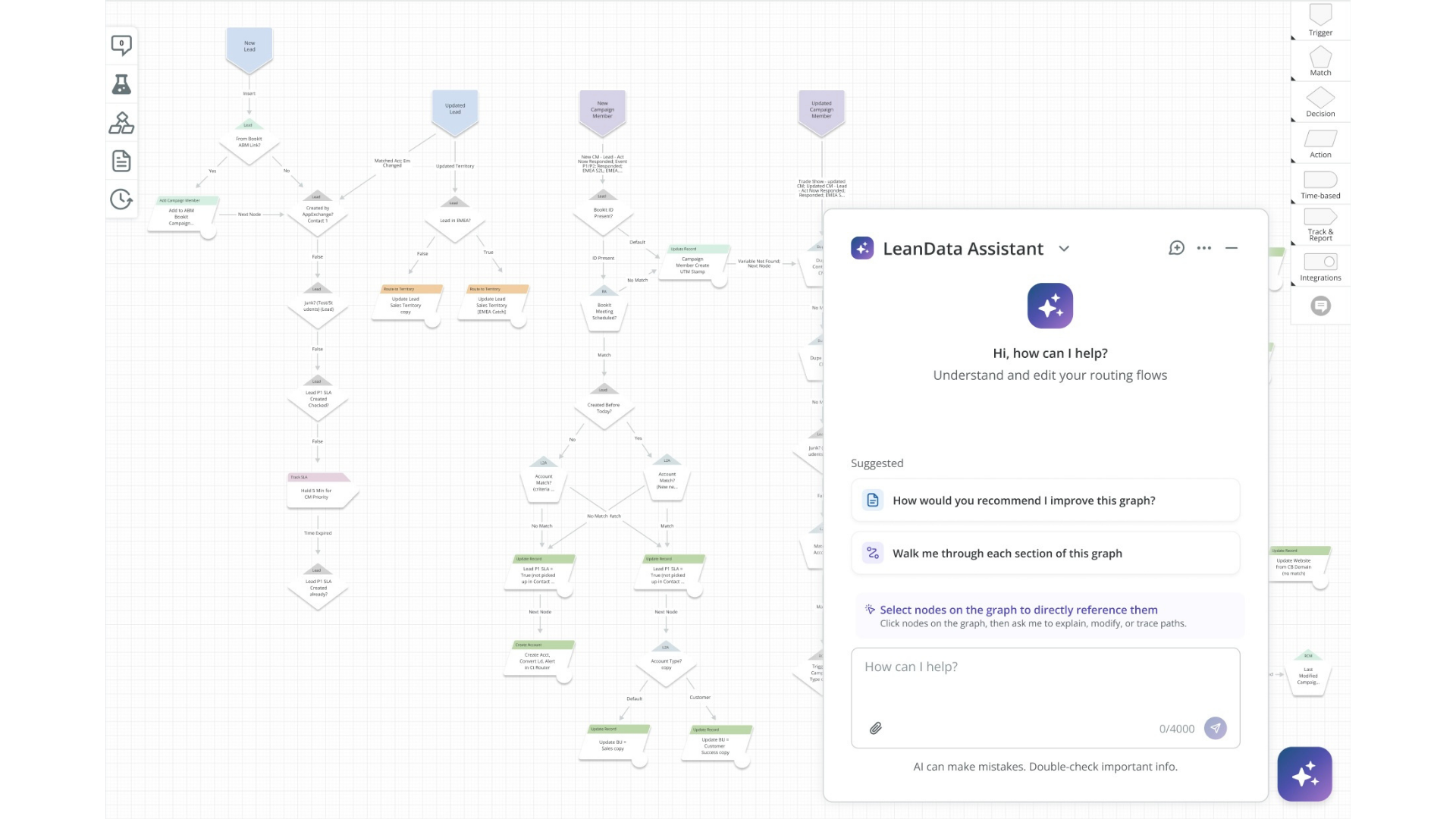
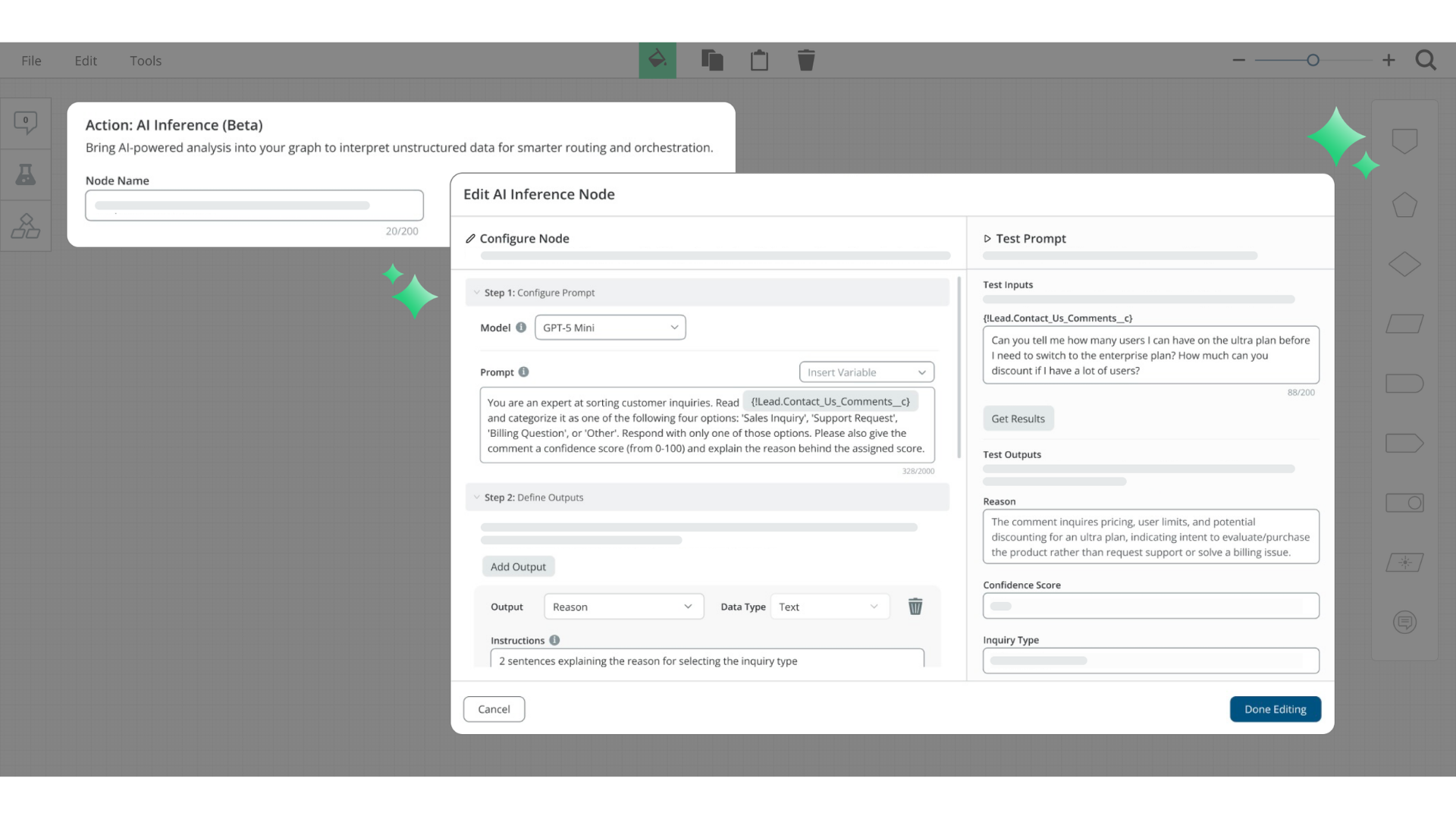
Writing a process down is a start. The next step is putting those rules into the systems that execute them. If a routing rule lives only in a document, someone has to translate it into action. Rules-based automation can apply the logic directly and consistently.
3. Deterministic where consistency matters
Not every AI decision needs a predetermined answer, but repeatable actions should produce repeatable results. For example, if an account meets specific criteria for ownership, the same routing rule should apply every time. Clear agent decisioning rules help ensure that agents handle these situations consistently.
4. Owned and maintained
Business processes change as territories shift, products evolve, teams reorganize, and customer journeys change. That makes GTM process governance an ongoing discipline. AI-ready business process documentation is a living part of the organization’s infrastructure that needs clear ownership and a process for keeping it current. Someone on your team should own the rules, monitor whether they still reflect the GTM operating model, and update them as processes, teams, and priorities evolve.
Quick Check: Are Your Processes AI-Ready?
Not sure where your team stands? Use these warning signs as a quick check.
How Do Teams Turn Business Rules Into AI Infrastructure?
LeanData provides the data, process, and context layers for AI-ready GTM. Rules-based, deterministic automation can help your organization put GTM rules into practice. Centralized routing and decisioning logic gives AI agents consistent rules for lead-to-account matching, ownership, routing, and handoffs.
That creates a clearer boundary between what AI is good at and where the business needs consistency. AI can reason, surface insights, and handle ambiguity, while deterministic rules govern actions that need to stay on policy and auditable.
“LeanData is helping by improving routing, standardizing lead and account flows, and creating clearer ownership across the GTM process. This stronger operational foundation makes it easier to automate workflows and reduces friction when moving toward more AI-driven decisioning.”Marketing Operations Analyst
Is Your GTM Process Ready for AI?
As more agents act on behalf of marketing, sales, and customer service, organizations need a reliable way to keep those actions consistent. That requires documented rules, encoded decision logic, clear ownership, and ongoing governance to keep processes current.
The 2026 State of AI Go-to-Market Readiness Report explores the infrastructure gaps holding GTM teams back and the foundations they need to address them. Explore the findings to benchmark how close your team is to AI-ready processes.
See How LeanData Can Power Your AI GTM
FAQ
What are some examples of business process documentation?
What are the best practices for integrating AI into GTM?
Why do AI agents need documented business processes?
What is deterministic AI execution?
How does LeanData help GTM teams build AI-ready processes?

Jill Makin
Jill Makin is a Content Marketing Specialist at LeanData. Her content expertise includes B2B SaaS marketing across industries including fintech, healthcare, enterprise orchestration, and more. Connect with Jill on LinkedIn.