












Summary
The 2026 OpsStars Award winners show what AI GTM looks like when it actually works. Teams from Uber for Business, Autodesk, Korn Ferry, PagerDuty, and four other companies paired AI with clean data, encoded processes, and shared context, then measured what changed. This post breaks down eight AI GTM examples: what each team built, the results, and the lessons other GTM Ops teams can borrow.
What You’ll Learn
- What the eight 2026 OpsStars Award winners built and their results
- Why the strongest AI GTM examples start with data, process, and context
- How winning teams put checks on AI before it reached buyers
- Which lessons you can apply to your own AI GTM motion
Most AI GTM examples you’ll find online describe what AI could do. These eight describe what it has already done.
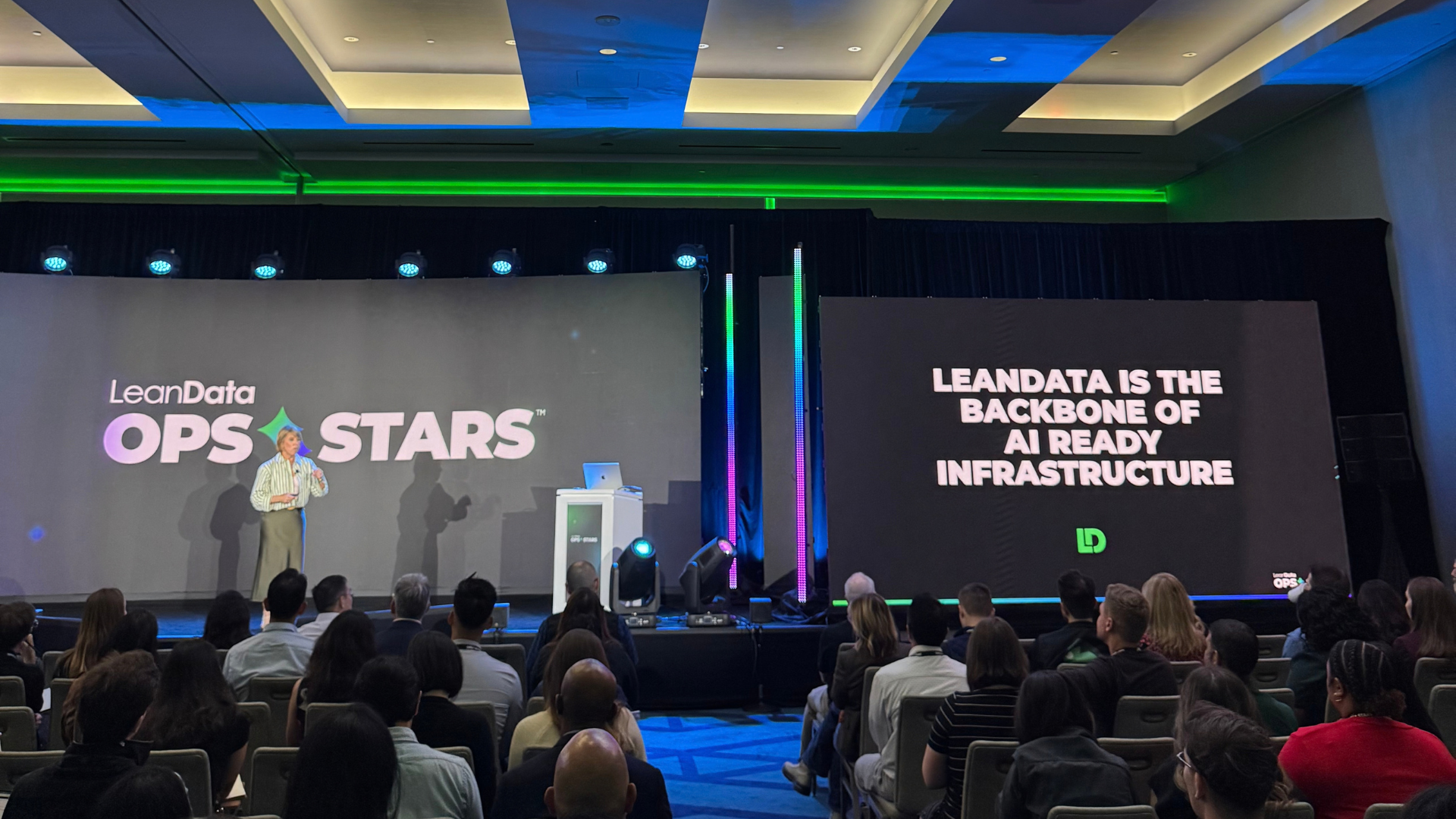
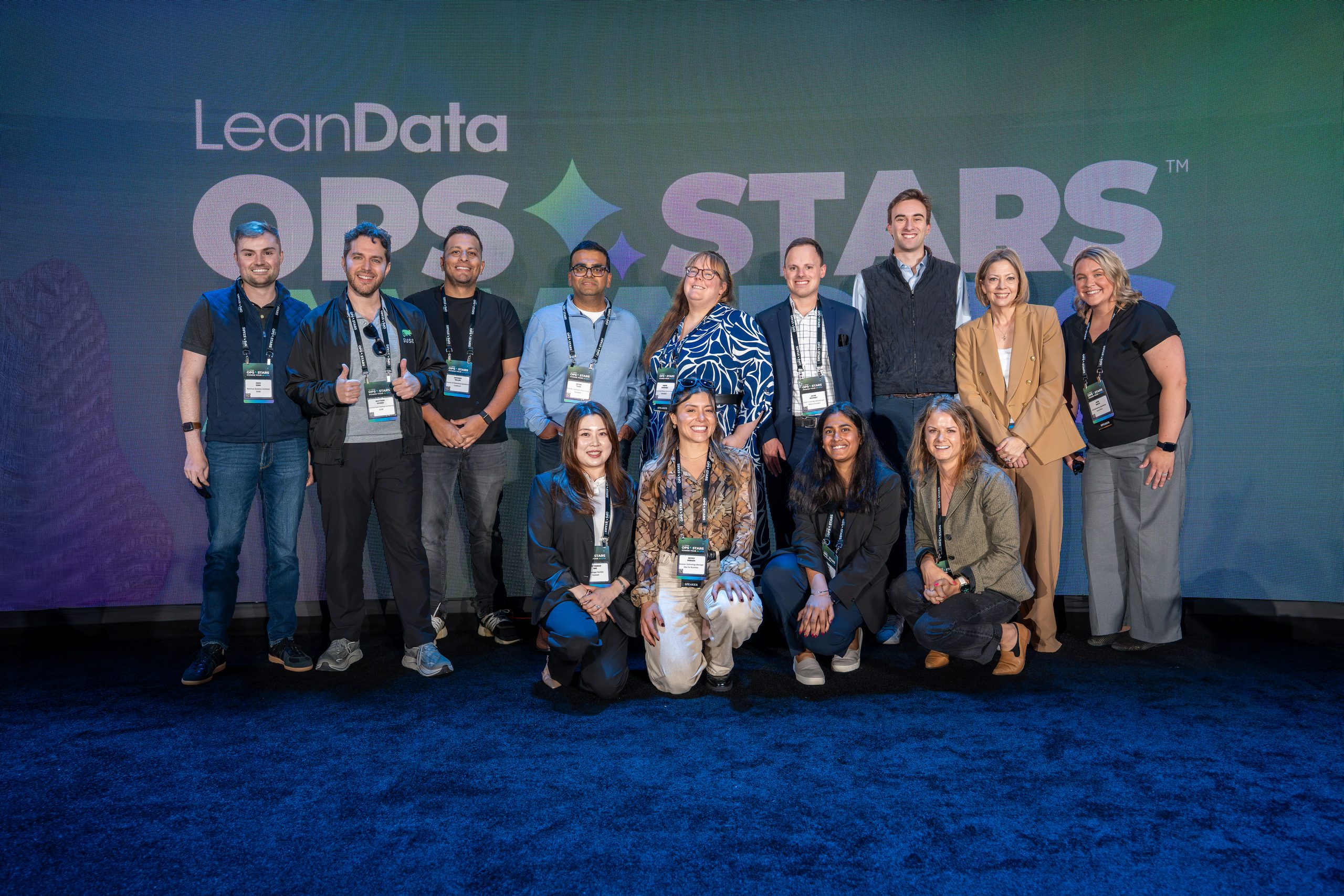
At OpsStars 2026 on Oct. 5, LeanData CEO Katy Keim and Senior Director of Customer Marketing Ashley Ward named the winners of the eighth annual OpsStars Awards. This year’s theme was Power Your AI GTM, and the winners lived up to it. Three of them ran AI agents in production. Others used AI to score demand, classify buyers, or monitor their own CRM.
What stands out for all of them is the order of events in their approach. In LeanData’s 2026 State of AI Go-to-Market Readiness Report, 93% of GTM teams said they had deployed at least one AI agent, but only 31% also said their infrastructure was ready for it. The winners reversed that approach by getting the foundation right first. Each story below falls under one of the three pillars of AI-ready infrastructure: Data, Process, and Context.
The 2026 OpsStars Award Winners at a Glance
For the full story behind each win, see the Award-Winning Ops Stories ebook.
Data: Give AI Signals Worth Acting On
AI can only prioritize, score, or route reliably when the records it’s pulling from are accurate and up to date. These two winners started by figuring out which data signaled genuine buying intent and which records were slipping through unnoticed. For more on preparing clean data for AI GTM, see our guide to AI-ready data.
Coalesce: Rebuilding qualification before automating it
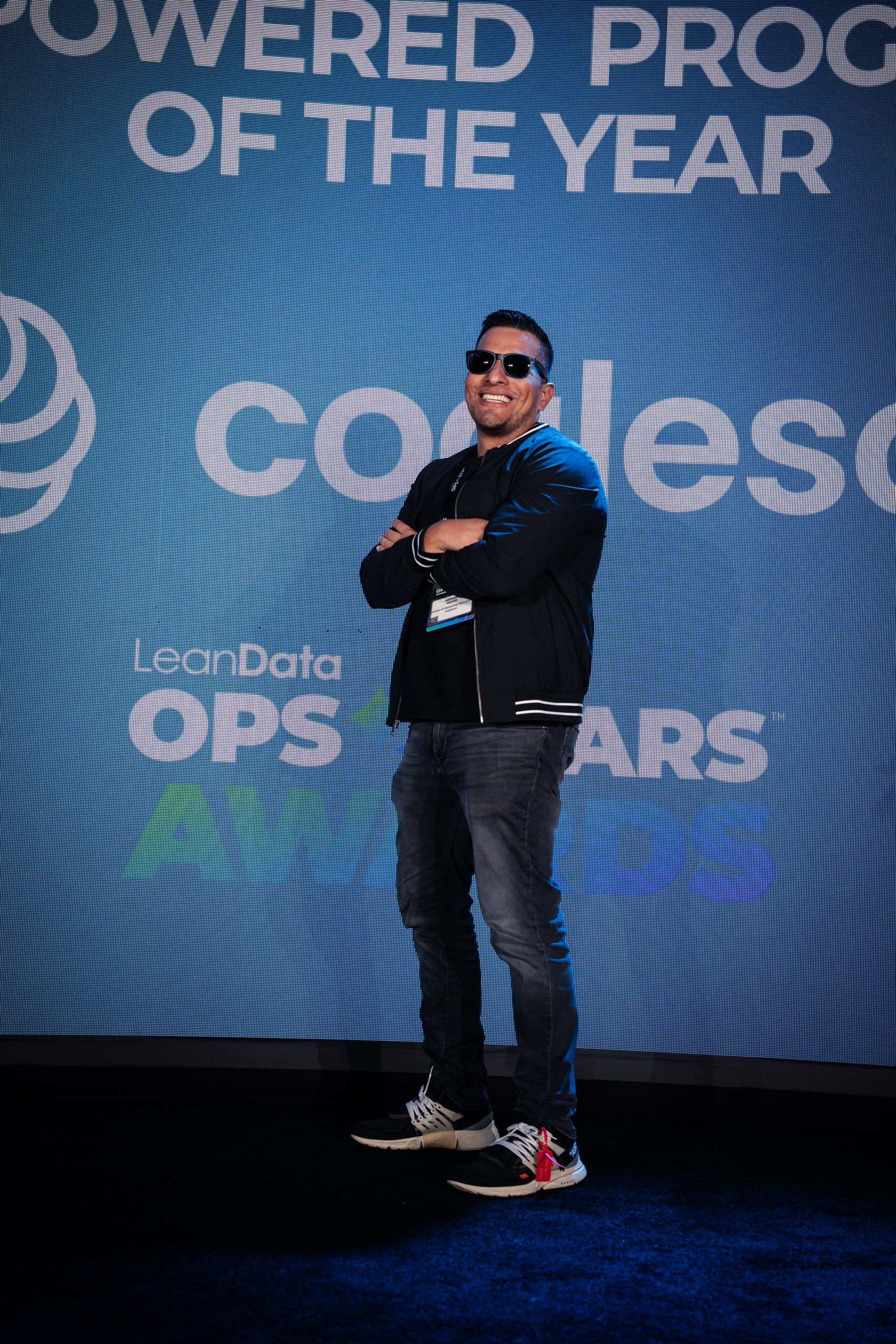
AI-Powered Program of the Year
Coalesce’s inbound queue had two problems at once. About 72% of inbound leads weren’t followed up within SLA, and the queue was full of low-intent noise from event scans and webinar sign-ups. BDRs were also juggling separate lead and contact queues across Salesforce, Gong, ZoomInfo, and several other tools.
Instead of adding AI as yet another part of that queue, the GTM Operations team rode along with reps to see where the work was really breaking down. Then they rebuilt the qualification model on Snowflake data by combining historical customer and opportunity data with current ICP definitions and intent signals. Coalesce’s AI scoring now runs on that model in near real time. It feeds CoalesceIQ, an internal hub that brings inbound and outbound work into one place, while reps keep control of final outreach.
Results:
- Inbound SLA adherence rose from 28% to 93%
- AI-assisted prospecting dropped from 30–45 minutes per account to under five minutes for 10 accounts
- Less low-intent noise in the inbound queue
What to borrow: Watch how reps really work before you choose what to automate. Coalesce’s AI scoring works because the qualification model underneath it was rebuilt first.
PagerDuty: Turning revenue leaks into something you can measure
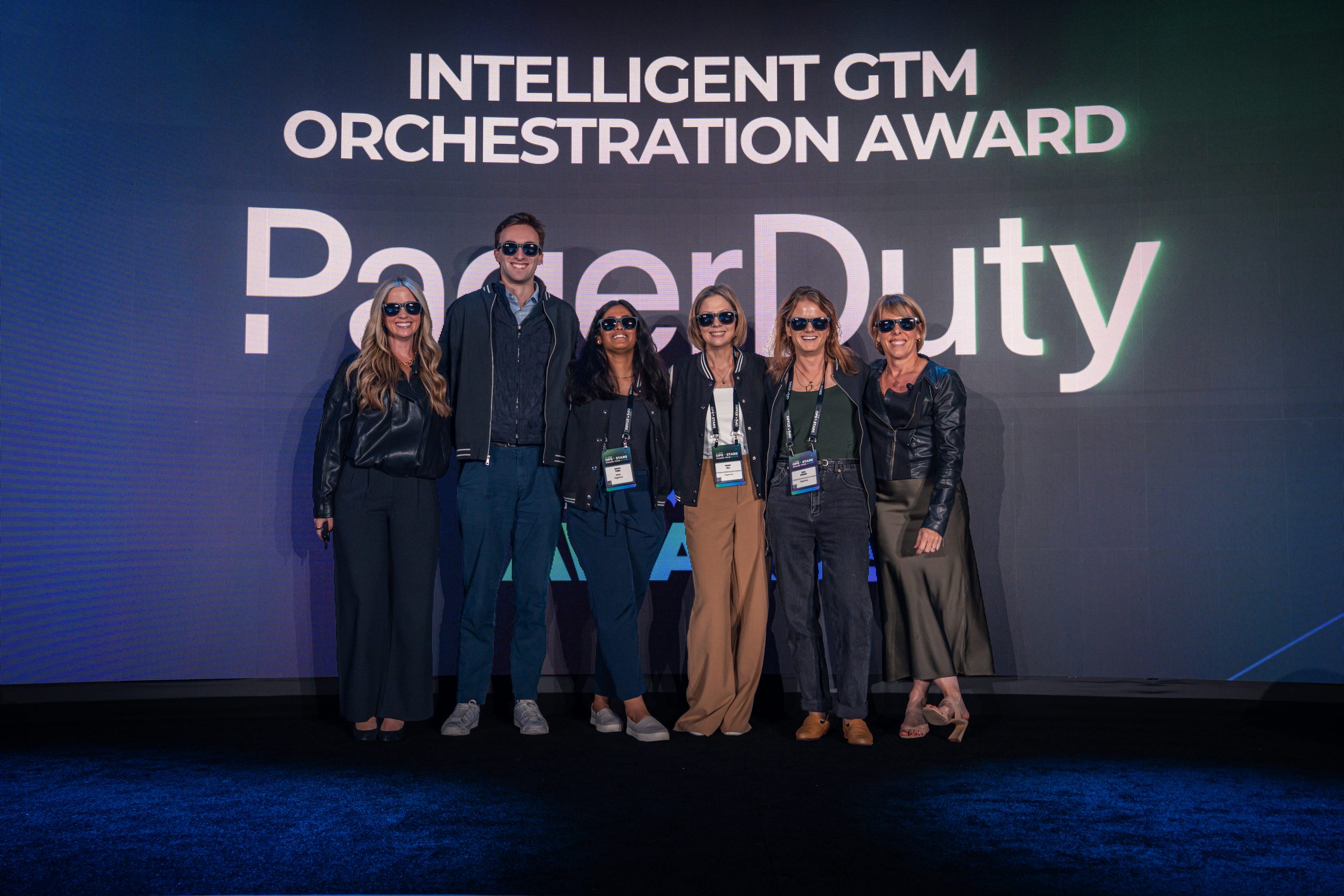
Intelligent GTM Orchestration Award
PagerDuty’s GTM engine has grown over the last 16 years one system and process at a time. It kept running, but nobody could see where prospects fell through the cracks. Prospects who asked to talk to sales sat in Salesforce with no owner, alert, or SLA. Some MQLs went 90 days or more without sales activity.
Despite having just a small Marketing Operations and Analytics team supporting 120 marketers, PagerDuty successfully built an observability layer around the stack it already had. AI agents now scan Salesforce on a schedule, find high-intent prospects without an owner, and separate real buyer interest from low-value submissions. The team also tested its data signals before automating other flows with them and rebuilt reporting so every number can now be traced back to its source.
Results:
- Daily SLA events rose from 0.53 to 42.2, about an 80x increase
- 1,477 SLA events captured in 35 days, compared with 28 in the previous 53 days
- 27.8% fewer prospects entering the monitored revenue leak after upstream fixes began
- Zero net-new technology costs
What to borrow: Audit based on how your system actually behaves, not how it was configured to behave. PagerDuty only trusted a signal for automation after testing it.
Process: Encode the Rules So Both AI and People Follow Them
An AI agent can’t follow a rule that lives in an engineer’s code or a Slack thread. These three winners turned their routing, qualification, and handoff rules into logic their systems could run and audit. (More on why that matters in Why AI GTM Needs Business Process Documentation.)
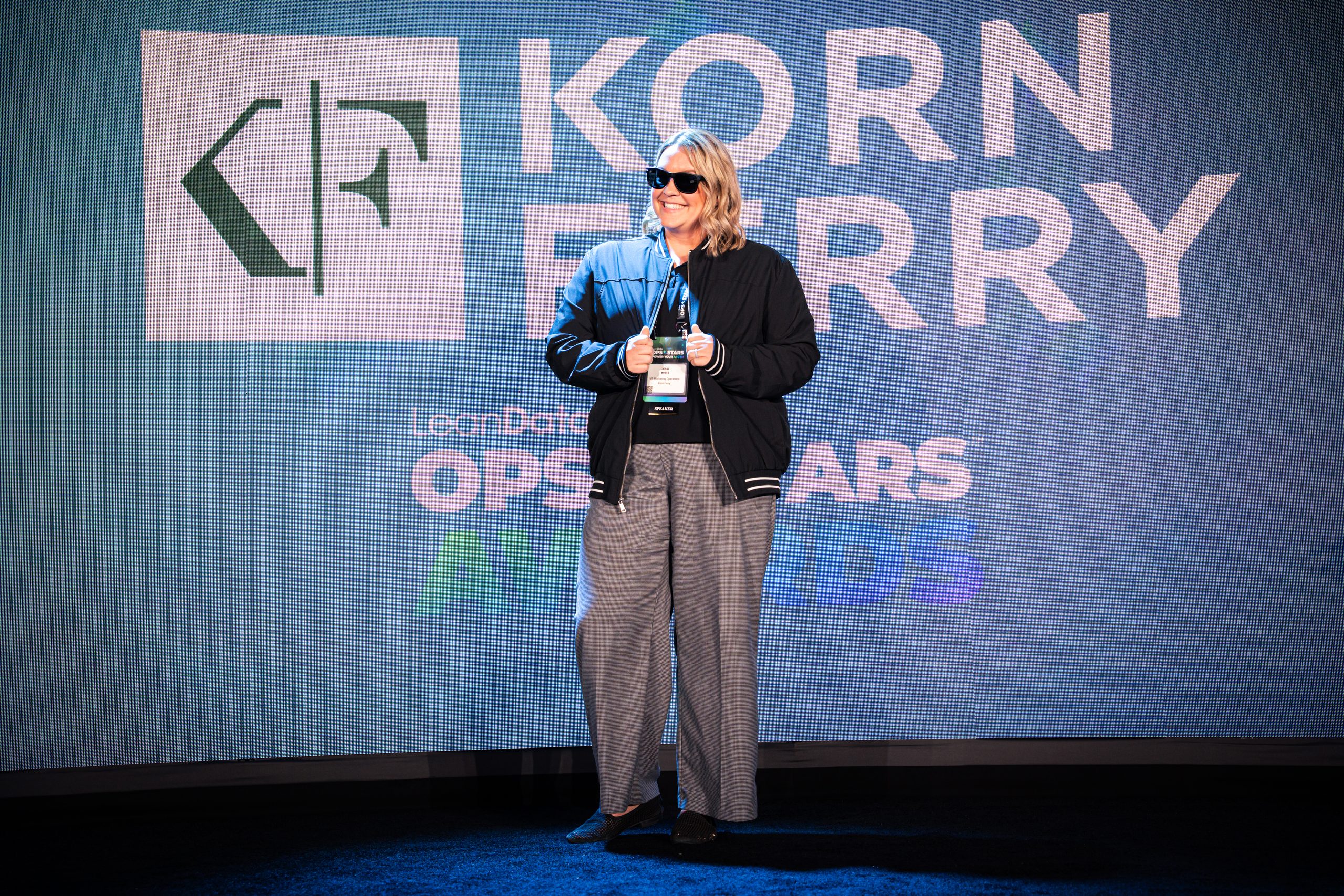
Speed matters, but only when the decisions along the way are right. As Korn Ferry’s Jessi White put it during her OpsStars session:
 “A lead routed to the wrong person in ninety seconds is not a success. It’s just a faster bad client experience.”Jessi White

Autodesk: From six weeks to six days for a routing change
GTM Systems Transformation of the Year
Autodesk’s global lead and account routing ran on custom Apex inside Salesforce. Territory assignment, round robin, and matching for a large direct sales team and a partner network of tens of thousands all lived in hand-written code. Every routing change needed an engineering build, which meant changes that should have taken days took about six weeks instead.
Using an existing deployment at Autodesk Construction Solutions to make the case, the team then rebuilt routing logic as no-code flows and data tables in LeanData. RevOps and Marketing Ops can now implement routine routing changes themselves. Every decision has an audit trail, and matching, assignment, SLA enforcement, and reprocessing run automatically.
Results:
- Routing-change cycle time cut from about six weeks to six days, an ~85% reduction
- Routine routing changes moved from engineering to RevOps and Marketing Ops
- An audit trail for every routing decision
- A foundation for AI SDR and agentic routing as the rollout expands to global sellers and partners
What to borrow: Before introducing AI routing, make sure the people who own the rules also have the ability to change them once they’re deployed. Autodesk built the foundation for agentic routing by getting the rules out of custom code first.
Korn Ferry: An AI SDR with a second AI checking its work
Agentic GTM Award
Korn Ferry gets inbound spanning high-value commercial deals to personal requests from B2B and B2C buyers. For years, a Lead Management team reviewed every lead by hand. When that team switched to focusing on other priorities, Korn Ferry needed to drop the manual review without losing lead quality or speed.
Now eligible leads pass automated checks in LeanData and trigger a first-touch email from 6sense’s AI SDR. The AI SDR engages and qualifies prospects before LeanData routes them to the right rep. Korn Ferry also added a second check. Leads the AI SDR marks unqualified or unclear go to LeanData’s AI Inference Node, which reviews the email conversation against Korn Ferry’s qualification criteria. It returns a decision, a confidence score, and a specific reason. Misclassified leads get recovered and every call is auditable.
Results:
- 42% conversion for leads that received AI-first engagement, compared with 26% for leads routed directly to sellers
- 38.6% larger average deal size
- Leads reach Sales Accepted one day faster on average
“We don’t use AI to compensate for an untrusted process. AI will always amplify the foundation that you already have.”Jessi White
What to borrow: Don’t take one AI tool’s word for it. A second, auditable review step can catch what the first one misses and gives you better data on why leads get disqualified.
Vestwell: Routing and scheduling as a single motion
GTM Velocity Award
Vestwell’s self-serve website brings in prospects who are ready to talk now. In cases where scheduling a meeting has to wait for a rep to notice those leads, prospects can drop off before a human ever sees them.
Vestwell paired real-time LeanData routing with BookIt for Forms and BookIt Links. When a qualified lead arrives, LeanData routes it to the right rep by territory, and BookIt immediately displays open times on that rep’s calendar. The prospect books the meeting in the same flow.
Results:
- 4,000+ calls scheduled in 18 months
- More than half of those calls originated through self-service
- Qualified leads routed and bookable in real time
What to borrow: Treat “who owns this lead” and “when can we meet” as one decision. The fastest handoff is the one where routing and Scheduling never separate.
Context: Carry the Full Picture Through Every Handoff
The best next step depends on everything around a record:
- Who else at the account is engaged
- Where the customer is in the onboarding process
- What happened before
These three winners made sure that context travels with every handoff whether the next step is taken by a rep, an agent, or a customer success team.
SUSE: Seeing the buying group, not just the lead
Buying Groups Trailblazer Award
SUSE used to route leads to sales once a single prospect hit 50 points, even if that score came from one isolated interaction. Reps couldn’t see who else at the account was engaging, and qualification restarted from scratch when a deal entered the pipeline.
SUSE switched to an account-centric motion. The team used AI to analyze more than 148,000 historical lead records and consolidate thousands of job titles into 10 core personas. LeanData Journeys now classifies new prospects, connects them to the right accounts, and rolls activity from multiple people into one account-level view. When two or more relevant personas engage, the account gets flagged for sales. When it becomes an Opportunity, all of those buying group details come with it.
Results:
- 56.9% of cold inquiries and 47.7% of warm AQLs automatically classified into core buyer personas
- 100% of confirmed buying group members automatically mapped to Opportunity Contact Roles
- No more manual errors linking buying group journeys to Opportunities
- Marketing can now see which personas are missing from a buying committee and target them
What to borrow: Use AI to clean up messy inputs like job titles before you build signals on them. Then let the account, not the individual lead, trigger sales attention.
Verizon Business: One connected journey from close to growth
Revenue Lifecycle Award
Verizon Business had onboarding built around installation, with no standard way to capture vehicle information, track progress, or keep customer communication consistent. Slow first installs delayed both customer value and revenue recognition.
Then the team gave every new customer a dedicated VOSS Agent and connected LeanData, Gainsight, Salesforce Marketing Cloud, Salesloft, and Gong into one journey. LeanData assigns qualified opportunities to VOSS Agents, including specialized routing for camera installations. Gainsight tracks progress, and Marketing Cloud automates customer updates. When onboarding wraps, LeanData routes accounts to Customer Growth agents twice a day based on account revenue. From there, AI-generated summaries give Strategic Account Managers the onboarding backstory.
Results:
- 33% reduction in active customer churn and at-risk accounts
- 44% fewer shipping errors
- Median time to first installation down 4 days, and median full installation down 7 days
What to borrow: Handoffs are often where context gets lost. Follow the lead of Verizon Business, which uses AI summaries to give each new owner the full story from the beginning instead of just a blank record.
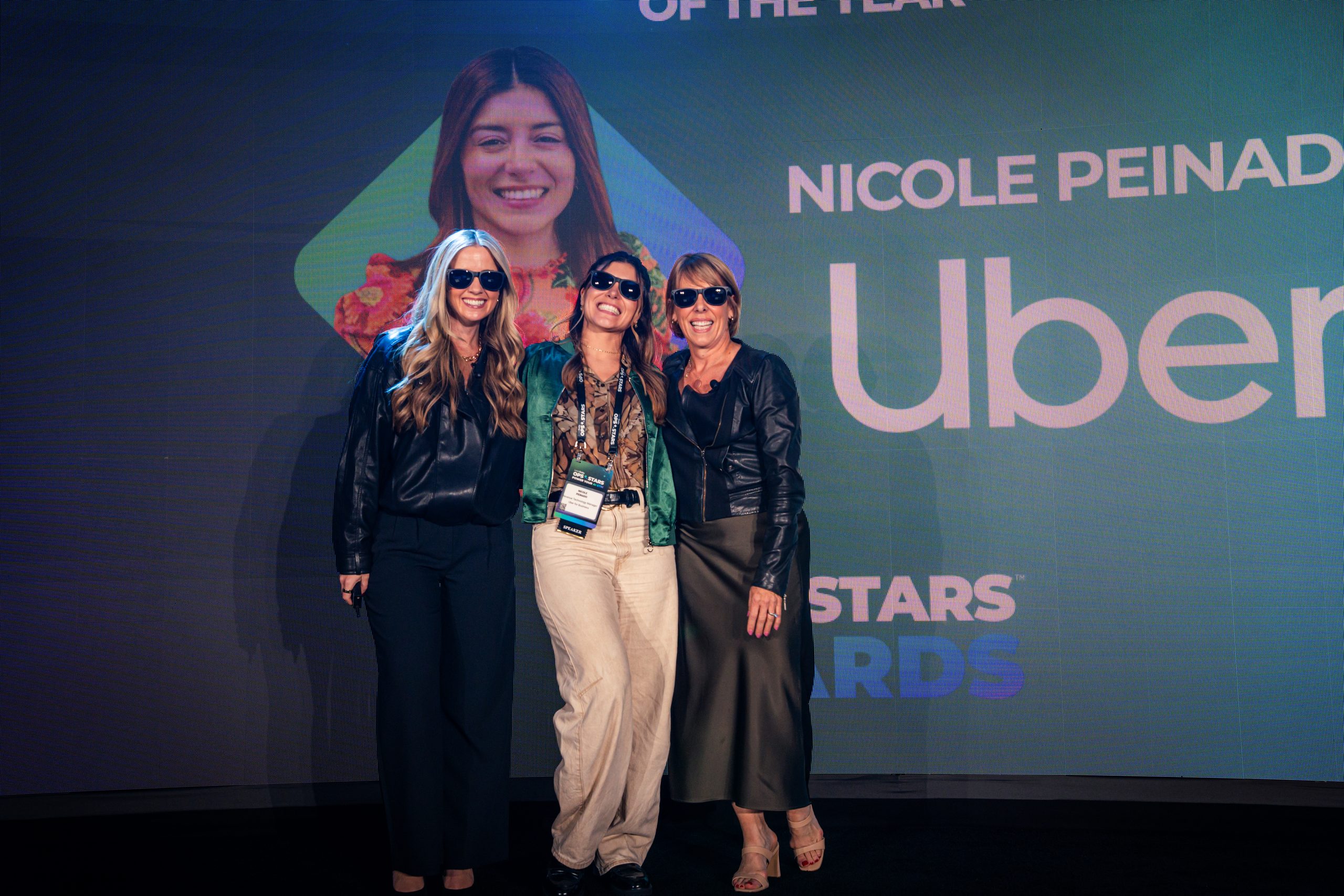
Nicole Peinado, Uber for Business: AI reach with a human handoff
OpsStar of the Year
Uber for Business’s self-serve channel generated $540 million in FY2024 bookings, but roughly 93% of sign-ups dropped out before becoming active customers. A Proactive Onboarding team of 30+ people could reach only about 20% to 25% of the funnel by hand.
Nicole Peinado, Revenue Technology Manager, led the build of “Garrett,” an Agentforce SDR agent that engages self-serve sign-ups, answers onboarding questions, and reads each customer’s live onboarding stage.
Her team also connected Agentforce to LeanData, so now when a customer needs a real person, LeanData finds the right owner, and Scheduling books the meeting on that specialist’s calendar. Humans can take over any AI conversation. Rather than switching everything over at once, Nicole’s team is testing the AI motion against the human team’s results with A/B tests and parity dashboards before expanding by market and language. (Read the full Uber for Business story.)
Results:
- 56,972 organizations engaged, compared with 28,362 by the human team over the same 12 months
- 43% higher conversion across the self-service AI motion
- No more manual email scheduling for AI-to-human handoffs
- A measurable framework for comparing AI performance against the human baseline
“The prospect is able to book a meeting, and that’s powered by BookIt. The handoff is also powered by BookIt. We have started leveraging LeanData to connect some of our AI solutions with automation.”Nicole Peinado

What to borrow: Prove the value of AI against a human baseline before you scale it. Nicole’s team expanded reach without risking the more than $12 million in annualized bookings the human team was still driving.
What These AI GTM Examples Have in Common
The eight winners worked in different industries and on different problems, but their approaches overlap in four ways.
- They fixed the foundation before adding AI. Autodesk got its routing out of custom code, Coalesce rebuilt its qualification model, and PagerDuty audited how its system actually behaved. AI came after.
- They put checks on AI decisions. Korn Ferry added a second, auditable AI review. Nicole Peinado’s team tested AI against a human baseline. Clear rules decided ownership and routing, while AI handled the judgment calls. See more on that balance in deterministic vs. probabilistic systems.
- They kept people in the loop. Coalesce reps still control final outreach. Uber for Business specialists can take over any AI conversation.
- They measured everything. Every winner can point to a before and after, which is exactly what AI councils and finance teams now ask for.
If you’re planning your own next steps, our AI GTM guide for B2B revenue leaders covers where to start.
Congratulations again to every 2026 winner and finalist.
Read the Full Award-Winning Ops Stories
FAQ
What are some examples of AI GTM?
What are the best practices for integrating AI into GTM?
What is agentic GTM?
How are RevOps teams using AI?
Who won the 2026 OpsStars Awards?
What are the OpsStars Awards?

Jill Makin
Jill Makin is a Content Marketing Specialist at LeanData. Her content expertise includes B2B SaaS marketing across industries including fintech, healthcare, enterprise orchestration, and more. Connect with Jill on LinkedIn.