













Summary
Deterministic and probabilistic systems serve different functions in B2B go-to-market motions. Understanding that distinction is what separates AI experiments from AI that drives revenue. This article breaks down the difference between the two, and shows where each one belongs in your go-to-market (GTM) tech stack. Understand why the companies moving fastest in 2026 are investing in both.
What You’ll Learn
- The practical difference between deterministic and probabilistic systems in a go-to-market context
- Which GTM tasks belong to AI and which require rule-based execution
- Why AI signals lose value without a reliable handoff layer
- How clean data and structured workflows make AI outputs trustworthy
- What it looks like when both systems work together inside a revenue motion
The AI Problem Nobody Is Talking About
Every revenue team is adding AI. AI SDRs are generating leads. Intent platforms are scoring accounts. Scoring models are classifying prospects. Conversation intelligence tools are summarizing calls. The signals are everywhere.
And yet, a lot of those signals are going nowhere.
Leads still go unrouted. Response times still miss SLAs. Follow-up workflows still fail to trigger. Meetings still get booked with the wrong person. The intelligence is there, but the execution is not keeping up.
This is the AI problem that does not get enough attention. The conversation about AI in go-to-market has focused almost entirely on generating better inputs: smarter signals, richer context, more personalized outreach. But generating a signal is only half the job.
Something still has to decide what to do with it, who gets it, when, and in what order. That part requires a different kind of system entirely.
To understand why, you first need to understand the difference between the two systems your GTM stack actually runs on.
Two Systems, Two Jobs
Every GTM motion, whether you have deployed AI or not, relies on two fundamentally different types of systems. One is probabilistic. The other is deterministic. They are not interchangeable, and they are not competing. They are complementary, and both are necessary.
What Probabilistic Systems Do
Probabilistic systems are AI models. They reason through ambiguity. Feed the same question into a large language model twice and you may get a slightly different answer each time. That is not a flaw. It is by design. Probabilistic systems excel because of that flexibility.
- They find patterns across enormous volumes of data.
- They generate personalized content based on context and intent.
- They summarize unstructured inputs like call recordings, emails, and website behavior into something a rep can act on.
- They score accounts by predicting conversion likelihood.
- They handle tasks where the goal is interpretation, inference, or generation, not exact repeatability.
Scott Brinker, editor of chiefmartec.com and author of the annual Marketing Technology Landscape, describes probabilistic systems as “more resilient, able to adapt to unexpected changes in their environment.”
That adaptability is a significant advantage when the task requires judgment.
What Deterministic Systems Do
Deterministic systems do one thing above all else: produce the same result every time. Same input, same output, regardless of volume, time of day, or who submitted the request.
When a lead comes in, it routes to a specific rep based on specific rules, within a specific time window. Either the SLA was met or it was not. Either the lead matched to the right account or it did not. There is no interpretation involved, and that is the entire point.
Deterministic systems are the foundation of operational reliability.
They enforce SLAs, execute multi-step workflows, trigger automations based on defined conditions, and govern the processes that revenue teams depend on to function consistently.
Rules-based, auditable, and predictable, these systems have been the backbone of marketing automation and sales operations for well over a decade.
The intelligence layer and the execution layer are two separate problems, and most GTM stacks have invested heavily in one while underbuilding the other.
Why the Distinction Matters
Brinker frames this well in his Martech for 2026 research: “One isn’t inherently better than the other. Each has strengths and weaknesses, depending on your use case.”
He goes further to note that the most innovative approaches emerging in practice are hybrid, incorporating AI steps within the structure of deterministic workflows. That combination gives you the reasoning power of AI alongside the operational reliability of structured execution.
The problem many teams run into isn;t that their AI tools are poor. It’s that their AI tools generate outputs that have nowhere reliable to go.
The intelligence layer and the execution layer are two separate problems, and most GTM stacks have invested heavily in one while underbuilding the other.
The GTM Division of Labor
So where does each system belong? The table below maps common GTM tasks against the system best suited to handle them.
The pattern here is consistent. AI handles the judgment calls. Deterministic systems handle the execution. Neither replaces the other. AI tools can tell you the best chess move. They cannot be the chessboard.
This is also the architecture that the companies building AI are using internally.
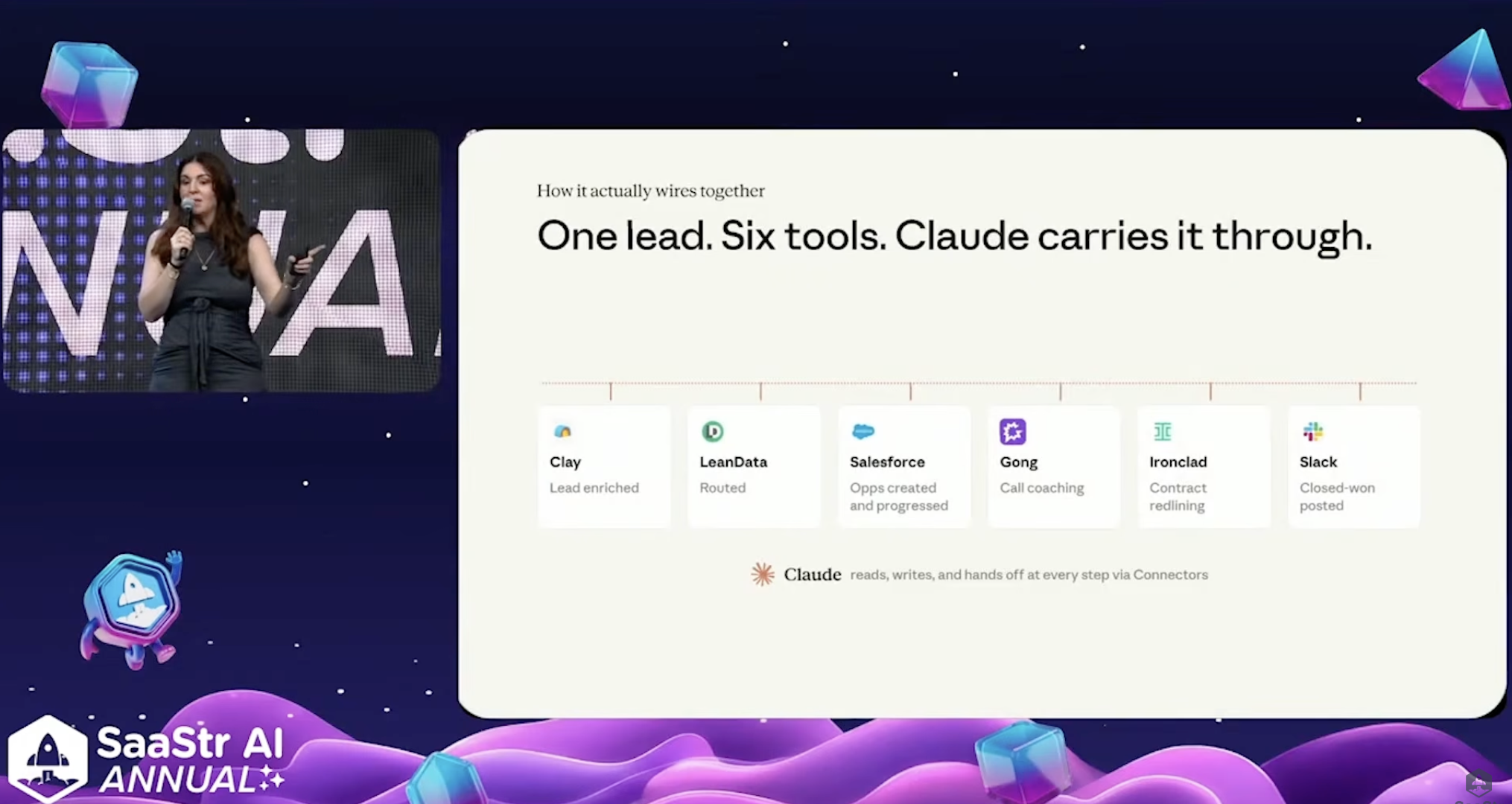
Anthropic, notably, uses LeanData for GTM workflow execution. Even the organizations at the frontier of AI development still depend on structured, deterministic systems to govern their revenue operations. The reason is straightforward: enterprises need intelligence that operates reliably at scale, and reliability requires structure.
Where AI in GTM Breaks Down
Understanding the division of labor is one thing. Seeing where it fails in practice is more useful.
The Gap Between Signal and Action
Most AI tools in a GTM stack generate an output and stop there. An intent platform identifies a high-fit account. A scoring model classifies an inbound lead as a strong MQL. An AI SDR qualifies a conversation. Each of those is a useful signal. But a signal is only valuable if something happens next, the right person receives it, within the right time window, with the right context attached.
That handoff is where most stacks break down. Without a deterministic layer governing what happens after the signal, leads sit unrouted, SLAs get missed, and high-intent moments go cold. The AI did its job. The execution infrastructure did not.
The Data Quality Problem
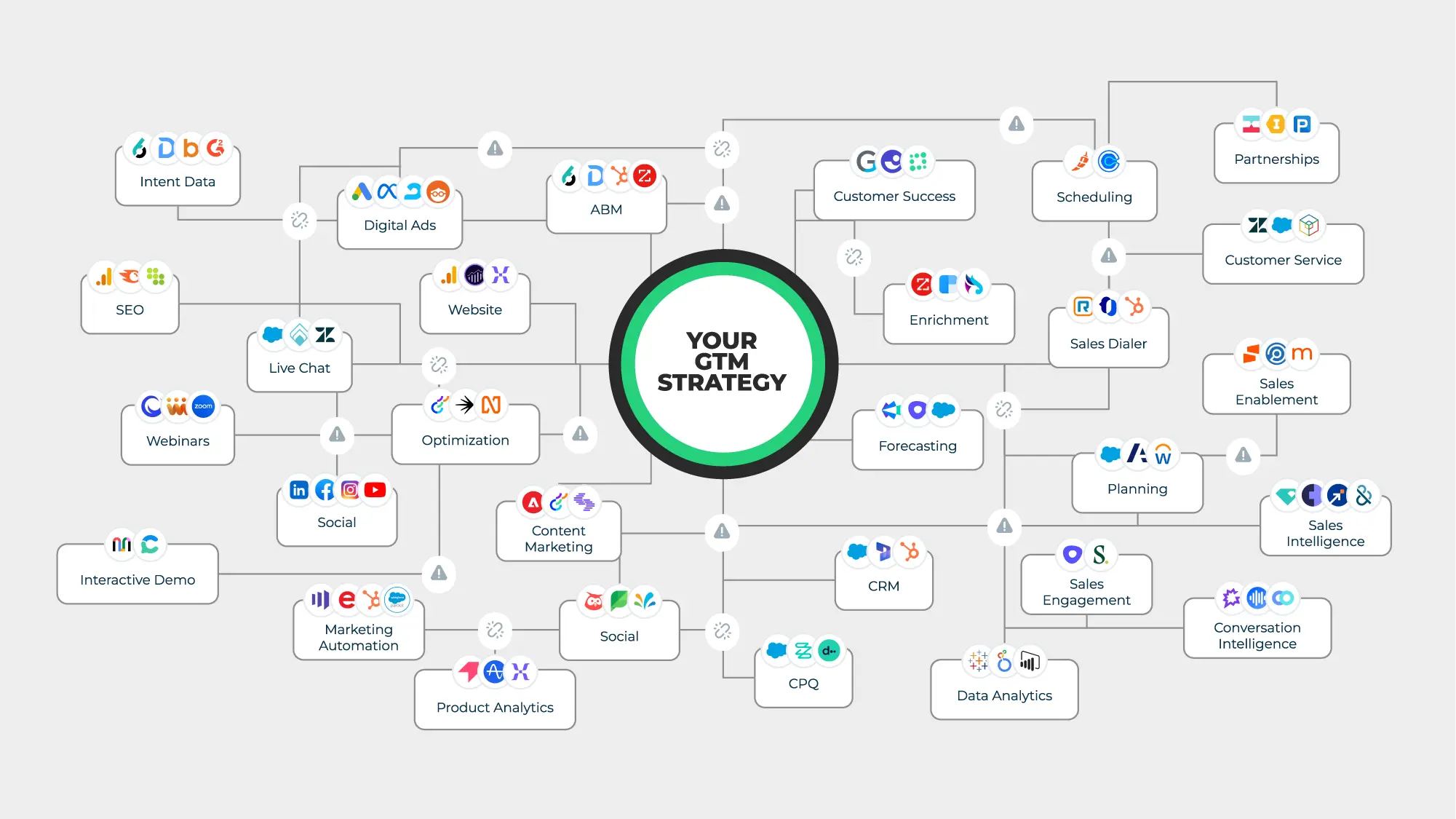
There is a second failure mode that compounds the first. AI tools are only as reliable as the data they act on. If your Salesforce instance has duplicate records, mismatched lead-to-account assignments, or outdated territory mappings, your AI workflows will not improve those problems. They will make wrong decisions faster and at higher volume.
This is not a reason to delay AI adoption. It is a reason to treat data quality as infrastructure rather than a cleanup project. The systems that normalize, deduplicate, and correctly match records across your CRM are foundational to getting anything useful out of AI. Clean data going in means trustworthy outputs coming out.
The Governance Gap
A third problem emerges as AI agents multiply across the revenue stack. Each one generates outputs, but most do not govern them. There is no unified record of which action fired, why, when, and based on what rule or recommendation.
For an Ops team that needs to audit a missed SLA, investigate a misrouted lead, or report on GTM performance, that lack of visibility is a serious operational problem.
Deterministic systems solve this by design:
- Every action is logged.
- Every routing decision is traceable.
- Every workflow step has a record.
As AI agents become more prevalent in the GTM motion, that governance layer becomes more critical, not less.
What This Looks Like in Practice
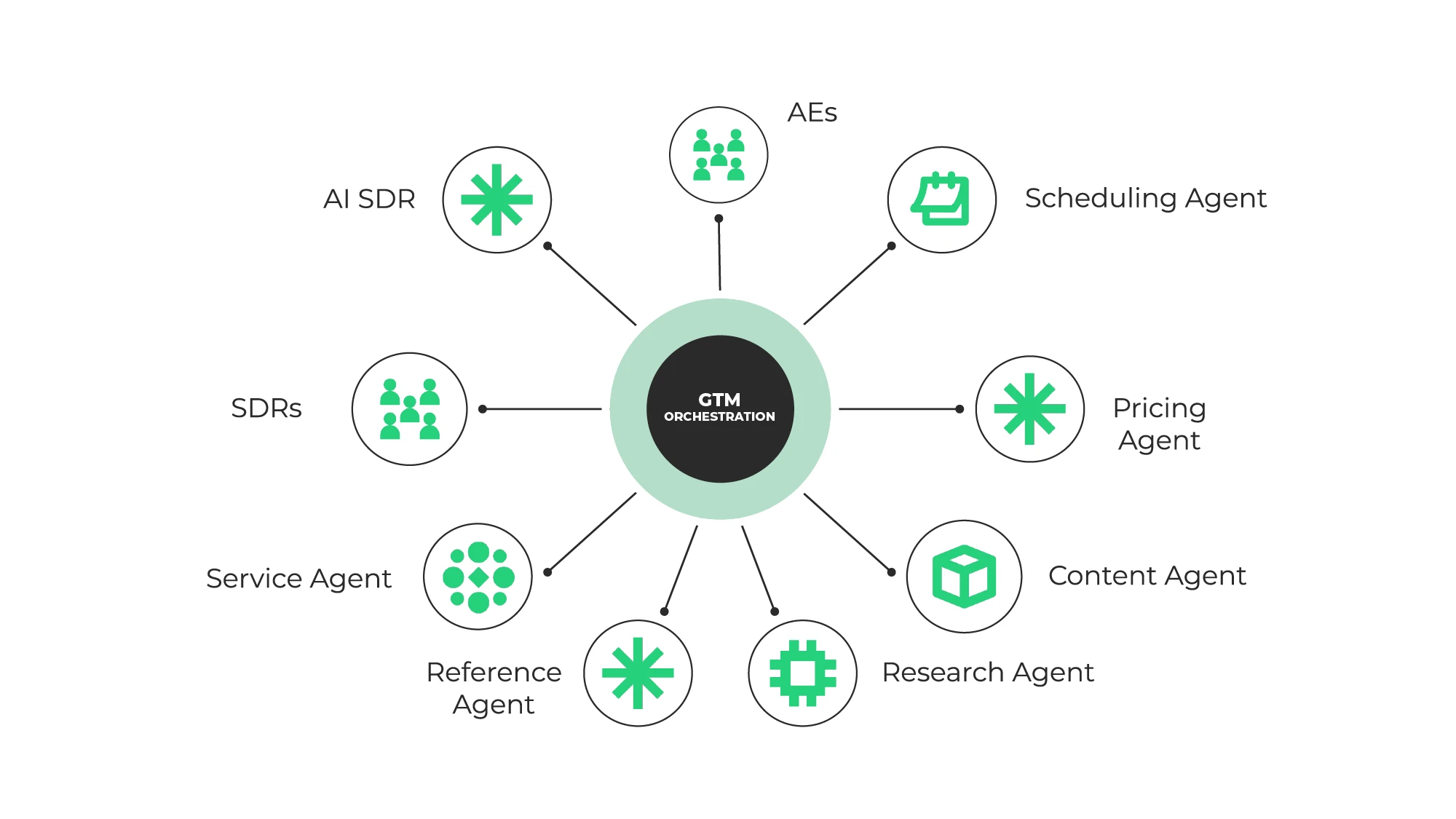
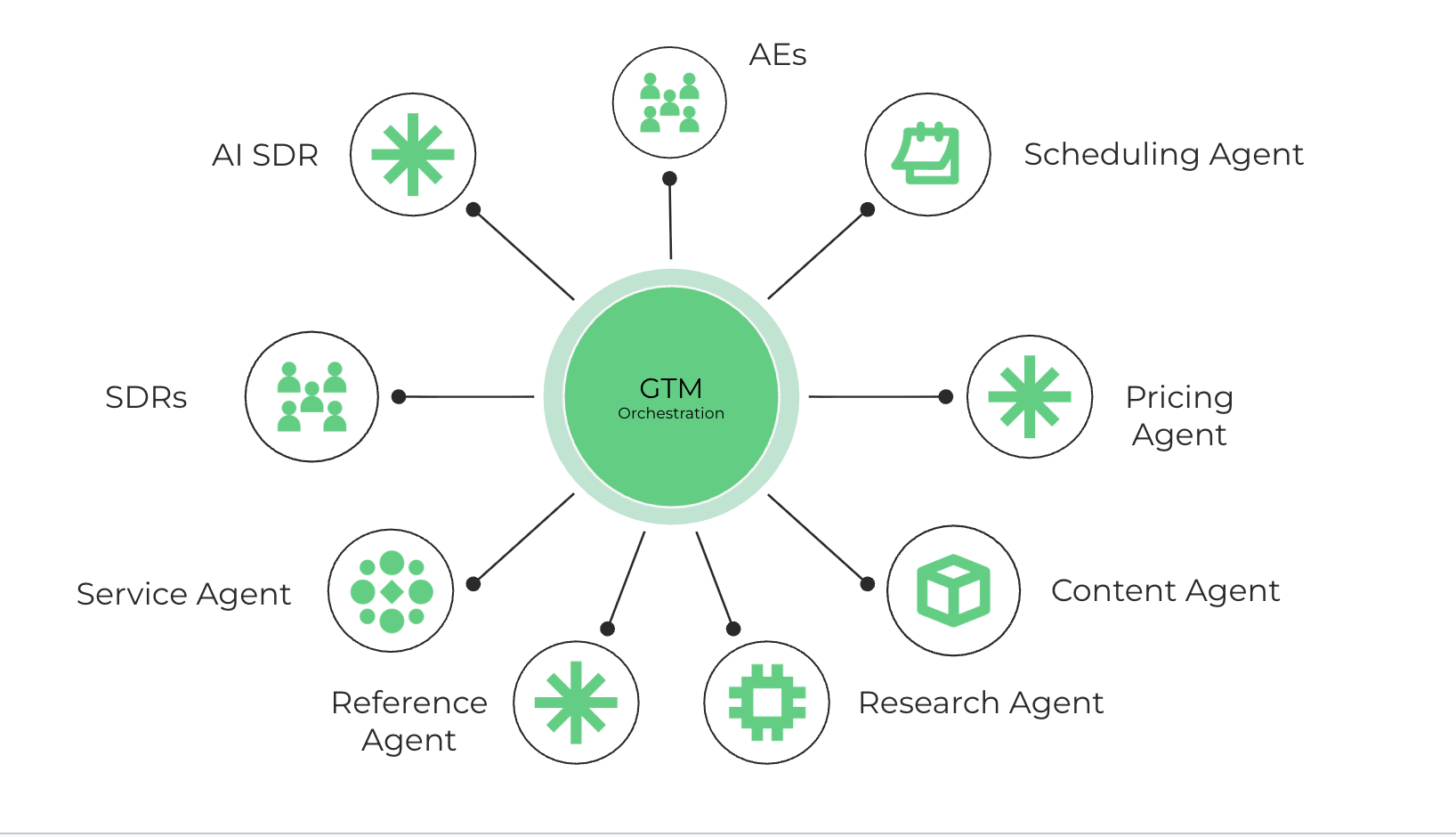
Orchestration platforms that sit at the center of the revenue stack connect these two system types into a working whole. The way that works in practice comes down to a few core functions.
Routing and Assignment
When a lead comes in from any source, including an AI SDR, a chatbot conversation, a form fill, or an intent platform alert, the routing layer determines who receives it, based on territory, account ownership, product fit, buying stage, and any other rules the team has defined. The assignment fires the same way every time.
There is no interpretation involved.
LeanData handles this for revenue teams with complex GTM motions, including organizations running multiple routes to market simultaneously. The routing logic lives in a visual FlowBuilder interface that Ops teams can update directly, without writing code or submitting IT tickets. When the business changes, the routing rules change with it.
The Full Revenue Lifecycle
A common misconception is that routing and orchestration apply only to inbound lead management. In practice, they apply across the entire revenue lifecycle.

The same orchestration layer that routes a new inbound lead can also:
- Govern handoffs at renewal
- Trigger expansion alerts when a customer hits a product usage threshold
- Manage case routing in customer success
- Coordinate buying group workflows during an active deal.
The signals change at each stage. The need for reliable, governed execution does not.
Scheduling and Meeting Conversion
One of the highest-value deterministic actions in a GTM motion is converting inbound intent into a booked meeting with the right person, fast.
A prospect who fills out a form or finishes a chatbot conversation is at peak interest in that moment. The longer the gap between that signal and a confirmed meeting, the lower the conversion rate.
LeanData Scheduling connects that moment of intent to a confirmed calendar event, routed to the right account executive or sales development representative, with no manual back-and-forth.
The deterministic logic governs who gets the meeting, based on the same rules that govern lead routing. Consequently, the buyer experience stays consistent whether the initial signal came from a human or an AI agent.
Buying Groups
In enterprise B2B sales, a single account rarely has a single decision maker. Deals involve multiple stakeholders, and reaching only one of them is a common reason deals stall.
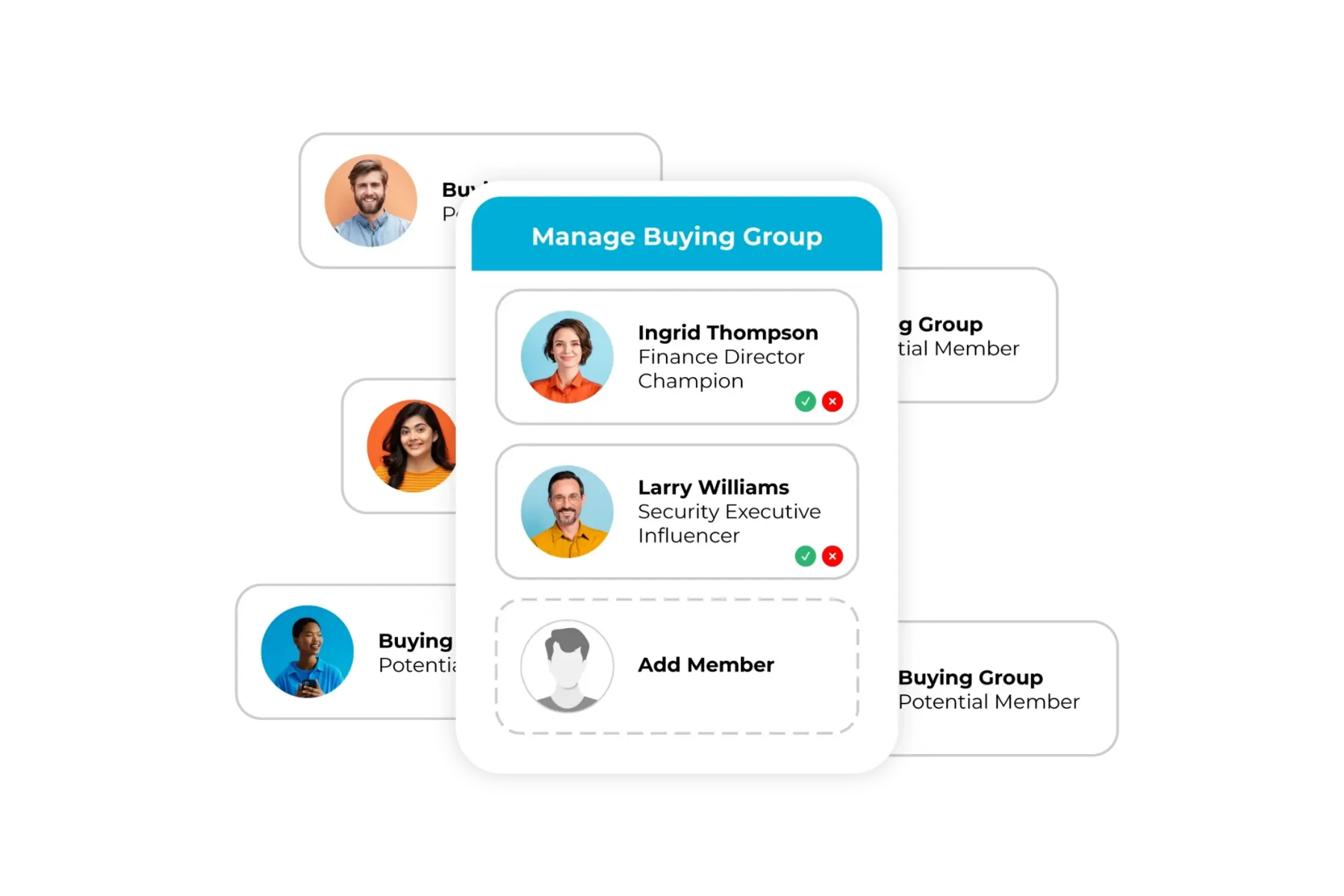
Buying group orchestration adds a second layer of coordination on top of standard lead routing.
LeanData Buying Groups identifies the relevant stakeholders for a given account, surfaces any gaps in coverage, and triggers coordinated actions across the buying group throughout the deal cycle.
Next, it connects those signals to the rep and the marketing team simultaneously, so the right people receive the right outreach at the right stage.
For Ops teams managing enterprise sales motions, this is where AI-generated account intelligence becomes genuinely useful, because the orchestration layer tells it what to do with what it finds.
“Many of the most innovative approaches we’re seeing in practice are hybrid processes that incorporate limited non-deterministic AI steps within the guardrails of well-structured, deterministic workflows. This gives you the best of both worlds.”Scott Brinker
Building the AI GTM Stack
The practical takeaway from all of this is not to choose between AI and orchestration. The goal is to wire them together deliberately.
Here is what that looks like across the key decisions:
Where to start with AI in your GTM motion:
- Use AI for tasks that require interpretation, summarization, or generation: call summaries, lead scoring, personalized outreach, intent classification, and account research
- Treat AI outputs as inputs to deterministic workflows, not as final actions
- Audit your current stack for gaps between AI signal generation and workflow execution
What your deterministic layer needs to handle:
- Lead and contact routing based on territory, account, segment, and product rules
- SLA enforcement and escalation logic
- Meeting booking and calendar coordination
- Handoff workflows between sales stages and teams
- Buying group assignment and coverage tracking
- A full audit trail for every action, regardless of whether it originated from a human or an AI agent
What makes the whole thing work:
- Clean, normalized CRM data as the foundation that AI acts on and deterministic systems enforce
- A centralized orchestration layer that can ingest signals from any source, human, system, or AI, and route them through the same governance framework
- Visibility into every action at every stage, so Ops teams can identify what’s working, what’s not, and why
The Martech for 2026 research captures this architecture well: “Many of the most innovative approaches we’re seeing in practice are hybrid processes that incorporate limited non-deterministic AI steps within the guardrails of well-structured, deterministic workflows. This gives you the best of both worlds.”
That framing applies directly to GTM: AI accelerates the intelligence layer; deterministic orchestration makes the intelligence executable.
FAQ
What is the difference between deterministic and probabilistic AI in a GTM context?
Can AI agents replace my existing lead routing and workflow automation?
How does LeanData connect AI signals to GTM execution?
How does data quality affect AI performance in a GTM motion?
See the GTM orchestration layer that AI companies trust.

Kim Peterson
Kim Peterson is the Senior Manager of Content Strategy at LeanData where she digs deep into all aspects of go-to-market strategy and execution. Kim's writing experiences span tech companies, stunt blogging, education, and the real estate industry. Connect with Kim on LinkedIn.