













Summary
This guide compares LeanData vs. Chili Piper across the decisions that matter most for enterprise RevOps teams: lead-to-account matching accuracy, routing logic scalability, Salesforce-native architecture, AI orchestration infrastructure, and total cost of ownership. Learn how to choose the platform that fits your go-to-market (GTM) motion.
What You’ll Learn
- Why Salesforce-native architecture changes data security and governance for enterprise teams
- How LeanData’s proprietary fuzzy matching engine differs from Chili Piper’s Salesforce-dependent matching, and why it matters at scale
- Where Chili Piper’s scheduling experience is genuinely strong, and where it creates friction at scale
- How LeanData’s AI releases differ from Chili Piper’s AI investments, and why the depth of orchestration-layer AI matters for enterprise teams
- How to know which platform your team should choose, and what switching from Chili Piper to LeanData looks like
LeanData vs Chili Piper
LeanData and Chili Piper both show up on RevOps shortlists. Both sit in the routing and scheduling category. And both get evaluated by the same buyers, often at the same time.
But they were built to solve different problems, and that distinction becomes critical as your GTM motion grows more complex.
Chili Piper was built to get inbound form fills onto a calendar fast. LeanData was built to orchestrate the entire revenue lifecycle inside Salesforce, from first signal through closed-won and beyond.
Choosing the wrong one for the wrong reason is expensive. This guide breaks down exactly where each platform excels, where each one falls short, and how to know which one fits your team.
What this guide covers:
- Lead-to-account matching depth and accuracy
- Salesforce-native architecture vs. external integration
- Routing logic complexity and scalability
- Scheduling capabilities and handoff intelligence
- AI and agentic scheduling infrastructure
- Enterprise governance, audit logs, and SLA enforcement
- Pricing structure and total cost of ownership
- What switching looks like if you’re already on Chili Piper
Platform Overview: What Each Tool Was Built to Do
Before comparing features, it helps to understand what problem each platform was originally designed to solve, because that origin shapes every product decision downstream.
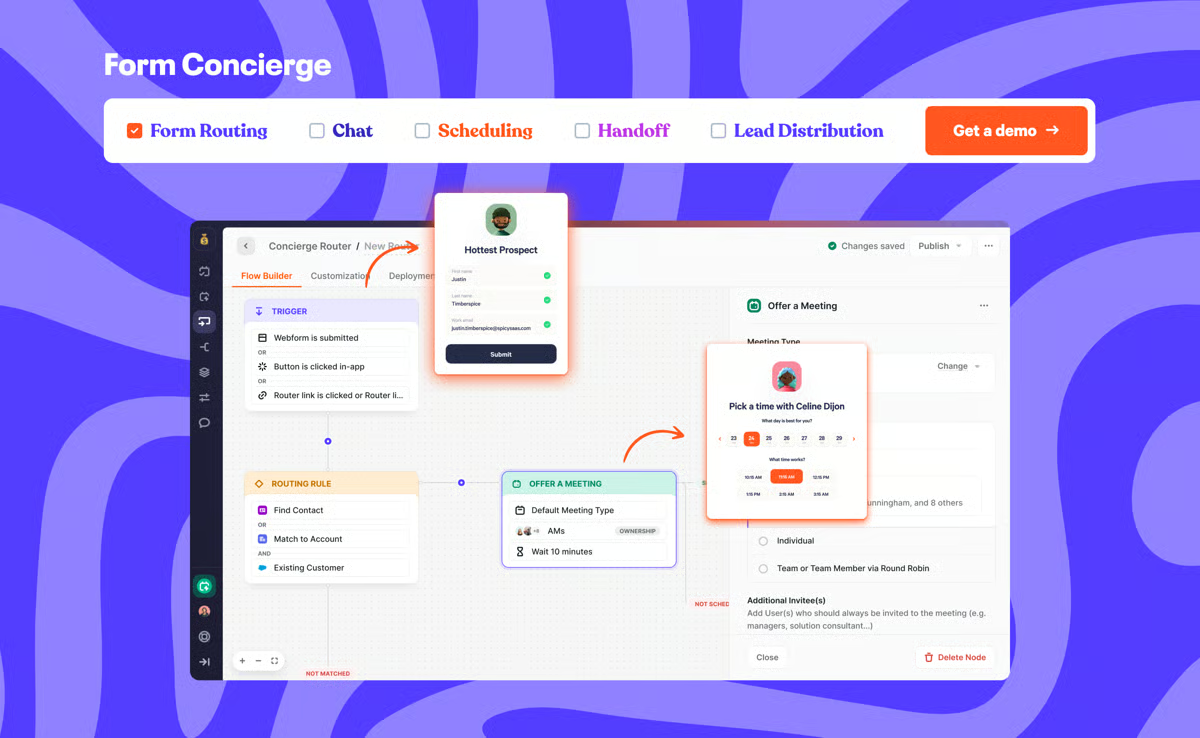
Chili Piper: Speed to Meeting
Chili Piper launched in 2016 as a scheduling tool with a single core promise: turn a web form submission into a booked meeting before the lead goes cold.
It added lead distribution (Distro) in 2021 and rebranded in 2024 as a “Demand Conversion Platform,” adding chat and live AI capabilities. Today it bundles Concierge (inbound scheduling), Distro (lead routing), ChiliCal (scheduling links), and Chat under one roof.
It works across both Salesforce and HubSpot, and basic configurations can go live in hours. For teams whose primary problem is converting inbound intent into booked meetings quickly, that speed is an advantage.
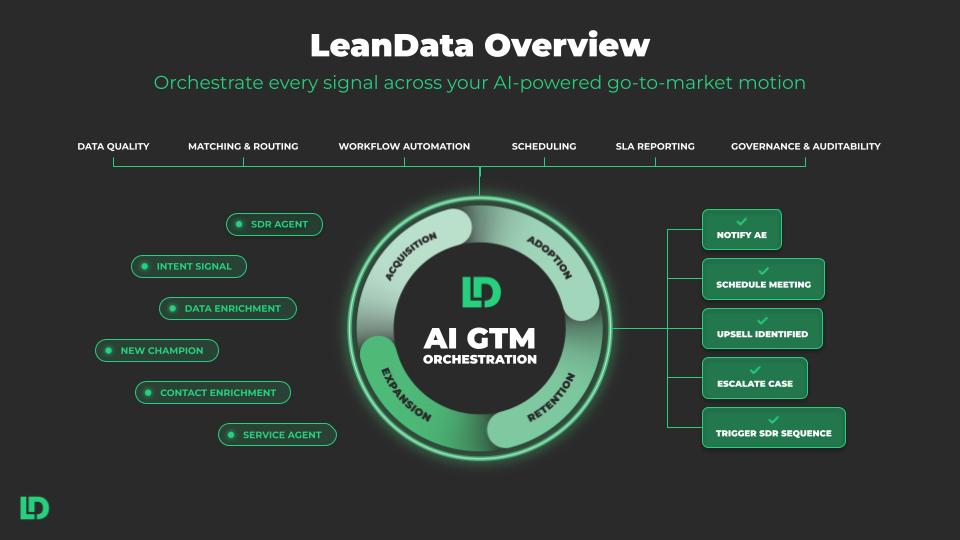
LeanData: Orchestration Across the Full Revenue Lifecycle
LeanData launched in 2012 and was built from day one as a Salesforce-native application.
Its FlowBuilder handles the full matching, routing, and assignment chain across every Salesforce object: leads, contacts, accounts, opportunities, cases, and custom objects.
LeanData’s scheduling suite, BookIt for Forms, BookIt Handoff, and BookIt Links, manages scheduling. Buying Groups handles multi-stakeholder orchestration. And a suite of AI capabilities, including an AI Inference Node, AI Graph Summary, AI Assistant for audit logs, and the BookIt MCP Server for agentic scheduling, has extended the platform into Intelligent GTM Orchestration territory.
Where Chili Piper asks “how do we get this lead on a calendar quickly?”, LeanData asks “how do we ensure this signal triggers exactly the right action across the entire revenue team?”
Those are different questions, and they produce materially different software.
Lead-to-Account Matching: Understanding the Architectural Difference
Matching is the foundation of every routing decision. Get it wrong and the rest of your routing logic is irrelevant. Leads go to the wrong rep, buying committee members get treated as net-new prospects, and revenue leaks before it ever reaches your pipeline.
Both LeanData and Chili Piper offer fuzzy matching. The meaningful difference is in how that matching is built and what it depends on.
Chili Piper’s Approach
Chili Piper does offer fuzzy matching in Distro, and for many teams it works. The important architectural detail is that Chili Piper’s duplicate and fuzzy matching is built on top of Salesforce’s native Duplicate Rules framework.
This means configuring Chili Piper’s matching logic requires first setting up Matching Rules and Duplicate Rules inside Salesforce itself, then connecting those rules to Distro. The matching algorithm inherits both the flexibility and the limitations of what Salesforce’s duplicate engine supports.
For teams with well-maintained Salesforce data and standard account structures, this approach is functional. But the dependency on Salesforce’s Duplicate Rules adds configuration complexity, and any gaps or inconsistencies in how your org’s duplicate rules are set up will surface as matching errors downstream in Distro.
Matching configuration that depends on multiple interconnected Salesforce settings creates more surface area for things to break.

LeanData’s Proprietary Matching Engine
LeanData’s fuzzy matching is proprietary and operates independently of Salesforce’s Duplicate Rules.
It evaluates six fields simultaneously, including company name normalization, email domain, website, phone, and subsidiary databases, with configurable tiebreaker rules. The result is 95% matching accuracy across any Salesforce object, without requiring admins to pre-configure Salesforce duplicate logic as a prerequisite.
What this means operationally: the matching engine is self-contained inside LeanData’s managed package. When you update matching logic, you update it in one place. There is no dependency chain between Salesforce Duplicate Rules, Matching Rules, and routing configuration to maintain in sync.
LeanData’s Account Hierarchies extends matching even further. LeanData now automatically maps parent-child account relationships inside Salesforce, giving revenue teams complete visibility across corporate structures.

With Multi-Hierarchy Support, enterprise teams to maintain up to 10 separate hierarchy views per org, whether by legal entity, sales territory, or buying group structure, and route against any of them from a single FlowBuilder graph.
For teams running account-based motions, managing global account structures, or operating in enterprise segments with complex subsidiary hierarchies, the independence and depth of LeanData’s matching architecture is a meaningful operational advantage.
Routing Logic and Workflow Complexity
Routing logic is where RevOps teams spend most of their configuration time, and where the wrong tool creates the most technical debt.
Chili Piper: Binary Decision Trees
Distro’s flow builder uses binary yes/no logic at each decision node. Every routing step produces exactly two possible outcomes.
For simple inbound routing, this works fine. But as your GTM motion evolves, binary logic forces you to build exponentially more branches to handle the same number of scenarios. What should be a ten-node flow becomes a forty-node tangle that nobody wants to touch.
G2 reviewers describe this directly. One noted that Distro “wasn’t very intuitive from the start” and required significant CSM assistance to build. Another flagged that “small changes (territory tweaks, new queues, edge-case routing) often require a knowledgeable admin. It’s not very self-serve for non-technical ops or marketing users.” A third reviewer summarized the core problem: the tool has “loads of customization limits.”
When your GTM strategy changes, which it will, binary logic makes changes expensive and slow.
LeanData: Multi-Branch GTM Orchestration
LeanData’s FlowBuilder supports multi-branch decision trees, meaning each node can produce multiple outcomes simultaneously. You can route, notify, update a field, trigger an SLA timer, and hand off to a scheduling flow within a single node.
This is not just more elegant. It is fundamentally more scalable.
FlowBuilder supports:
- Round-robin distribution with rep capacity weighting, count-based distribution, and Best-Fit Assignment, which routes to the optimal rep based on admin-defined attributes like language, product expertise, or conversion rate by segment
- Territory-based routing via LeanData’s own Territory Management system, with optional integration with Salesforce Enterprise Territory Management
- Account-based routing that respects existing ownership and account relationships
- Support for overlay routing patterns, including product specialists, solution engineers, and partner co-sell assignments
- Time-based routing for business hours, time zones, and follow-the-sun models
- Any Object Routing across leads, contacts, opportunities, cases, and custom objects
- AI Inference Node which embeds LLM reasoning directly into your routing graph to interpret unstructured data, such as contact form text or survey feedback, and extract structured values that drive routing decisions
LeanData also includes an AI Assistant for audit logs, allowing admins to ask plain-language questions about routing history and get instant answers, without cross-referencing graphs, deployments, or opening a support ticket.
When your GTM strategy changes, LeanData’s visual FlowBuilder lets Ops teams update routing logic without developer support.
Scheduling: Understanding What Each Platform Prioritizes
Chili Piper’s scheduling product is genuinely strong.
Concierge is purpose-built for the inbound moment. When a prospect fills out a form, they see a calendar immediately and can book a meeting in seconds. The UX is clean, setup is fast, and the form-to-meeting conversion experience is solid.
That said, G2 reviewers have noted real friction points.
One reviewer cited that “the speed at which it runs for iframed Pardot form submitters may be contributing to scheduling attrition.” Another flagged limited UX customization options for the form submission experience. A third noted that Chili Piper lacks a fast frontline support channel for lower-level configuration issues.
And several reviewers raised concern about contractual terms, specifically that monthly contracts are not available for renewing customers, and that auto-renewal policies are enforced even when renewal reminders fail to send.
One reviewer said plainly that Chili Piper offers “nothing Calendly couldn’t resolve at a fraction of the price,” which signals that buyers with simpler needs are questioning whether the cost is justified.
“What do you dislike about Chili Piper? We’ve had on-and-off technical challenges maintaining the tool’s form and CRM integrations, and it requires ongoing monitoring and maintenance. I also find the UX customization options for the form-submission experience to be lacking. In addition, the speed at which it runs for iframed Pardot form submitters may be contributing to scheduling attrition for us. I would warn ChiliPiper users about two contractual stipulations: 1) a monthly contract is not possible for renewing customers, and 2) your contract will auto-renew after a year, and they’ll hold you to it even if a renewal reminder fails to send.”G2 Review, April 2026
LeanData BookIt: Scheduling Built on Routing Intelligence
LeanData’s BookIt handles the same core surfaces: inbound form booking, scheduling links, rep handoffs, and a Chrome extension for embedded scheduling. The critical difference is that scheduling decisions are informed by the same matching and routing intelligence that governs the rest of your GTM motion.
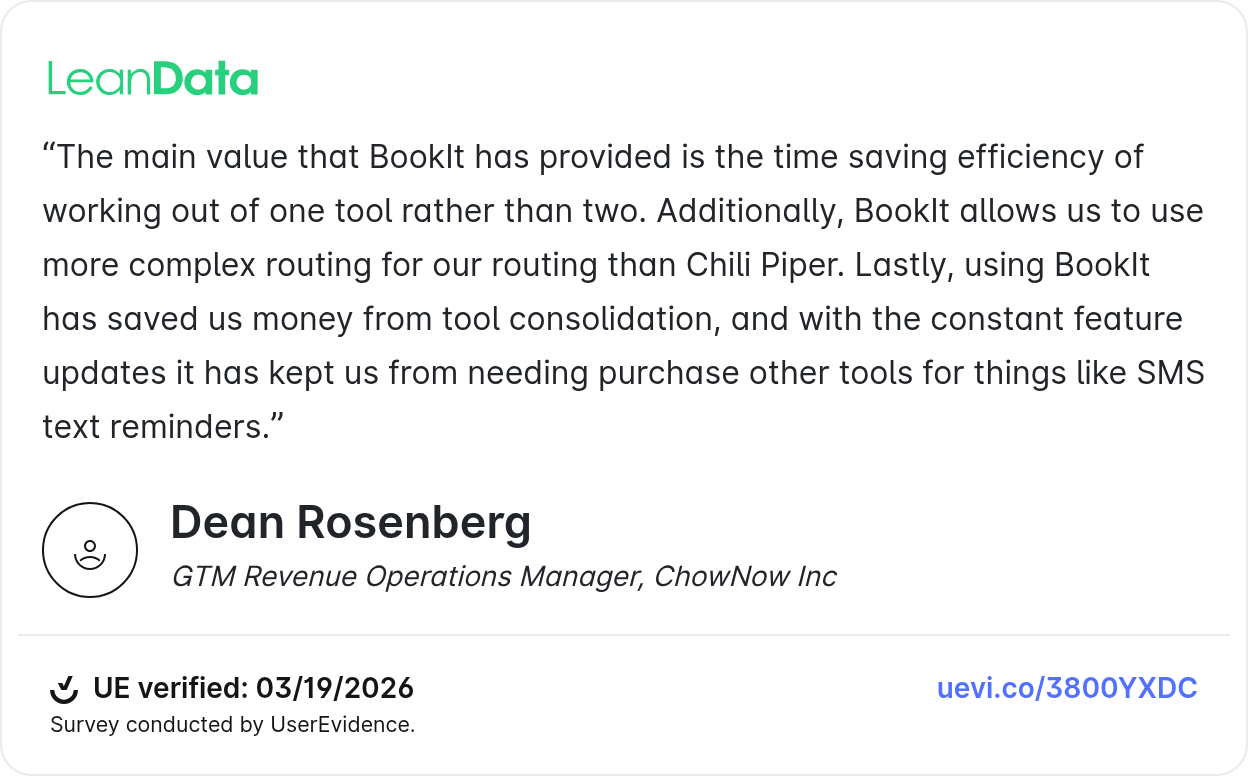
When a prospect books through BookIt, the right rep is suggested based on your custom business logic, not just calendar availability. Chili Piper requires you to pre-define a pool of reps for every assignment scenario, which becomes operationally heavy at scale.
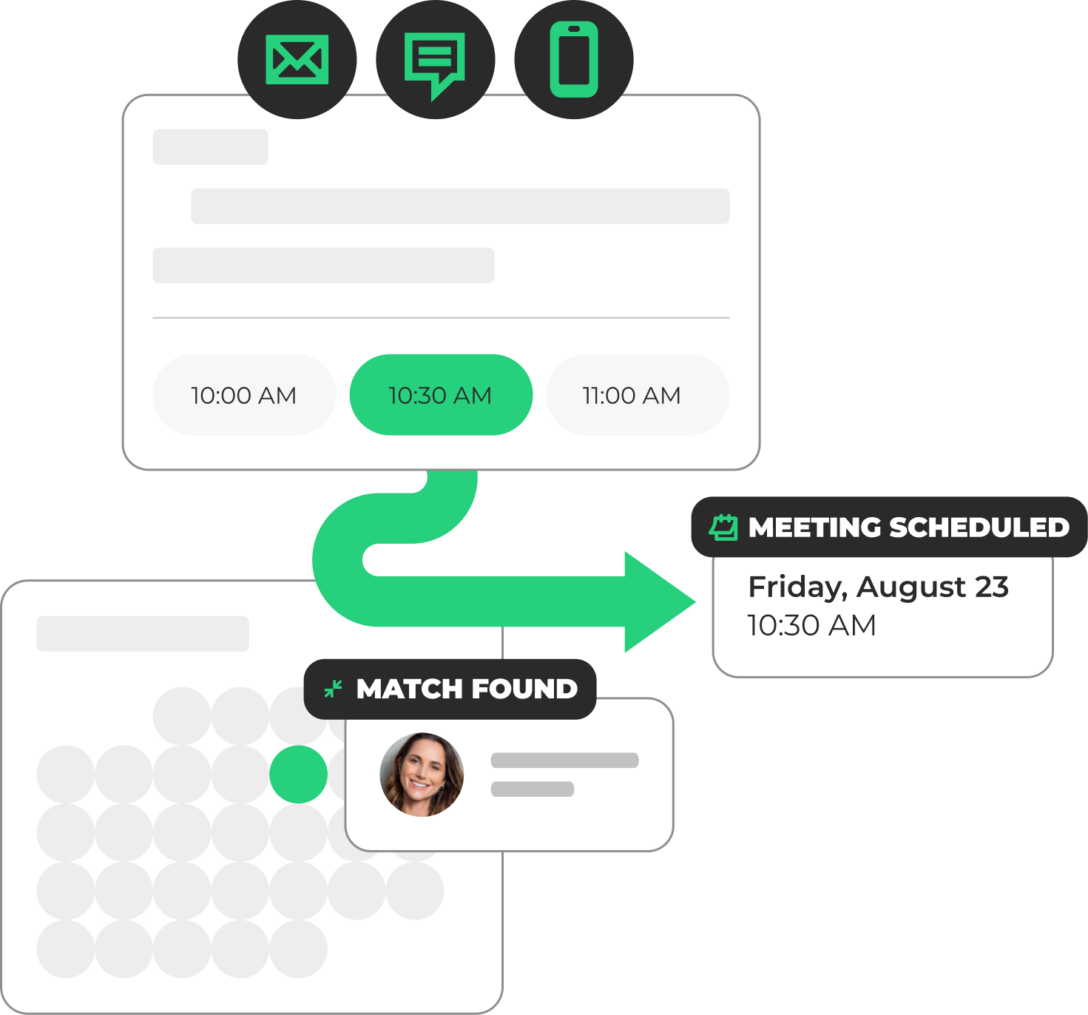
In 2026, LeanData expanded BookIt’s API capabilities to support custom booking experiences that leverage your core routing and round-robin logic. This means BookIt can now serve as the scheduling backend for AI agents, allowing agentic tools to programmatically check availability, confirm bookings, and manage meetings without manual workarounds or brittle custom integrations.
LeanData’s May 2026 release extends this further with the BookIt MCP Server, which makes BookIt natively discoverable and callable by any MCP-compatible AI agent, including Claude, ChatGPT, Agentforce, and 1Mind.
Chili Piper also launched an MCP Server, so both platforms support AI agent-driven scheduling via the Model Context Protocol.
The architectural distinction is what sits behind each MCP implementation. Chili Piper’s MCP exposes scheduling and routing data from a platform that runs outside Salesforce.
LeanData’s Additional scheduling enhancements include:
- Meeting Reassignment, which lets admins reassign meetings to a different rep without canceling and rebooking, preserving the prospect experience when a rep calls in sick or leaves the company
- Rep Personalization, which displays rep profile photos on the scheduling and confirmation pages to humanize the booking experience and improve show rates
- A redesigned Meeting Type Editor that reduces admin cognitive load and speeds configuration time
- Modernized post-scheduling confirmation and reminder emails
- Microsoft Teams conferencing support with Google Calendar, decoupling video conferencing from calendar provider selection
- Conditional User Provisioning, which automatically invites Salesforce users to authorize their calendar for BookIt based on admin-defined conditions, eliminating the manual provisioning burden as teams scale.
Hubspot Integration: Where Chili Piper Still Has an Advantage
For teams running on HubSpot rather than Salesforce, Chili Piper’s native HubSpot integration is a genuine differentiator. BookIt is Salesforce-first.
And for teams where website chat is a core inbound conversion channel, Chili Piper’s Chat product is a capability LeanData does not currently offer.
“I started working with LeanData at my current company, and I’m in love with all its powerful features. It’s a native SFDC app, which makes it not only easy to use but also helps avoid issues that can arise from integration apps. Highly recommended—not just for the lead object, but you can also use it on standard objects like Accounts, Opportunities, and Cases. ”Marsy B.
Salesforce Architecture: Native vs. External Integration
This is the architectural decision that enterprise teams most frequently underestimate during evaluation, and most frequently flag as a pain point after implementation.
LeanData is a 100% Salesforce-native managed package. That means:
- Every routing decision, every match, every audit log entry lives inside Salesforce.
- No data leaves your CRM.
- No sync delays.
- No API call limitations from constant two-way sync.
- No separate login to manage.
Chili Piper is not Salesforce-native. Its routing and scheduling logic runs externally and syncs back to Salesforce via API. That creates several compounding risks:
- API call limitations: Salesforce enforces API call limits per org. External tools that rely on constant two-way sync consume those limits, which can throttle performance during peak inbound volume.
- Data security exposure: When data leaves Salesforce to be processed externally, it creates a potential security and compliance gap. For organizations in regulated industries or with strict data governance requirements, this is a material risk, not a theoretical one.
- Sync latency: External tools introduce the possibility of sync delays. A lead that enters Salesforce may not be immediately visible to Chili Piper’s routing logic, creating a window where fast-follow actions are delayed.
- Integration maintenance burden: G2 reviewers flagged “on-and-off technical challenges maintaining the tool’s form and CRM integrations” as a recurring issue, with one noting it “requires ongoing monitoring and maintenance.”
The governance implication is significant.
LeanData’s Salesforce-native architecture means your routing logic, audit trails, and reporting all live in the same system your sales team already uses. There’s no reconciliation between what Salesforce says happened and what your routing tool says happened.
For enterprise teams that need to answer “why was this lead routed this way?” that single source of truth is a compliance and accountability requirement.
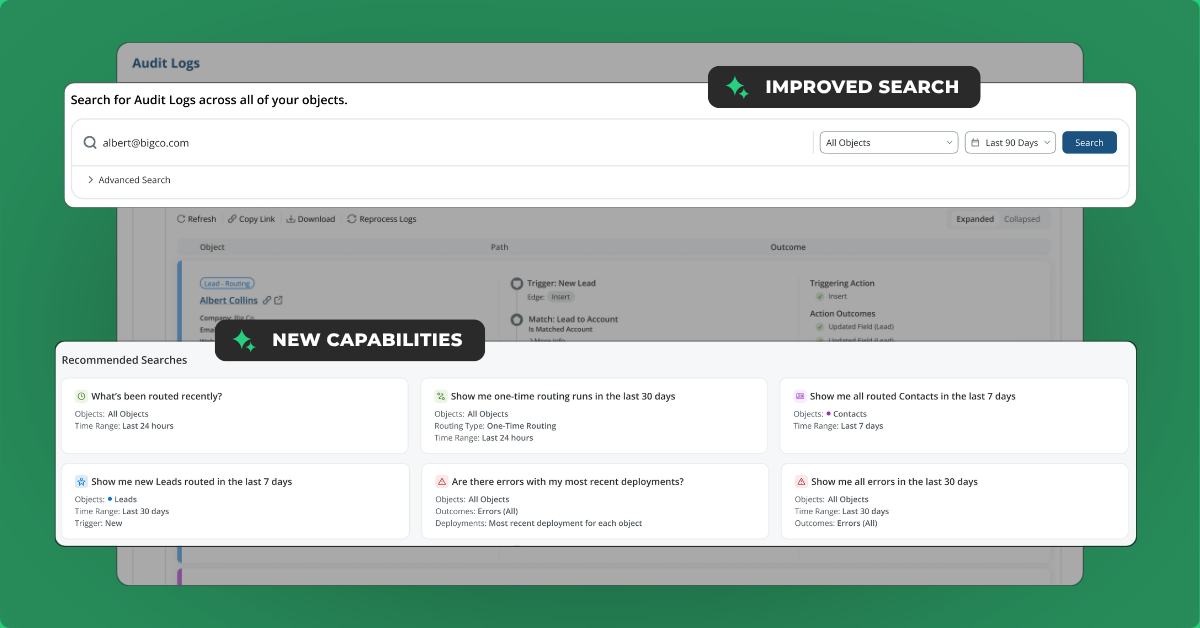
Audit Logs, Reporting, and AI-Assisted Visibility
When a lead gets misrouted, the question is how quickly you can diagnose and fix it.
Chili Piper
Chili Piper’s audit logs exist but do not provide record-level granularity or out-of-the-box Salesforce-native reporting. Operations teams relying on Chili Piper for routing diagnostics often find themselves piecing together information across systems rather than working from a single source of truth.
LeanData
LeanData provides comprehensive, record-level audit logs that show the exact path each lead took through a routing flow, including every decision node evaluated, every outcome triggered, and every action taken.
LeanData’s Unified Audit Logs show a record’s journey across products, objects, and graphs into a single chronological searchable view.
The AI Assistant goes further. Admins can ask plain-language questions directly in the audit log interface, such as “Why was this lead routed to this rep instead of that one?” or “Show me every action taken on this contact in the last 30 days,” and get instant, contextual answers that stitch together logs across matching, routing, and scheduling.
LeanData also includes native Salesforce reporting for routing effectiveness: speed-to-lead dashboards, SLA performance tracking, match rate analysis, and routing flow metrics. Because the data lives inside Salesforce, it plugs directly into existing sales and marketing dashboards without additional data pipeline work.
For RevOps leaders accountable to CRO-level metrics, the ability to show routing performance, SLA compliance, and speed-to-lead data directly inside Salesforce, earns a seat at the revenue strategy table.

SLA Enforcement: Both Platforms Have It, but the Depth Differs
Both LeanData and Chili Piper support SLA enforcement.
Chili Piper’s Distro lets admins configure SLA timers that trigger reassignment and alerts when a rep has not responded within a defined window. For teams whose primary SLA requirement is speed-to-lead on inbound submissions, that is a functional solution.
The difference is in how complex an SLA structure each platform can support:
- Chili Piper’s SLA configuration is built around a single time window per routing step.
- When the SLA expires, the record exits and a reassignment or alert fires.
- Teams managing sequential SLAs, mid-SLA reminders without triggering reassignment, or post-breach time tracking end up stacking multiple nodes in sequence to compensate.
- This adds graph complexity and makes troubleshooting harder.
LeanData’s Track SLA node handles this in a single node:
- It can configure and track multiple SLAs simultaneously.
- It can fire email, Slack, and Microsoft Teams reminders while the record is still held without triggering an exit.
- It can continue tracking past SLA expiration to capture true time-to-action including post-breach rep response.
- It can notify a manager the moment an SLA is breached while tracking continues.
For enterprise teams managing tiered SLA structures across segments, territories, and products, the result is simpler routing graphs, cleaner reporting, and a single time-to-action metric that captures the full picture.
AI and Agentic GTM: The Emerging Differentiator
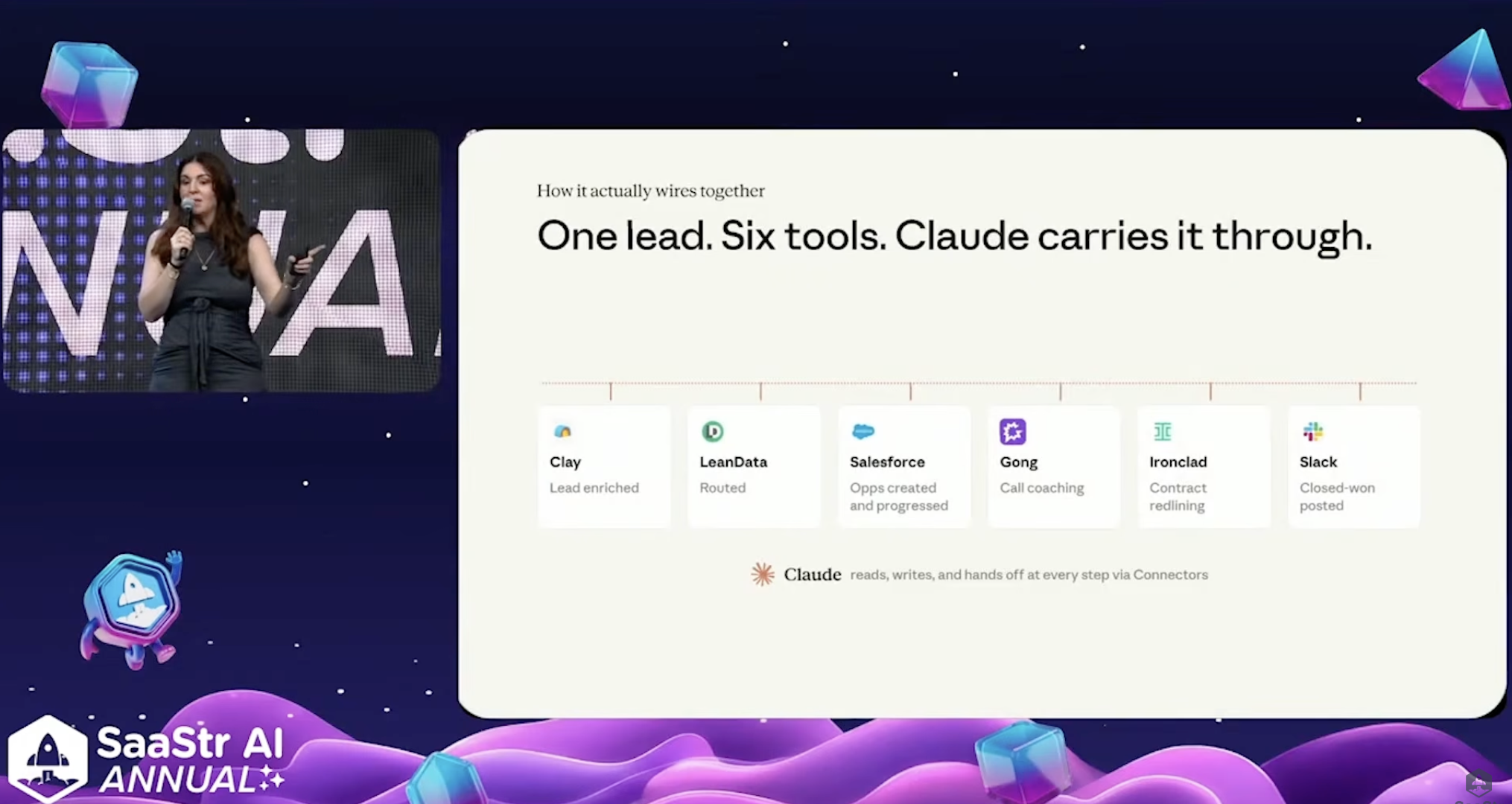
Both LeanData and Chili Piper are investing in AI, and both support agentic scheduling via MCP.
The more useful question for enterprise teams is not which platform has AI, but what kind of AI infrastructure each platform is building and what it sits on top of.
Chili Piper AI Investments
Chili Piper’s AI investments are concentrated in the inbound conversion layer: Chat AI for website visitor qualification and meeting booking, and an MCP Server.
For teams whose agentic use case is primarily about booking meetings from conversational interfaces, that’s a real and functional capability.
LeanData AI Investments
LeanData’s AI investment spans a different surface area.
- The AI Inference Node embeds LLM reasoning directly inside FlowBuilder, allowing routing logic to interpret unstructured data like form submissions, survey responses, or call notes, and extract structured values that drive routing decisions. This means AI is not just triggering a booking, it is participating in the logic that determines who gets routed where and why.
- The AI Assistant brings natural language querying to audit logs, so admins can ask plain-language questions about routing history and get instant answers across all objects and products.
- AI Graph Summary and AI Graph Comparison let admins generate plain-language explanations of routing logic and compare graph versions, which reduces documentation burden and speeds troubleshooting.
- The BookIt MCP Server gives AI agents governed access to scheduling, with strict schemas and guardrails so agents operate within your defined business rules. Because BookIt is Salesforce-native, every agent-initiated booking flows through the same routing logic, round-robin fairness, and audit infrastructure as every other action in your GTM motion.
The difference is not which platform has AI features. It’s how deeply AI is embedded into orchestration logic, and whether that logic lives inside Salesforce or outside it.

Pricing: What You Are Paying For
Pricing transparency is an area where Chili Piper has a slight advantage: its per-user costs are publicly listed, which makes it easier to build a quick business case.
Chili Piper Pricing (Public)
LeanData Pricing
LeanData’s pricing is structured around object types, user seats, and required integrations, confirmed through a sales conversation. Because every enterprise deployment is different, ranges vary significantly. Contact LeanData directly for a quote based on your specific environment.
The Total Cost of Ownership Question
Chili Piper looks less expensive on a per-seat basis. LeanData looks more expensive upfront. But the right comparison is not per-user cost.
It’s what each platform costs you when it does not work.
If your team processes 500 inbound leads per month and domain-only matching misroutes 10 to 15 percent to the wrong rep, that is 50 to 75 leads per month that go cold, get reassigned too late, or restart a deal from scratch.
At an average deal size that varies widely by segment, even a modest conversion rate on misrouted leads represents significant lost pipeline each month.
That cost is invisible in a licensing spreadsheet. It shows up in your pipeline report.
If You’re Already on Chili Piper: What Switching Looks Like
The most common concern from teams evaluating LeanData while on Chili Piper is not “does LeanData do more?” It is “is switching worth the disruption?”
It’s a fair question. Switching routing and scheduling tools touches every inbound workflow your team runs.
What Typically Triggers the Evaluation
According to LeanData’s BookIt User Survey, teams usually start evaluating LeanData when they hit one of these inflection points:
- Matching failures at scale: matching that worked at 200 leads per month starts producing visible misroutes at 1,000 leads per month
- Routing complexity outgrows binary logic: a new territory model, a partner overlay program, or an ABM motion requires multi-branch routing that Distro cannot support cleanly
- Governance requirements emerge: legal, compliance, or CRO-level accountability requires audit trails that live inside Salesforce
- Salesforce-native becomes non-negotiable: a security review flags external data processing as a risk
- AI and agentic GTM investments require a scheduling backbone that connects to agent workflows
The Migration Process
LeanData’s implementation team works with RevOps to map existing Chili Piper flows into FlowBuilder.
Because LeanData is Salesforce-native, the data migration question is largely moot: your Salesforce records stay where they are, the routing logic migrates. Average implementation runs six to eight weeks for mid-market teams and up to two months for complex enterprise environments with multiple routing flows.
LeanData provides full implementation and onboarding support as part of the engagement, including flow design review, testing protocols, and go-live validation.
G2 reviewers of Chili Piper frequently praised their CSM while also describing significant implementation gaps, with one noting they “never really got it to rotate the way we were told it would” and another describing having to “expand on our existing contract to leverage” features they were sold upfront.
LeanData’s implementation model is designed around preventing exactly those gaps.
What Teams Say After Switching
According to the LeanData BookIt customer survey:
- 74% reported time saved internally on administration (Ops, BDRs, AEs, CSMs)
- 65% reported increased meeting assignment accuracy
- 57% reported increased meeting assignment speed
- 83% reported achieving ROI within days or weeks of implementing BookIt!
Which Platform Is Right for Your Team?
Choose Chili Piper if:
- Your primary problem is converting inbound form fills into booked meetings fast
- You run HubSpot as your primary CRM
- You have fewer than 50 reps and a relatively simple routing model
- Website chat is a core part of your inbound conversion strategy
- You want publicly listed pricing you can put in a spreadsheet today
Choose LeanData if:
- You run a complex Salesforce org with territory hierarchies, account-based motions, or subsidiary structures
- You need lead-to-account matching accuracy above 95 percent to protect pipeline
- Your routing logic spans multiple objects: leads, contacts, opportunities, cases, custom objects
- You require governance-grade audit logs and Salesforce-native reporting for CRO visibility
- Your GTM strategy changes frequently and you need to update routing without developer support
- You are running buying group or multi-stakeholder orchestration across the revenue lifecycle
- Data security requirements make external data processing a non-starter
- You are deploying AI SDRs, Agentforce, or any agentic workflow that needs a governed scheduling and routing backbone
The Bottom Line
Chili Piper wins on chat, Hubspot integration, and simplicity.
LeanData wins on depth, accuracy, enterprise-grade orchestration, and the AI infrastructure that modern GTM teams are building toward. That’s why leading AI companies like Anthropic, OpenAI, and Databricks are LeanData customers.
For teams at the intersection of complex Salesforce environments and ambitious GTM motions, the question isn’t really which tool does more.
Ask yourself, which tool will grow with you without creating a new set of problems at scale?
FAQ
How does LeanData’s lead routing compare to Chili Piper Distro for enterprise Salesforce teams?
Is LeanData or Chili Piper better for Salesforce-native meeting scheduling?
What are the most common reasons teams switch from Chili Piper to LeanData?
How does LeanData handle AI agents and agentic scheduling workflows?
Your GTM motion is specific. See how LeanData maps to it.

Kim Peterson
Kim Peterson is the Senior Manager of Content Strategy at LeanData where she digs deep into all aspects of go-to-market strategy and execution. Kim's writing experiences span tech companies, stunt blogging, education, and the real estate industry. Connect with Kim on LinkedIn.